










































Unite4Climate Zambia
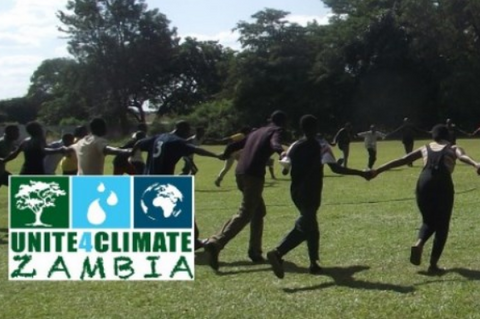
Launched in December 2009, Unite 4 Climate Zambia is a nationwide programme to inspire and foster child-led action on climate change reduction advocacy and HIV and AIDS prevention. Through media programmes, debates, and advocating for the construction of floating schools in flood-prone areas, Zambia's young Climate Ambassadors are working to be agents of change. A programme of UNICEF, Unite 4 Climate partners with young people in all of the country’s nine provinces to develop child ambassadors through workshops that seek to empower and inspire. Reaching 200 climate ambassadors each year and equipping them with the "pay it forward" concept, Unite4Climate Zambia is working to make Zambia and the global community more equitable.
In December 2009, children from around the world got together for the first Children’s Climate Forum (CCF), held in Copenhagen, Denmark before the United Nations climate summit (COP15). The CCF, organised by UNICEF, was a platform where children could voice their concerns about different climate issues affecting communities. Four Climate Ambassadors from Zambia attended the event and were passionate about replicating the experience back home. Inspired by the CCF experience, the Zambian Climate Ambassadors partnered with UNICEF Zambia to create Unite 4 Climate Zambia.
The Zambia programme kicked off with the first Zambian Children’s Climate Conference (ZCCC), which was held in Lusaka from April 26-28, 2010. One hundred and fifty six delegates coming from all nine provinces were engaged in an intensive three-day programme filled with presentations from climate experts, thematic discussions, practical skills building workshops, and field visits. The programme was designed to educate ambassadors on a broad range of issues related to climate change, as well as show practical and simple ways in which they could tackle those issues.
At the conference, ambassadors were challenged to design their own action plans and lead climate awareness raising campaigns back in their communities. The strategy is for the ambassadors to sensitise their respective communities on climate change and be a channel through which various environmental projects can be undertaken. Following from that, ambassadors started an environmental dialogue with both their peers and their communities at large. Building on that experience, a second Conference (ZCCC2) was held from August 23 to 27 2010 in Lusaka. At the Conference, 75 Climate Ambassadors from all nine provinces were led through a week-long mentored process which guided them through the steps of project management. The conference also had a series of creative workshops, some of which were led by their partners. These included:
- media (radio and video) in partnership with Child Radio Foundation;
- theater and music in partnership with Barefoot Theatre;
- HIV/AIDs and Life skills in partnership with Restless Development and UNICEF Zambia’s Education Programme section;
- sports for development, in partnership with Sports in Action;
- painting and Talking Walls instruction; and
- using the Internet for advocacy.
According UNICEF, the Climate Ambassadors were able to design a comprehensive action plan through the mentored process and were also able to discuss their plans in detail with Zambia-based climate experts, including from the Ministry of Environment, Tourism, and Natural Resources. As a result, at the end of ZCCC2 all the ambassadors were equipped with a concrete action plan, as well as different creative tools they could use to communicate their advocacy goals and mobilise their communities.
Since then, the Climate Ambassadors have led various different actions across country. Ambassadors from Chipata, Lusaka, Kabwe, and other cities have mobilised seeds and tools from local authorities and have organised tree planting days in their communities. Ambassadors from Lusaka have also organised litter clean-up days as part of their strategy to raise awareness in the wider community. Ambassadors from Kabwe are visiting communities of charcoal burners to sensitise and raise their awareness on the problems created through uncontrolled deforestation. The Ambassadors from Mongu and Lusaka have also received further training on radio journalism. The Mongu ambassadors are using their radio training skills to create radio podcasts advocating for the creation of a floating school in the area.
Climate Change
UNICEF website and ZambiaUnite 4 Climate Zambia website on August 4 2013
- Log in to post comments