Our Climate, Our Future

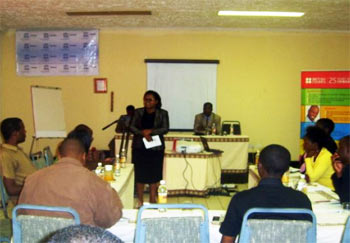
The project conducted a Climate Change Training Workshop for media in June 2009. The workshop was attended by 25 media professionals - editors, bureau chiefs, reporters, producers, and presenters - from electronic and print media outlets across Zimbabwe. The training focused on the production of news, stories, pictures, and audio/video programmes for newspapers/magazines, television, radio, and the internet. Course content was adapted from the UNESCO manual entitled "Media as Partners in Education for Sustainable Development: A Training and Resource Kit". The training for media professionals sought to:
- raise the awareness of media professionals around the causes, effects, and impact of climate change and issues surrounding it with the goal of sensitising them to the need to report extensively and intensively on the topic;
- equip media professionals with information, knowledge, and skills to understand the science and facts around climate change with a view to demystifying the topic for their audience; and
- provide media professionals with an opportunity to conceptualise and practise reporting on climate change from the perspective of various scenarios and angles.
According to the organisers, the training workshop led to the formation of a network of climate change journalists, the compilation of a roster of experts and resources, the production of articles, and the generation of programme ideas and concepts on climate change.
Our Climate, Our Future also organised a school poetry competition as part of commemorations of World Poetry Day (March 21) and World Water Day (March 22) to raise awareness of the threat of climate change among young people. The theme of the competition was shaped around water. Schools around Zimbabwe were invited to each send up to 20 of their best poems in English, Ndebele, or Shona on the theme "Water/Mvura/Amanzi".
Environment, Natural Resource Management
In 1992, the United Nations General Assembly designated 22 March as World Water Day to draw attention to the critical lack of clean, safe drinking water.
British Council and UNESCO.
UNESCO website, August 20 2009 and June 25 2010; and ZimboJam website, August 20 2009.