










































A New Face of Education: Bringing Technology into the Classroom in the Developing World
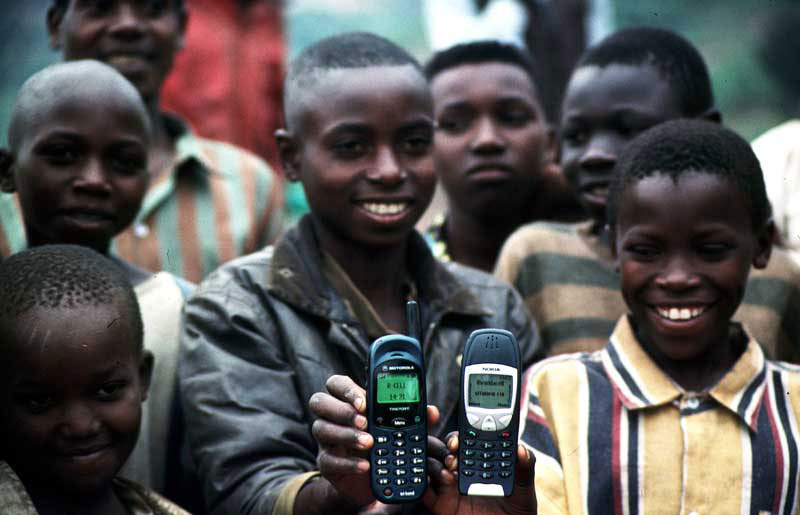
"In the small village of Hafizibad in Pakistan's Punjab province, a young girl is using her mobile phone to send an SMS [text] message in Urdu to her teacher. After sending, she receives messages from her teacher in response, which she diligently copies by hand in her notebook to practice her writing skills."
The purpose of this paper is to provide guidance to non-specialists interested in pursuing technology for educational improvement in the developing world. It explores questions about what technology is available to support education, what its possible benefits are, and how it can be used effectively - looking closely at the different enabling conditions that frequently shape the success or failure of technology interventions in education and deriving a set of 7 basic principles for effective technology use. In doing so, the authors look both at the primary and secondary, as well as at the higher levels, of education systems. Using the World Bank classification of low-income and lower-middle-income countries, they focus on the world's economically poorest countries - from Sub-Saharan Africa to South and West Asia to the Caribbean.
Noting that, while many children enter school, few stay enrolled and even fewer are mastering the basic skills needed to progress in their education, the authors explain that there has been a call from multiple actors to shift the global education paradigm from a focus on access to a focus on learning for both those in and out of school. A proposal for a Global Compact on Learning calls for renewed attention to the broader "Education for All" goals and focuses on the importance of early childhood development, literacy, and numeracy at the lower primary level, as well as the transition to relevant post-primary education. A "learning for all" lens highlights three common dimensions of primary and secondary educational shortfalls in the developing world: 1) access to learning opportunities; 2) mastery of foundational skills, including learning how to learn and analytic skills; and 3) the relevance of learning content to full participation in the economies and governing structures of today's world. "If deployed effectively, technology has a role to play in helping to address all three of these dimensions."
In a section of the paper titled "Developing World Experience of Technology in Education", the authors note that stories of failed technology interventions in education abound. They cite several reasons. For example, a pilot project in St. Lucia procured database software from a Canadian company that appeared to fit the island's needs. Unfortunately, the teachers and administrators ran into a range of problems with the software, including drop-down display items that were not translated from French to English, and difficulty in navigating the database. "There are however a number of examples where a smart program design and careful consideration of the enabling conditions have meant that computers in schools added value to educational outcomes and processes. Consider the Education Development Center's Interactive Radio Instruction (IRI) project in Indonesia. The project was designed to support early childhood development, particularly in meeting school readiness requirements. It resulted in increased scores in Language and Cognitive Development categories between pre- and post-tests, where interactive radio instruction (IRI) learner scores increased by 21 points, while control learner scores increased by 13 points. The program saw improvements not only in student learning and school readiness outcomes, but also in teacher practice."
In this context, the authors outline a set of guiding principles to inform technology programming in the developing world:
- Identify the educational problem that needs to be addressed, and then assess which, if any, is the best technology to do the job. (That is, start with the problem, not the technology.)
- Make sure the technology will add value to other existing solutions. "Unfortunately finding the necessary comparative information on technology interventions, especially in developing-country contexts, can sometimes be difficult. This, among other knowledge gaps in the status of technology in education in developing countries, suggests that on-going research and evaluation is urgently needed."
- Carefully consider the full range of enabling conditions that are essential to design and implement an intervention that will last over time. This includes factoring in the total cost of ownership, the ultimate relevance of the technology to the particular location, access to appropriate infrastructure, and human resource capacity.
- Select a technology and design an intervention so that the technology can be used for multiple purposes. For example, a computer lab in a school should not only be reserved for learning information and communication technology (ICT) skills but also be at the disposal of the math and science classes for enriching their work and/or available to teachers for their own professional development, opened for use after school hours by the community for informal education, or for other such uses.
- Select the least expensive option for the job(s) desired. For example, in many rural regions in developing countries, radio now is much more cost-effective than computers for improving student learning.
- Ensure that the technology is reliable and will not rapidly break down. The technology should also be adequately and appropriately vetted before it is established.
- Take note of the fact that excessively complicated technologies can present barriers to implementation and the ultimate success of the intervention, especially if extensive training is required to learn how to operate the particular technology.
Brookings website, August 1 2013. Image credit: textually.org
- Log in to post comments