










































Voices from Villages: Community Radio in the Developing World
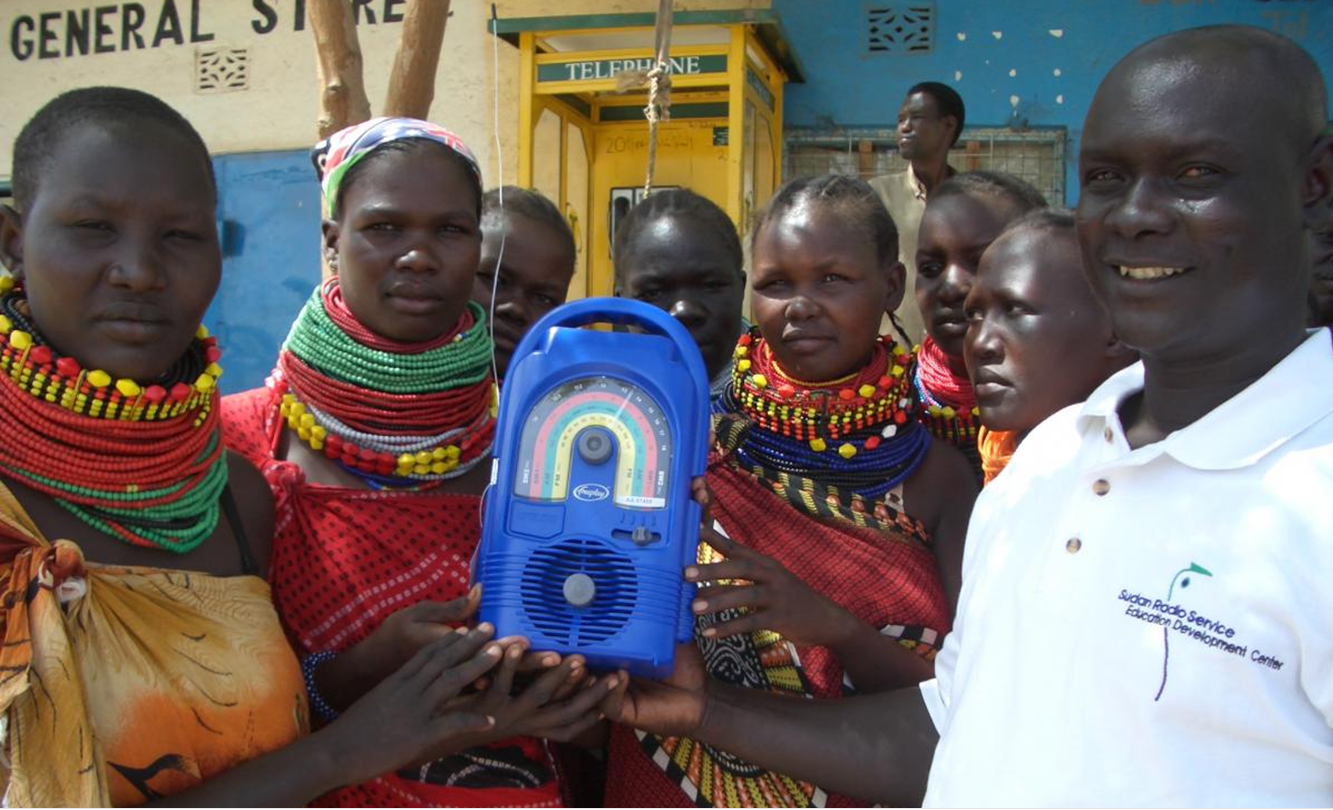
Published by the Center for International Media Assistance (CIMA), this report discusses the expansion of community radio in the developing world, explores the reasons for this expansion, and outlines constraints and challenges facing the sector. The report states that international aid agencies are showing increasing interest in community media’s ability to inform and empower, and more governments are acknowledging the contribution of community media to education, public health, and economic development. However, major challenges for community radio include economic survival and sustainability beyond donor and non-governmental organisation support, as well as threats to freedom of expression, especially in authoritarian and fragile states.
The report describes community radio as "radio by and for the community, be it a physical community or a community of interest, with an emphasis on community ownership and management on a not-for-profit basis." It differentiates true community radio from ethnically-based radio stations used for propaganda and hate messages, citing Radio Télévision Libre des Mille Collines (the Rwandan radio station that incited genocide in 1994) and the vernacular radio stations in Kenya accused of fomenting post-election violence in January 2008, as examples of what a community station is not. Both were privately owned commercial stations that purported to reflect the views of the community, and neither exhibited the core values of bringing people together that is considered to be at the heart of community broadcasting. On the other hand, studies showed that community stations like Pamoja FM, in the Kibera slum outside Nairobi, worked to calm the conflict and stop fighting between groups of youths.
The report also points out that community radio is most prevalent in Latin America, most diverse in Africa, and expanding in South and Southeast Asia. The first community radio in the developing world is widely acknowledged to have been Radio Sutatenza, established in Colombia in 1947. This was the first model of rural and community broadcasting in which the emphasis was on rural development, liberation, and literacy. The first community radio in Africa was in Kenya, at Homa Bay on Lake Victoria in 1982. Since the 1990s, community radio has really burgeoned, both in Africa and worldwide. In 11 countries surveyed across Africa, local commercial radio grew by an average of 360% between 2000 and 2006, whereas community radio grew by a striking 1,386 %, on average, over the same period.
In developing countries, community radio has a developmental mission and sees itself as uniting either geographical communities or communities of interest around common economic, cultural, or linguistic interests and themes. However, in countries where community media are not officially recognised, or where legislation is still evolving, there are various hybrid models." These include privately owned models that reflect community-driven content. In Zimbabwe, community radios are banned, but an ingenious alternative has been found by Radio Dialogue in Bulawayo, which does what it calls “road-casting” by recording news and music on cassette and CDs and disseminating them through local taxi and bus drivers. International agencies have set up stations in conflict and disaster zones. Some community radio models include state ownership and management.
According to the paper, community radio can often be a catalyst or a rallying point for the community for development, such as the provision of electricity, building of a community school, or neighborhood clean-up efforts. For example, at Radio Fanaka Fana in Mali, a campaign to use compost to improve agriculture was so popular that people in neighboring villages outside the broadcast range erected a homemade antenna to listen to the broadcasts. At Mega FM in Uganda, campaigns on voluntary counseling and testing for HIV/AIDS boost attendance at clinics to such an extent that the local health authority often runs short of testing kits. And in Nepal, respect and care for the elderly has been very effectively promoted on Radio Swargadwari. The report states that "One of community radio’s most significant developmental impacts has been–and continues to be–the articulation and realisation of human rights in their various forms."
Economic survival and sustainability beyond donor and non-governemental organisation (NGO) support is addressedd through various models that emphasise a business approach, including advertising. A Danish project helps stations look beyond domestic markets for advertising revenue. Launched in early 2010, the Protore network aims to help 'professional independent media' that have websites to optimise the potential for generating income beyond their immediate domestic markets. The idea is that by convincing hundreds of media sites to gather around this one 'social purpose global advertising network,' advertisers will want to place their advertisements there to reach more viewers.
According to the author, new technology presents great opportunities to both community radio broadcasters and their listeners. Arguably, mobile telephony represents the biggest revolution in radio broadcasting since the invention of the transistor, while computers and the internet have transformed, or have the potential to transform, programming. The report looks at the extent to which community radio stations have adopted new technologies and describes some of the advantages and pitfalls they have experienced.
The report concludes that the community radio boom is set to continue for some time to come. However, significant threats to its sustainability remain. They include:
- the increasingly fractured nature of broadcasting, which means that the most economically weak will be squeezed out of the market by commercial competitors, especially in urban areas;
- increasing suspicion of minorities and special-interest groups in countries experiencing terrorist and other threats to national unity and security, meaning potential difficulties for community radio in such places; and
- further development of technology and on-demand content, such that conventional broadcasting on the FM wave-band will soon start to look outdated.
The report suggests a number of steps that donors, governments, and community radio stations themselves can take to bolster the sustainability of community radio:
- international donors should continue investing in community radio as a way to support freedom of expression and democratic participation;
- in addition to grants, donors should look at business models for sustaining community radio in the long term;
- governments should adopt mechanisms for state aid to the community radio sector or expand and improve access to the mechanisms they already have;
- the international community should exert more pressure on governments to enact legislation in support of community radio; and
- community radio stations everywhere must look to the future and embrace new technology in creative ways.
Email from Mary Myers to The Communication Initiative on May 4 2011.
- Log in to post comments