










































Integrating Low-Cost Video into Agricultural Development Projects: A Toolkit for Practitioners
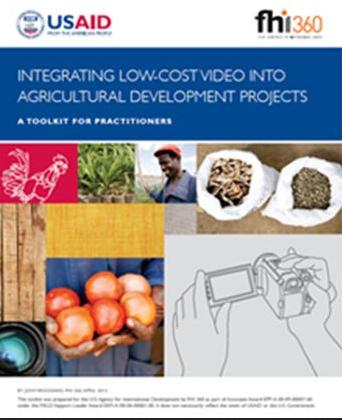
The toolkit, developed by FHI360 for USAID's Fostering Agriculture Competitiveness Employing Information Communication Technologies (FACET) project, is designed to be a starting place for practitioners who want to integrate videos into their work. It provides a framework on how to choose the right technology for the situation and how to plan and produce a video that reaches the intended audience with the right information. It explains how to effectively share videos and shows how to track whether videos are having an impact. FACET, which is funded by the United States Agency for International Development (USAID), provides technical assistance to strengthen competitiveness and trade in the agriculture sector across sub-Saharan Africa. The toolkit is divided into the following six components:
- Component 1: How is low-cost video currently being used in agricultural development? This component provides an overview of some of the ways that video is currently being used in agricultural development, particularly for extension services. It includes illustrative examples from organisations both in Africa and elsewhere, along with contact information, websites, and other resources to learn more about a given approach.
- Component 2: Is low-cost video an appropriate way to achieve our objectives? This component guides readers through a process of assessing the appropriateness of a variety of information and communication technology (ICT) and traditional solutions to determine if video is, indeed, a good fit based on individual organisational, technical, and financial capacity.
- Component 3: How can we create our own agricultural extension videos? This component will help you to identify who you will want to train and determine what capacity they will serve in the process. It includes suggested techniques for producing videos that meet a baseline quality standard - with a focus on drafting, recording, and editing videos. Finally, it includes suggested techniques for lowering barriers to entry so that your team is more likely to produce its own videos, including simple ways to provide incentives for video production.
- Component 4: What is the best way to disseminate videos? This component includes suggestions for different dissemination methods, including both technical and social considerations. It will help you assess which method(s) might be most appropriate for unique needs and shows how to use continuous feedback to improve dissemination approaches.
- Component 5: How can we track the impact that our videos are having on farmers? This component highlights various ways for tracking video usage and measuring impact. In addition, it includes suggestions for how to capture farmer feedback to better inform the creation of new content development.
- Component 6: What are the technical considerations we need to keep in mind? This component includes overviews of the different types of low-cost video recording devices, their strengths and weaknesses, and examples of situations for which they may be most appropriate. It also covers peripheral devices, editing software, and other important technical choices.
English
FHI360 website on October 23 2012; and email from Josh Woodard to The Communication Initiative on January 10 2013.
- Log in to post comments