










































Interactive Radio for Agricultural Development Projects: A Toolkit for Practitioners
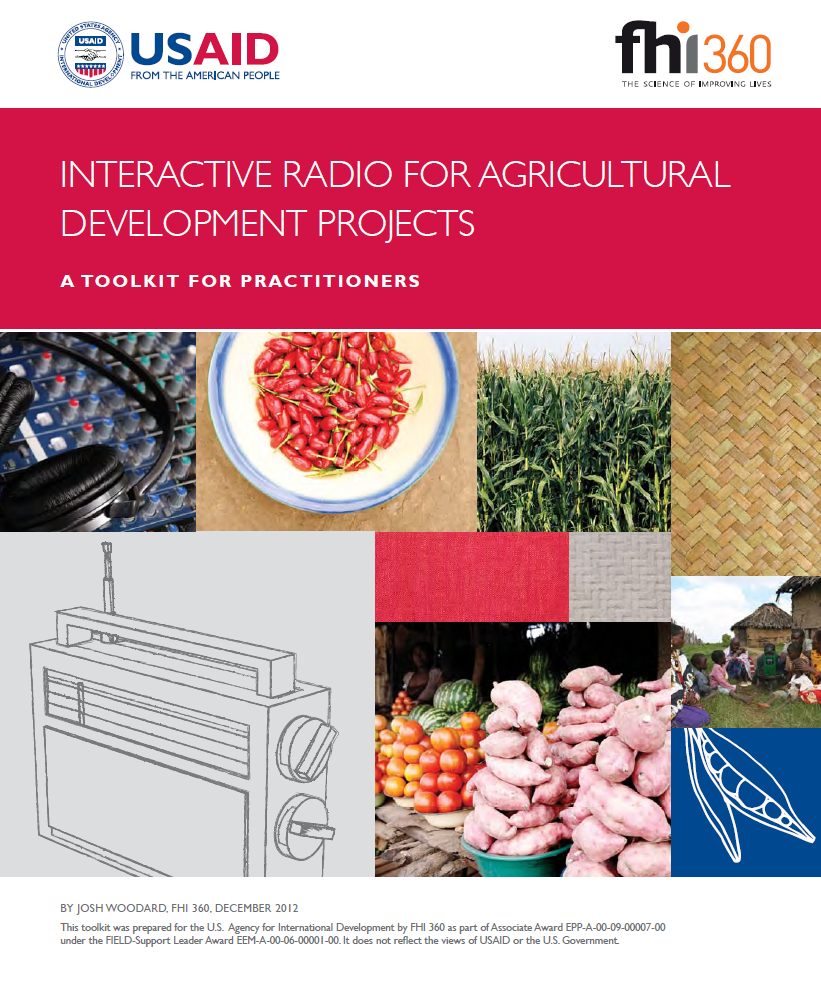
Developed by the Fostering Agriculture Competitiveness Employing Information Communication Technologies (FACET) project (a U.S. Agency for International Development's (USAID) project), the toolkit is designed to help USAID projects and other implementing organisations use interactive radio to augment the traditional agricultural extension services they are providing. It is designed to provide practitioners with a foundational understanding of what is needed to create compelling radio programming, as well as how to develop a more systematic approach to using interactive radio as one medium through which they share information with farmers.
The toolkit is divided into the following six components:
- Component 1: How is interactive radio currently being used for agricultural development? This component provides an overview of how interactive radio is currently being used for agricultural development. It includes illustrative examples from organisations both in Africa and elsewhere, along with contact information, websites, or other resources that can be used to follow up directly to learn more about a given approach.
- Component 2: Is interactive radio an appropriate way to achieve our objectives? This component will guide readers through a process of assessing the appropriateness of a variety of information and communication technology (ICT) and traditional solutions to determine if interactive radio is indeed a good fit based on organisational, technical, and financial capacity.
- Component 3: How can we create our own agricultural radio programming? This component will help to identify how to create agricultural radio programming. It aims to help create compelling scripts for original content and adapt other types of content for the radio that meet a baseline quality standard. In addition, it includes technical tips for effectively recording and editing radio segments. Finally, it includes suggested techniques for lowering barriers to entry so that teams are more likely to produce their own content for radio, including simple ways to provide incentives.
- Component 4: What are the different approaches that can be used to make our radio programming interactive? This component highlights the most promising approaches that are currently available, what is needed to integrate them into programming, and how to effectively implement them. In addition, it includes suggestions for other ways to disseminate radio programming without relying on radio airwaves.
- Component 5: How can we track the impact that our radio programming is having on farmers? This component highlights various ways that you can track listenership and measure impact. It also includes suggestions for how to capture farmer feedback to better inform the creation of new content.
- Component 6: What are the technical considerations we need to keep in mind? This component includes overviews of the different types of low-cost audio recording devices, their strengths and weaknesses, and examples of situations for which they may be most appropriate. It also covers devices that support interactivity, peripheral devices, audio editing software, and other important technical choices.
English
ICT for Agriculture website on November 27 2012; and emails from Josh Woodard to The Communication Initiative on January 9 2013 and January 14 2013.
- Log in to post comments