










































I Survived Ebola Multi-media Campaign
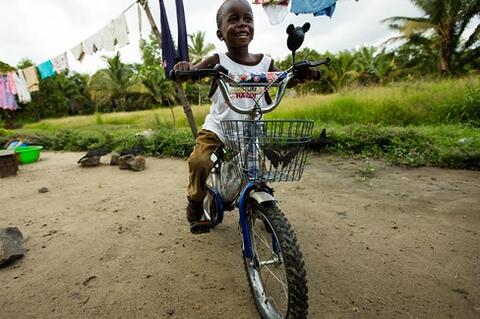
The I Survived Ebola campaign "leverages survivor stories from Liberia, Sierra Leone, and Guinea to deliver vital public health information about Ebola to affected populations, and to reduce the stigma faced by Ebola survivors." By documenting and sharing stories, the campaign is designed to facilitate communication in a way that ia entertaining and practical.
Survivors share their stories through short videos, images, and text messages. The stories are being collected and shared through the I Survived Ebola website, which houses campaign videos, images, and stories, as well as recordings of the radio dramas and call-in shows. They are also being shared through social media, and people wanting to support the campaign are invited to like and share updates via the #ISurvivedEbola Facebook page and follow #ISurvivedEbola on Twitter. The videos are also available through #I Survived Ebola on Vimeo.
Examples of stories include that of Decontee Davis, a 23-year-old Liberian who overcame Ebola but lost her fiancé to the virus. "Decontee now works in an Interim Care Center for children who have come in contact with Ebola patients and are under 21 days of observation. Many of these children have lost one or both parents to the disease." In Sierra Leone, Aminata Kargbo is a university student who, after surviving Ebola because of early treatment, "has arisen as a leader in efforts to educate her fellow countrymen and women on the benefits of early treatment."
A mobile phone app has been developed to help survivors tell their ongoing stories about recovering from and continuing to live in Ebola-affected areas. The #ISurvivedEbola mobile app is designed to enable Ebola survivors "to connect with each other, share public health advice, and update the world on their post-recovery lives." The campaign is providing survivors who are sharing their stories with a smartphone installed with the #ISurvivedEbola app. The smartphones and the app were provided and developed with support from the charity fundraising website GlobalGiving.
The 5-part "Ebola is Real" Radio Drama Series is being produced and aired in Liberia and is "designed to reinforce life-saving health information about Ebola through compelling story-telling and interactive discussion sessions with listeners." The series will air in simple Liberian English across Liberia, and will be translated into 4 local languages spoken in Ebola hot spots. The drama features "realistic fictional characters who embody the everyday life experiences of Liberians." Each episode is followed by a call-in session with listeners led by a trained host. Listeners can call in using basic, widely available mobile phone technology. The call-in segments also feature interviews with Ebola experts and key opinion leaders who share information and address misperceptions about Ebola and its survivors.
Ebola
The campaign is part of the broader Tackle Ebola initiative, which is working to raise awareness about Ebola and support efforts to stop the Ebola outbreak in West Africa.
PCI Media Impact, UNICEF, Vulcan Productions, Paul G. Allen Family Foundation.
#ISurvivedEbola website, NGO Pulse website, AllAfrica.com websiteand PCi Media Impact website on January 19 2015.
- Log in to post comments