










































Ebola and C4D
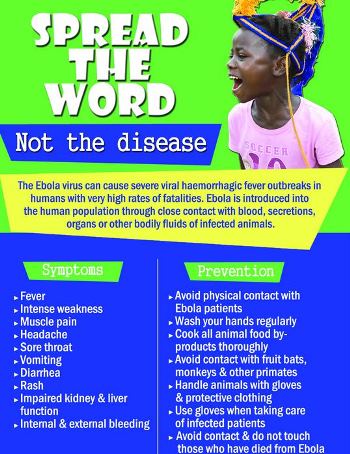
"Access to timely and accurate life-saving information is hence absolutely crucial. This is where UNICEF is focusing its efforts moving forward." - UNICEF Representative in Guinea, Dr. Mohamed Ag Ayoy.
The United Nations Children's Fund (UNICEF) Communication for Development (C4D) section is sharing information in an online collection of materials on how to prevent the spread of the Ebola virus, while also promoting care seeking behaviours for those already affected. Working closely with the World Health Organization (WHO), as well as the partners, communities, governments, and UN agencies it supports, UNICEF is assembling materials offered as collaboration to ensure a prompt response to this humanitarian crisis.
"The materials on this page are meant to assist countries dealing with an Ebola outbreak to respond with accurate information in a timely fashion. This page will continue to be updated as new materials are created. If you have documents to contribute to the collection, please send them to: c4dhq@unicef.org "
Materials include:
- Fact Sheets - For example, key messages, brochures with facts, and slide presentations.
- Social Mobilisation - For example,
- visual materials like a poster of signs and symptoms and a flip chart for health communicators.
- audio materials like songs and public service announcement (PSA) spots.
- training materials such as guidelines for community volunteers.
- Planning Documents - For example, a West and Central Africa (WCARO) strategy framework model.
- Other Tools - the Behaviour Change Communication In Emergencies: A Toolkit; Essentials for Excellence - Research, Monitoring and Evaluating Strategic Communication; and the UNICEF Cholera Toolkit.
English, French, Bantu, and Portuguese, among others
UNICEF Communication for Development (C4D) website, August 7 2014.
- Log in to post comments