










































Digital Stories in Rural Senegal

As part of this process, the student writes and records the script (narration) that ultimately determines the shape of the final story, which is built completely from footage that they shot. CyberSmart Africa explains that the process of digital storytelling requires creative thinking and collaboration, where students often work in teams. Problem solving, interpersonal skills, and self-direction are also key components to success. In addition to its benefits as a powerful learning tool, digital storytelling can also be effectively used to benefit entire communities, bringing people together through an open dialogue of ideas and feelings.
Specifically, the on-site component of the production process lasted 3 weeks. During the first week, organisers met with school stakeholders, including parents, village leaders, and teachers, to introduce the project and explain how it would benefit the school and community. The organisers visited the nearby villages, where many students lived, to introduce themselves. They also met with teachers to discuss the time frame and curriculum, as well as logistical issues.
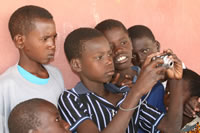
The teachers then selected 20 students aged 10-15 to participate. The organisers met with the selected students to explain the project, discuss the storytelling process, and familiarise the students with the equipment. The remainder of the week was spent instructing students on how to use the video cameras and set up shots. Students selected their topics and split into groups of two. Each group was given a camera to film their stories over the weekend. During the second week, groups finished filming, and organisers sorted through the footage to weed out unusable footage. During this week, each student wrote a rough draft of narration to accompany the footage. The organisers then used these drafts to make rough cuts of the students' stories. During the final week, the students recorded their voiceovers and combined the rough cuts with the narrations to create the final movies. On the final day of the project, the students held a viewing party.
According to CyberSmart Africa, an established time frame for production activities is what kept the project running smoothly. They made sure that the students had enough time to write and produce their stories without lingering too long on any particular step. Working in an area without electricity, it is not feasible to provide editing computers for the kids, teach them the programmes, and troubleshoot for days on end as they learn to edit. The goal is to get their stories made, not to train them as professional filmmakers.
Click here to view the stories on the CyberSmart Africa website.
In 2010, CyberSmart Africa joined to support a documentary effort funded by the Dartmouth College Dickey Center for International Understanding, Kodak, and the United States Embassy in Dakar to work with another group of students and teachers - this time broadening the scope of the films to allow students to share what organisers describe as "the touching and inspiring stories behind their pursuit of formal education." Click here to view the results.
Youth
According to CyberSmart Africa, extending traditional storytelling customs through the process of digital storytelling is a way of introducing 21st century learning to rural Africans. In addition, the use of cameras for storytelling allows each student to look at his or her life with a new, more objective eye, resulting in heightened pride in their identities, villages, and way of life.
CyberSmart, Ecole Sinthiou Mbadane 1, United States Agency for International Development (USAID)/Senegal, Pearson Foundation, and Senegal Ministry of Education.
CyberSmart Africa website on May 20 2010 and February 25 2011; and email from Mala Bawer to The Communication Initiative on September 30 2011.
- Log in to post comments