










































Bana Dukine: Using Technology to Teach Conflict Resolution Skills
Search for common Ground
This 24-page evaluation report shares findings of an assessment of Bana Dukine, a computer game designed to teach conflict resolution skills and create a space for Rwandan students to practice these skills. The game was designed through a partnership between Serious Games Interactive, Search for Common Ground (SFCG), and the Rwandan Ministry of Education – with the financial support of the United States Institute for Peace (USIP). The evaluation assessed three elements of the game, including the appropriateness of the game for the target group, level of increased knowledge about conflict resolution, and whether the game translated to the students' real life. The evaluation found that the game is appropriate based on students’ ability to understand it as well as their desire to play. It also found that computer games can be included as a complement to the on-going peace and conflict resolution education within primary schools.
According to the report, while conflict resolution and peace are taught in schools, conflicts and differences of opinion are rarely discussed on a personal level. The Ministry of Education introduced a new peace and conflict mediation syllabus within schools. Although the effort is positive, limited debates and open discussions hinder what the students can actually learn. Bana Dukine (Kids, let’s play!) is a computer game that enables students to learn and practice conflict resolution skills through playing the game. The game is designed for Rwandan children ages 9 to 11. Through the game, the students control the character "little lion," who is tasked with distributing water to the other animals around a water hole. When conflicts arise between the animals, it is the responsibility of little lion to resolve them. Thus, students choose the best response to a conflict through a series of conflict dialogues. To help measure the impact of the game after the pilot stage, SFCG conducted an evaluation of the project.
The evaluation produced the following findings:
Appropriateness of the Computer Game
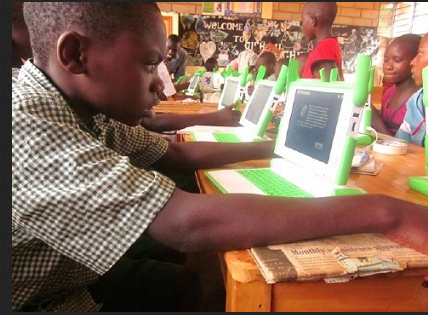
One of the major goals of the Bana Dukine project is for students to learn through playing the game. In only 1 out of 20 focus groups, two students say that they did not understand the game. Students were also asked to describe the game, and in each focus group, they described the little lion distributing water drops and trying to resolve conflicts. Based on researcher observation, the students quickly learned how to move the little lion, collect water drops, switch days, and click on the conflict dialogues. The game playing showed that students were focused on the ideas of sharing water and on helping the little lion to resolve the conflicts. Additionally, observations by teachers showed that students understood the game. This demonstrates that students understood the intended lessons of the game. Since the role of the little lion in solving conflicts is vital to the students’ understanding of the game, SFCG researchers looked specifically at how they understood his role. The majority of students saw the little lion’s role as distributing water and resolving conflicts. The category "enjoyment" was included in the assessment of appropriateness, because in order for the students to learn from the game they must play it – and they will play it more often if they enjoy it. In all of the focus groups, students responded that they liked the game. This data appears to confirm the previously mentioned research conducted by SFCG that Rwandan students are more conflict-adverse than other nationalities, making the intervention relevant.
Conflict Resolution Skills
Bana Dukine is designed to complement the existing knowledge of students in P4 and P5 conflict resolution education and to create a space for them to practice these skills. The evaluation assessed whether students identify the same types of conflicts in their lives before and after playing the game. It also assessed students’ identification of conflict resolution strategies pre and post-game play. Rwandan students in levels P4 and P5 understand conflicts as "disagreement, hatred, people disliking each other, misunderstandings, and the lack of peace or unity." These words form the context in which they recognise conflict and potentially begin to identify conflict resolution skills. Additional observations mention that students were open to talking about conflict and describing how they view it and see it in their lives. These parallels demonstrate the appropriateness of the game. The first piece of the definition of "conflict resolution skills" for the purpose of this evaluation is the ability to recognise conflict in one's life. Thus, the focus group discussions with students were designed to assess where they see conflict in their own life and if this changed as a result of playing the game. Students were able to identify a wide variety of conflicts, including, the actors in the conflicts and the potential reasons. The game may serves as a complement to their education and creates a safe environment for students to practice conflict resolution, especially among the more conflict adverse population. Students also identified a number of conflict resolution strategies within the computer game and after playing the computer game, students commented on strategies they will use to resolve conflicts in their lives.
The ability of children to relate to the game to their real lives
The game is designed to present conflict scenarios that students find in their everyday lives. The data demonstrated that students learned the intended lessons while playing the game. All of the teachers interviewed believed that the students would be able to relate the scenarios in the game to their real lives. Because the students had to choose the best response to the conflict scenarios, they processed actions that they themselves would take in their own lives. The majority of students believe that they make decisions about resolving conflicts in their life. All in all, students demonstrated a sense of agency in conflict resolution, yet the tendency to avoid conflicts is still present.
The report concludes that the data shows that the majority of students are able to understand how to play the game and the majority enjoyed it. Students felt as though they learned through playing the game and that they will now use more conflict resolution skills in their lives. Students reported that they learned about conflict resolution through the game, which is supported by the opinions of teachers. Additionally, both groups report that the skills learned in the game can be related to the student’s real life.
SFCG website on May 25 2013.