










































Approaches of the Leo Toto and APHIAplus Nuru Ya Bonde Programs in Kenya - Case Study on Improving HIV Testing and Services for Children Orphaned or Made Vulnerable by HIV (OVC)
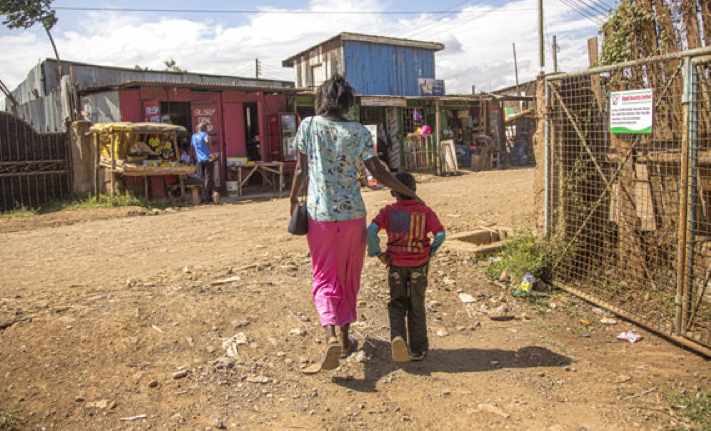
“In spite of the dramatic success of HIV treatment programs around the world, children remain under-tested, and are thus denied access to lifesaving treatment.”
This case study report offers insight into two programmes for children orphaned or made vulnerable by HIV (OVC) in Kenya that have successfully designed interventions and approaches to increase HIV testing and services (HTS) for children. The project review was conducted by Coordinating Comprehensive Care for Children, or 4Children, a 5-year United States Agency for International Development (USAID)-funded project designed to improve the health and well-being of vulnerable children affected by HIV and AIDS and other adversities. The report is based on case study interviews held in August 2016 with programme managers and staff, community workers, caregivers, youth and children, and facility-based workers engaged with two USAID-funded programmes in Kenya: Lea Toto in Nairobi implemented by Children of God Relief Institute (COGRI), and the FHI360-led APHIAplus in Nakuru County, a heavily populated agricultural area 90 kilometres northeast of Nairobi.
Following a description of the context - country background and information on Kenya’s HIV epidemic and response - the report looks at some of the barriers to HIV testing for children. For example, fear of discrimination is still a barrier to considering HIV testing for a child. ”Discomfort and cultural taboos associated with talking about sex (an unavoidable component of most HIV conversations) often result in delays and heightened awkwardness. Family and cultural norms, such as household power dynamics and gender-based violence, often deter female caregivers from acting on the child’s behalf. A child’s HIV-positive test result can be very risky for mothers, since it is assumed the virus was transmitted by the mother, who is thereafter considered to be immoral and often rejected by her husband”.
The report provides a general overview of each programme and its structures and processes, and then describes the approaches each programme uses to promote uptake of HTS and to secure linkage to treatment according to the following steps:
- Step One: Gaining entry and mobilising for HIV testing
- Step Two: The HIV testing process
- Step Three: Linkage to treatment
- Step Four: Follow up and ongoing support
- Step Five: Graduation
For example, in the Lea Toto (Swahili for “to raise the child”) programme, community health volunteers (CHVs) conduct weekly community mobilisation that consists of door-to-door visits to talk about HIV and Lea Toto’s services. Children who test seropositive are enrolled in treatment with the Lea Toto clinical programme, which includes meeting with a social worker, who describes the programme’s confidentiality and disclosure policies to the caregiver and child(ren). To ensure follow up and support, the Lea Toto programme provides specialised HIV care and treatment packages to adolescents grouped by age gradually evolving toward transition into adult care. These are:
- Explorers (10-13): young adolescents who have just learned their status “explore” their knowledge about HIV status, living with HIV, being young adolescents, etc.
- Sailors (14-16): through exploration, the adolescents have gained knowledge and can use it to “sail” on in their lives, and start addressing challenges comfortably.
- Achievers (17-19): having explored, acquired knowledge, and successfully sailed on in their lives, these adolescents have now “achieved” experience that they can build upon to start helping younger adolescents.
- Phoenix (over 19): finally, having gone through the stages of adolescence, these young adults help prepare younger adolescents for adult life. A “Phoenix” will transition from Lea Toto’s treatment programme to an adult care and treatment programme, but may still have ties to Lea Toto’s psychosocial support.
For the APHIAplus programme, the process for promoting uptake of HTS and securing linkage to treatment involves the engagement of CHVs to provide home visits and apply the programme’s tools for client assessment and monitoring. The programme also employs a data entry officer to record data into the OVC Longitudinal Monitoring Information System (OLMIS), which helps to track household vulnerability, monthly visits, and viral load and adherence. A key success of the project is the use of a link desk volunteer (usually a CHV living with HIV), whose role is specifically to support paediatric clients and their families to ensure that their linkage to treatment is smooth, and that, by removing community-level barriers to adherence, their retention in care is assured. Link desks, located in a comprehensive care clinic (CCC), coordinate case management, provide client tracking and defaulter tracing, and generally serve as a natural and effective bridge between community and facility.
Based on the case studies, the report highlights some promising practices. These include:
- Lea Toto and APHIAplus programme volunteers are trusted members of the HIV care and treatment team, allowing them to present a "one team” approach to client care. Mutual respect between programme volunteers and clinical health care workers allows them to assist and support clients while respecting confidentiality, which in turn wins the clients' trust.
- Programmes with built-in social work capacity add value by protecting health sector investments over the long term. Social workers, by virtue of their professional orientation, are sensitive to the critical nonclinical needs of children with HIV, and are able to anticipate the support they might require.
- The Lea Toto programme has developed a full array of adolescent activities specifically designed to empower children and youth with HIV to participate fully in their treatment plans, make life choices that support positive living and long-term health, and assume full and satisfying adult lives.
- The APHIAplus link desk volunteers are a unique and important adaptation of the "expert client" model, with a focus on children through a holistic care lens, ensuring that available community resources are fully utilised and serving as an effective community-facility bridge.
Finally, the report identifies a number of gaps and challenges, which include:
- Better data and stronger guidance are needed to understand the process and timing of disclosure to children.
- Evidence regarding the effectiveness of the various support group formats and methodologies for children and adolescents is needed to underpin clear guidance and a secure resource stream.
- Stigma is still a major barrier to the provision of HTS for children, in particular because children are often dependent on their mothers to initiate testing.
- Approaches to more rapid, systematic identification of children with horizontally acquired HIV (through, for example, early marriage or rape) are still lagging.
Catholic Relief Services website on October 12 2017.
Comments
HIV oral self testing
To reach most at risk populations, such as MSM, Commercial sex workers and the youth. Kenya is piloting self testing using bith oral and blood self test kits which will be available to the public through pharmacies. The oral self test is specific and sensitize and therefore provide very accurate results.
- Log in to post comments