










































Formative Research on Young Women’s Clubs - Report
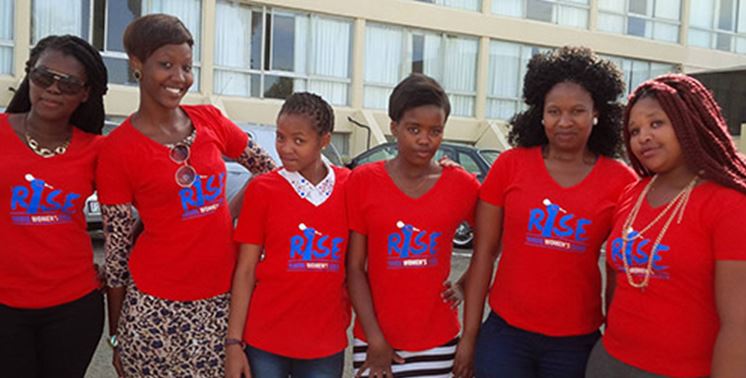
This 65-page report discusses the findings of formative research conducted to inform the creation of Rise Young Women’s Clubs (See Related Summary below), an initiative by The Soul City Institute for Health & Development Communication (SCI) to prevent HIV/AIDs by mobilising and empowering young women to "participate in taking responsible action to shape their lives and the communities they live in." The research found that while young women of different ages and in different locations face varied challenges, such clubs could help to provide young women with mutual support, be a venue for learning new skills and information, and provide positive peer interaction.
The Rise Young Women’s Clubs are being created as part of a larger SCI programme to respond to young women’s vulnerability to HIV/AIDs and other sexually transmitted infections (STIs), as well as improve reproductive health. Young women in their late teens and early 20’s are particularly vulnerable because of high unemployment rates and economic dependence on male partners, and are especially vulnerable in rural and peri-urban areas where they have little access to services and programmes. According to SCI, "Members will manage their own clubs with the back-up of skilled field support structures, magazines, television and social media. The programme will adopt a prevention approach that considers biomedical, behavioural and structural interventions."
To help guide the development of the clubs, eleven focus groups were held with young women aged 16 to 24 in rural and peri-urban locations in Tswhane and Katlehong in Gauteng province and Nkangala in Mpumalanga. The focus group discussions revealed that there are wide differences in terms of priorities, needs, challenges, and habits among locations and ages - even among the fairly narrow age grouping - 17 - 24 year-olds often differed significantly in their responses. This points to the need for each club to be tailored to their members own situations in order to ensure relevance. However, a number of key findings are intended to help guide the overall design of the club approach.
Social media
The research found that social media platforms were popular among young women, although this differed among age group and location. WhatsApp was preferred method of communication, as it is less costly, no login is required, and people can chat to people they already know. Facebook and Mixit were also used by a large number of young women, while Twitter was considered complicated and difficult to use. Younger women were aware of possible dangers of social media, and so in some cases avoided using them - i.e. being contacted by strange men or keeping them from their studies. Some participants had never heard of social media, some did not have a phone or electricity to keep a phone charged, and some young participants said they would like to use social media, but their parents will not allow them to have a phone.
Socialising
Most participants expressed that they enjoyed spending time with friends - gossiping and chatting, eating, visiting the mall, or going to movies. Many said they talked to their friends about their problems or about what is happening in their lives, particular about boyfriends. Young women across most focus groups indicated that they also enjoy going to the pubs or taverns to have fun. Many participants were mothers with one or two children whose lives revolved around looking after their house and children. In Katlehong, a focus group "expressed the need to establish "social clubs" in order for young women to have a conducive and healthy environment where they can express their problems, views and issues without being judged."
Challenges, health concerns, and factors that place young women at risk
Participants cited teenage pregnancy, crime, drugs, and violence against women, especially sexual violence, as key challenges in their community, caused by high unemployment and poverty. There were some differences amongst locations. For example, in Hammanskraal participants cited alcohol abuse as a major challenge, while in Nkangala older participants cited lack of resources, especially electricity and water as a major problem. Peer pressure was also cited as a problem, as both young men and young women face pressure to have sex. The participants were concerned about HIV in their communities, but generally expressed more worry about pregnancy and diseases such as cancer, than HIV. This is speculated to possibly result from the fact that condoms can prevent HIV, yet further discussions pointed out that condoms are not being used correctly and consistently.
Services and social structures available
Most participants expressed that there is little support or services available for young women in their communities. While many lived in areas relatively close to a clinic, most were not satisfied with the service and attitudes of the health care workers, saying they are "rude, judgemental and impatient." These clinics usually offer contraceptives, pap smears, antenatal care, and cared for those who are sick, but the majority of participants mentioned that they avoided going to the clinics because of poor treatment, and because they are made to feel bad for being sexually active. This seemed to be the opinion across all ages. In some communities there are a few support organisations, but these are rare and often target school-going girls. One person that people do not know about existing services. "When asked about the kind of support they would like to receive the participants have expressed that they need someone that they can trust with their issues. Someone who would be able to help them or refer them to the places where they can go for help."
Perceptions about reproductive health
Perceptions around reproductive health were mixed. On the one hand, "increased risk of not having children in the future was cited as the key main reason why they had negative perceptions about contraceptives." On the other hand, young women said that using contraceptives increases sexual pleasure as they do not use a condom when using other form of contraceptives. Most of the participants, except the groups from Nkangala, were not aware of the idea of dual protection (contraceptives and condom). Most participants were aware of prevention methods but sometimes did not use because of their partners refusal or in the case of condoms, the "heat of the moment." Most participants were able to name a number of different ways to prevent pregnancy, and were aware of various prevention methods.
Perceptions about Young Women's Clubs
When asked about the Young Women's Clubs, participants said this kind of forum "will keep them away from trouble" and "help them deal with issues by talking to someone within the club." Some participants believe that having a women's club in the area will help them with practical issues, such as child care, and enable them to become involved in different activities. They also saw the clubs as a place to be able to learn new things, share ideas, and help each other through similar situations. Overall, the Clubs were viewed as a space where they are free to talk about issues and receive some guidance from peers and possibly older adults. When asked about possible challenges arising, the participants noted lack of communication, motivation for prolonged membership, and personality clashed as possibly problems. They also mentioned breach of confidentiality, and expressed some concerns about sharing information that group members may then divulge outside of the group.
Soul City website on October 27 2014.
- Log in to post comments