










































Building Young Women’s Leadership in the Field of Sexual Reproductive Health and Rights (SRHR)
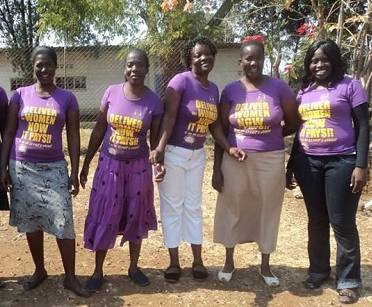
This 57-page report shares findings from a study by the Sexual Health and Rights Initiative about the development of women leaders and the role that they can play in Southern Africa in working for sexual and reproductive health and rights (SRHR). According to the report, while a number of organisations are focusing on supporting young women as emerging leaders, Southern Africa is failing to recognise and protect women’s sexual and reproductive health and rights. The report highlights what these young women feel has assisted them as they grow as leaders and the challenges that they face in the sector, and similarly, challenges faced by programmes that support their growth.
The research involved 21 in-depth interviews and desktop research from March to June 2012. Nine interviews were conducted with Ford Foundation partners in Southern Africa, five with ‘young, and/or emerging, women leaders' and seven additional people were interviewed who were involved either in leadership building initiatives or were leaders themselves in the field of SRHR. A desk top review of thirteen other organisations and courses was also undertaken. The findings from the report were taken to a workshop of key stakeholders in June were they were discussed and action steps developed.
Significant challenges mentioned included:
- My "culture" says I shouldn't: Nearly all participants mentioned the multiple socio-cultural barriers faced by young women aspiring to be strong leaders, and noted that this becomes even harder within a field as political and sensitive as SRHR. The very reality of being young creates obstacles in many communities with age automatically ascribing respect, authority and status for elders and the role of youth prescribing "subservience," a role of listener and learner, often leading to young people battling to hold positions of leadership within communities, organisations, and meetings. Young women reported that they had to walk a fine balancing act of gently challenging their elders without threatening them.
- We don't talk about sex, sexuality or our sexual rights: Talking about issues related to SRHR is taboo in many communities. Largely due to this taboo and secrecy, many young women themselves do not have much information about their own sexuality, and reproductive and sexual rights. One of the constant challenges is keeping the basic issues of reproductive rights on the table.
- I am HIV positive and I feel invisible as a sexual being and a leader: Many young women living with HIV report feeling invisible and being treated as asexual beings. Young women living with HIV have both general and particular needs around SRH services and polices; they need most of the usual services, but they also need additional information and services. There is a further need to particularly target interventions to support building young, HIV positive female leaders.
- We don’t have a hunger for reading, learning and seeking knowledge: A cross-section of respondents (youth and others) mentioned a dearth of reading, analysing, and little exposure to, or passion for knowledge among most youth. It was reported that most young leaders lack knowledge in theoretical understandings of either SRHR or leadership; the history of the SRHR struggle; key moments in SRHR policy developments etc., and further, that they lacked the skills to critically read and reflect even when exposed to information. This lack of knowledge, reading and analysing can create significant obstacles to building strong, informed leaders. Interestingly some organisations reported that when they created spaces for reading and reflecting, the youth responded positively and enjoyed the opportunities.
- Inter-generational transfer of leadership and knowledge: Respondents raised issues around how to ensure effective transfer of knowledge from the older generation leaders to younger and emerging leaders; and how to ensure that all leaders work well together. For the majority of respondents this was about finding effective mechanisms to create spaces for knowledge and skills transfer, mentoring, and shadowing, and building bridges for joint work. It was stressed that focusing on nurturing mutual respect, in other words not lecturing younger leaders nor dismissing older leaders, should be emphasised. Young and older leaders should come together and have these conversations more organically without forcing the issue. Others mentioned that mentoring is an excellent opportunity for such transfers.
- How can I be heard at key meetings, conferences and opportunities?: In order to be heard and make an impact, young women need firstly to be at key fora and secondly they need to have the skills and support to make strategic and effective inputs. The first obstacle around getting to the meetings is ensuring that young emerging women leaders are invited to represent their organisations at key meetings, and secondly that they have the funds to get to these meetings. An additional challenge is ensuring young leaders make an impact at these key meetings. Having 'got a seat at the table', young leaders need to also have the skills to know when and how to make inputs in the most strategic way.
- What about boys and men?: Some youth argue that "the boys and men are a part of the problem" and must be "a part of the solution" and "not stigmatised." While others argue that "we must organise separately as women in order to be able to develop our own consciousness and strength." These are not necessarily mutually exclusive, since an overarching initiative to build young people's SRHR leadership could include creating spaces for diverse genders to explore their specific issues and build confidence even while supporting leadership development across genders. Interviews revealed very little analysis from most partners about why and when one might work separately as women or involve men.
- The "young women" tag – a help or hindrance?: One participant queried the usefulness of this tag. Does it make it too easy for young women who are then provided with special opportunities? Is it patronising to the very women it's intended to support? Or is it a necessary tactic in order to enable young women to take critical spaces within the SRHR programme and policy arenas more broadly?
The report identifies the following as what works:
- The importance of going beyond training courses: The research highlighted very clearly that supporting emerging young women leaders in the SRHR sector has to be tackled through a number of ways, and while formal training and mentoring can offer a lot, it is certainly not enough on its own. Indeed, this research went further to question the effectiveness of stand alone, one-off training. However, supporting young women leaders can, and should, be done through many different approaches, and indeed offering young women multiple and complimentary forms of support is likely to increase effectiveness.
- Recruitment: This is the stage at which the individual and the group dynamic should be carefully considered and careful thought should be given to ensuring that the training matches the applicant’s needs, expectations and experience. However, the research showed that in many cases recruitment is rushed, undertaken at the last minute, without interviews and with very few resources.
- Training: The research highlighted that supporting young women leaders should be done through many different approaches, and indeed offering young women multiple and complimentary forms of support is likely to increase effectiveness. While formal training and mentoring can be effective, it is not enough on its own. The research did not review detailed content of any of the training courses, and as such no comment can be made about the quality or probable impact of the courses. However, having said that, all the training initiatives listed in this report were recommended by key respondents and as such one can assume a certain level of quality.
- Mentoring - a Luxury or a Necessity?: Despite these powerful observations supporting the view that mentoring is a critical ingredient when building and supporting young women leaders, mentoring was the least developed and funded aspect of nearly all the Ford partner initiatives.
- What is the role of social media?: In speaking with the young women leaders a number noted that they do not use social media as effectively as they could, and very seldom for the purposes of supporting themselves as emerging leaders. Many only use mediums such as Face book and WhatsApp to keep in touch with friends and occasionally to receive information around topics on SRHR. However, none of them reported that they use these as critical tool. On the other hand, SAfAIDS reported that they are using social media increasingly in their work and believe it is a critical tool for enabling young women leaders. They have found that this medium seems to provide a 'safe and anonymous' space for young women to engage in conversations around issues related to SRHR, especially issues around their own sexuality – they believe that it assists in building their confidence to speak out on sensitive issues.
The report makes the following programmatic recommendations for supporting young women leaders:
- Training processes must include sustained mentoring and an ‘organisational culture’ of support for learning and growing. Stand alone training is not enough.
- Training courses should be structured as a series of courses over a year or so.
- Discussion groups’ for emerging and current leaders should be encouraged as they are powerful spaces for reflection, learning, personal growth and networking.
- Leadership building initiatives must include young women most affected by the crisis.
Sharisa Website on June 15 2013.