










































Wize Up Radio Programme in Lesotho
Along with presenters and guests, each Wize Up episode allocated a few minutes to accommodate telephone calls from listeners who either had questions or comments. Young callers made contributions to the topic of the day by sharing their experiences or giving their views. Some asked questions for more clarity. The show had a weekly competition where a question based on the week’s programming would be asked and responses would be sent by either SMS or posted onto facebook. This was intended to give Phela an idea of the numbers of people who were listening and an indication of whether the messages were being well received and understood.
In order to maximise listenership of the Wize Up radio talk show, an intense marketing strategy was embarked upon. Prior to the show, radio public service announcements (PSAs) were produced and broadcast to create awareness and hype around the show. 150,000 pamphlets were also produced to further create awareness. These were distributed in all the ten districts of Lesotho in the schools where Phela has established Phela Friends Clubs and in communities around these schools. Phela Friends clubs are found in primary and secondary schools around Lesotho and club leaders are trained in life skills in order to be peer educators. Club members and leaders are involved in various activities such as drama, debates, competitions, games, and income generating activities.
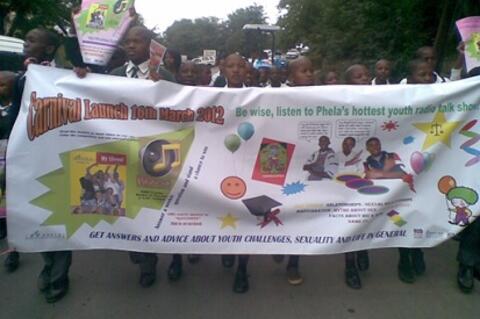
In Maseru, a carnival event was carried out where a group of people consisting of Phela staff, sister organisations, and students from nearby schools walked across the city dressed in colourful clown's attire accompanied by a brass band, causing commotion in the city. This was a way to attract people’s attention to the message about the radio talk show. At the final destination, which was around a main bus stop, speeches were delivered and a DJ played loud music which drew attention. Leaflets and posters were distributed at this event.
The programmes were recorded and are available for reference. They will be used to inform the development of a forthcoming booklet and possible TV talk show, as well as any other SRHR programming to be undertaken by Phela.
Youth, Sexual and Reproductive Health Rights
A research study (see below under Related Summaries) was carried out to inform the knowledge levels and gaps around SRHR in Lesotho. The study showed that there was need for information to raise awareness on the topic. The regional research findings were also used to inform the implementation of the project. The age group was also determined by a formative research that was carried out at the beginning of the process.
Phela Health and Development Communications, Soul City Institute for Health and Development Communication, and funded by Sweden and Norwegian Agency for Development Cooperation (Norad) and United Nations Population Fund (UNFPA).
Email from Hope Serobanyane from Phela on November 14 2013.
- Log in to post comments