










































Most-at-risk Populations: Unveiling New Evidence for Accelerating Programming
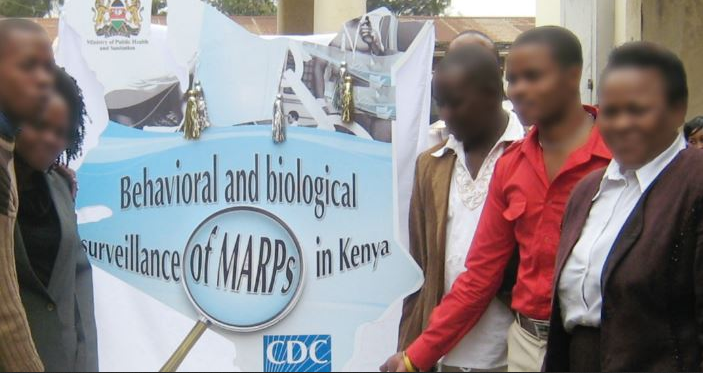
This 30-page publication shares reports from a series of studies undertaken among most-at-risk populations (MARPs) in Kenya between 2009 and 2011. According to the publication, the need for effective interventions among MARPs is increasingly recognised in Kenya’s national HIV response. Even though Kenya's HIV prevalence in the general population has declined in the recent years, MARPs contribute significantly to new infections in the country. However, there is paucity of data on the characteristics, sexual behaviour, other risk factors and estimates of population sizes of MARPs to guide the development and implementation of effective interventions among these populations at all levels.
To address the critical information gap, the National sexually transmitted infections (STIs)/AIDS Control Program (NASCOP) of the Ministries of Health together with the National AIDS Control Council (NACC), the Kenya Prisons Service and various bilateral agencies and implementing partners worked together to undertake a series of studies among MARPs around the country between 2009 and 2011. They also provided leadership in the study design, report writing and validation for the studies through the MARPs Technical Working Group (TWG).
The report contains the following studies (each undertaken by a different partner) outlining key findings, gaps, and recommendations (a selection of some of the findings and recommendations are given here):
Biological and Behavioural Surveillance for Most at-Risk Populations in Kenya
The study took place with men who have sex with men (MSM), female sex workers (FSWs), and injection drug users (IDUs). The key findings of this report are as follows:
- Men who have sex with men: Nearly 40% of all MSM have ever been married to women and 13% of all MSM are still currently married to a woman. Many MSM in both Nairobi (62%) and Kisumu (52%) identify their sexual identity as gay. Among those who had anal sex with a regular male partner in the past 30 days, about three-quarters were inconsistent condom users during anal sex over the past 30 days in Nairobi. MSM reported also having regular female sex partners. Among those who had anal sex with non-regular male partners, 70% reported inconsistent condom use with non-regular male partners in the past 30 days (Nairobi). In Nairobi, over one-third (37%) of MSM were verbally assaulted while 7% were physically assaulted and 6% were sexually assaulted in the past 12 months.
- Female sex workers: The median age at first transactional sex was similar to the median age of sexual début at 16 years. A moderate proportion (17%) of first sexual acts were coerced or forced. The majority of FSWs reported practising sex work for 10 years or greater (61%). Condom use among FSWs differed between paying clients and non-paying partners. In the past 30 days, more FSWs reported using condoms consistently with paying clients compared to non-paying partners (62% versus 37%). The most commonly reported barrier to using condoms with both paying and non-paying partners was trust and familiarity with partners. Drug use was common among FSWs. Only 37% reported not using drugs in the past 12 months. The most commonly used drug was mirraa/khat and marijuana.
- Injection drug users: A total of 263 IDUs were recruited in a three-month period for this study. Participants reported that initiation of either injecting or non-injecting drug use occurred at an early age (median age 11 years). Only four out of ten IDUs reported being sexually active in the past one month. Additionally, casual and commercial type of partnerships were reported by only 5% and 6% respectively. Condom use with the last sexual partner in the past month was reported by over two-thirds of IDUs. HIV prevalence for IDUs that had ever shared needles and syringes was six times higher than for those that never shared (30% vs. 5%). Risky injections practices were prevalent among the study population. Over two-thirds reported some form of risky injection practice in the previous one month.
In summary, HIV prevalence among Nairobi MSM, FSWs, and IDUs was higher than among Nairobi’s general population. The recommendations are:
- Health programmes need to prioritise these MARPs and their sexual partners for HIV and STI prevention and care. MSM in both Nairobi and Kisumu particularly need to be addressed with non-stigmatising and sensitive services.
- IDUs who used shared needles were especially vulnerable to HIV infection. This suggests that lack of access to clean needles and syringes among this population is a major contributor to unsafe injection practices and sterile needles and syringes should be made available through needle and syringe exchange programme.
- Continued, periodic surveillance to monitor HIV and STI prevalence and behavioural risks among MARPs in Nairobi, and expansion to other areas in Kenya is recommended.
Rapid Situational Analysis of HIV and Related Risky Behaviours among Injecting Drug Users in Kenya
The objectives of the study on IDUs were to update information on HIV prevalence and risk behaviours among IDUs in the general population to establish geographical distribution and size estimates for IDUs, as well as to determine available services for HIV and AIDS prevention, care and treatment among IDUs in the general population. The findings for this study were as follows:
- Socio-Demographic Characteristics: Over 90% of IDUs in Nairobi and Mombasa are males, median age 33 (15-34 years), are single/separated or divorced and reside with relatives. Since majority of IDUs only attained primary school education, they rely on casual labour or criminality for their livelihood, earning between Ksh 100 to 40,000 per month.
- Access to Outreach and Drug Treatment: Less than 15% of respondents have been reached with available outreach services targeting people who use drugs. There is a high risk of drug overdose among IDUs in Kenya, and the primary responders for most drug overdose victims are drug using friends, sexual partners and relatives rather than health workers and law enforcement personnel.
- HIV Awareness and History of HIV Testing: Although IDUs demonstrated high levels of awareness of HIV, many admitted engaging in high risk behaviours, such as having multiple sex partners and unprotected sex including with partners known to have an HIV infection or engaging in multiple male-to-male sexual relationships.
- Prior HIV Testing and SeroSurvey Results: Despite limited access to health and HIV services, the majority of IDUs have tested for HIV prior to the study. The serosurvey confirmed an overall HIV prevalence of 18.3% among IDUs in Nairobi and Mombasa, which is significantly higher compared to 6.3% for the general population (KDHS 2008/09). IDUs from the western areas of Nairobi are at particularly increased risk. Although female IDUs were few, their prevalence was almost thrice (44.5%) compared to 16.0% for male IDUs. The majority (81%) of all IDUs had ever been incarcerated. About 7% had ever injected drugs in jail and of these, 61% shared needles or syringes while in prison.
The following recommendations are made:
- Review HIV/IDU policy and legislation for a more enabling environment to support evidence-informed interventions based on new constitution plus study and develop national guidelines for a comprehensive package of evidence-based prevention, treatment, care and support interventions, with a special module on female drug users.
- Develop road map or joint plan of action for roll-out of harm reduction interventions through IDU-friendly and affordable rehabilitation facilities plus focused HIV outreach and BCC for IDUs in Nairobi and Coastal Counties as well as scale up affordable and user friendly rehabilitation facilities in Nairobi and Coast Provinces.
- Intensify HIV outreach and BCC on more effective harm reduction measures and address the problem of drug use in prisons via the new Kenya Prisons Health Strategy.
- Develop capacity of health workers, law enforcement personnel and community in drug overdose management and also set up a national integrated surveillance for MARPs and operations research for new interventions to document best practices.
Integrated Biological and Behavioural Surveillance Survey among Migrant Female Sex Workers in Nairobi
This study was intended to: establish HIV and STI prevalence among migrant FSWs in Nairobi, Kenya; determine HIV and STI knowledge, attitudes, risk behaviour, treatment-seeking behaviour, and preferred sources of HIV/STI information; and provide baseline HIV and STI behavioural and biological prevalence estimates to measure trends over time. The following observations are made:
- Prevalence was found to be similar to other FSW research in Kenya and over three times the national prevalence for general population. This indicates a need for intensifying prevention programmes among this vulnerable urban migrant population.
- With more than three-quarters of respondents indicating the reason they did not use a condom during their last sexual encounter was because the client objected, there is a need to include men in condom programming, including awareness raising, distribution, and demonstrations.
- Services for this population could be integrated into national FSW programmes; however, special care must be given to language and cultural needs of migrants.
HIV Prevalence and Related Risk Behaviour in Prison Settings in Kenya recommendations
The general objective of the assessment was to determine prevalence of HIV and risk behaviour in prison settings. From the baseline assessment findings the following general recommendations were made:
- Education emphasis should be applied to risk behaviours in and out of prison. There is need for education on all modes of HIV, tuberculosis and hepatitis transmission, as well as a need to undertake periodic voluntary HIV counselling and testing of inmates, staff and their families.
- The health care systems should be strengthened by ensuring that all prison institutions have a health care provider and a room/structure designated for provision of health care services, and drug abuse by inmates needs to be addressed including undertaking measures to reduce drug trafficking and to educate on effects of drug abuse.
HIV Sero-Prevalence and Risk Factors among Fishing Communities in the Lake Victoria Basin, Kenya
According to this study report, fishing communities are among specific population segments that have reported higher vulnerabilities than the average population. The recommendations made for fishing communities are as follows:
- Focus on and address the specific risks and vulnerabilities of the fishing population in order to reduce transmission of HIV, improve quality and responsiveness of services that are accessible, and address the legitimate needs of these special groups.
- Intensify and sustain tailored and focused HIV awareness and sensitisation on campaigns and develop and roll out specific programmes and policies with tailored interventions for the fishing community.
HIV and AIDS Situational Analysis on Sex Workers
The general objective of this study was to conduct a situational analysis on the status of sex workers regarding HIV and AIDS with a view of developing a comprehensive action plan focusing on and meaningfully engaging the sex workers in the national response to HIV and AIDS.
Findings showed that condoms were regarded as the most effective protection. However, most sex workers find it difficult to negotiate for safe sex. The study also showed that most sex workers were above the age of 25, less educated than their clients, and based in urban areas. The level of stigma among male sex workers and MSM is still high due to the fact that most interventions are designed to reach FSWs. The study recommended that interventions should: focus on youth who are engaged in sex work with youth empowerment programmes (YEF), and introduce stigma reduction strategies to effectively deliver services to SWs and clients. In addition, access to HIV and AIDS and sexual and reproductive health (SRH) information and services for sex workers should address both younger and older sex workers.
National Geographic Mapping of Populations Most-at-Risk of HIV (MARPs) in Kenya
The aim of this mapping study is to provide information on the size, locations, and operational typologies of MARPs in Kenya. According to the study, the mapping data may be used for: the enumeration or registration of MARPs; the identification and allocation of peer educators in programme sites; project implementation planning; and setting up an individualised tracking system for MARPs.
- Log in to post comments