











































Outreach to Most-at-Risk Populations Through SIDC in Lebanon
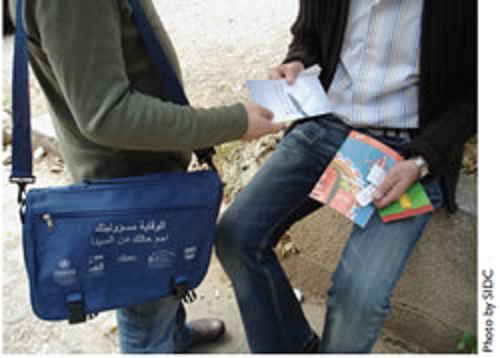
"Successful outreach to most-at-risk populations (MARPs) recognizes the sociocultural context and particularly the gendered norms in which MARPs live."
From the United States Agency for International Development (USAID)'s AIDSTAR-One (AIDS Support and Technical Assistance Resources, Sector 1, Task Order 1), this case study (one of nine in a series) documents the strategies that have been developed by the non-governmental organisation (NGO) Soins Infirmiers et Développement Communautaire (SIDC) to reach 3 stigmatised and hidden populations - people who inject drugs (PWID), sex workers, and men who have sex with men (MSM) - in Lebanon. "Global guidance stresses the importance of tailoring gender-sensitive prevention, treatment, and care to these populations." SIDC's aim is to strengthen access to basic services through a human rights-based approach, empower clients to improve their socio-economic status, reduce violence, and educate service providers on intersections of gender and HIV risk as well as strategies to reduce stigma and discrimination.
As detailed in the case study:
Core activities carried out by outreach workers include: raising awareness about how gender norms can increase HIV risk; delivering basic information on HIV, hepatitis, and other sexually transmitted infections (STIs); offering counselling to support positive behaviour change; distributing free condoms, syringes, and lubricants; supporting clients' efforts to take charge of their lives by improving their condom negotiation skills, referring them to services such as HIV testing or treatment and vocational training as appropriate, and discussing actions to take in cases of violence.
Complementary activities conducted as part of the outreach programme in an effort to change, in the longer term, the environment that contributes to making MARPs vulnerable include: a legal review of the laws governing such risk behaviours as sex work and homosexuality; advocacy with officials, the media, and the public on these issues to challenge gender norms; and documenting and researching stigma associated with gender norms.
SIDC's central gender strategies include: increasing gender equity in HIV programmes and services; addressing harmful gender norms and behaviours; increasing legal protection; and increasing access to income and productive resources.
The key principles that govern SIDC programme implementation include: inclusiveness and partnership with the intended population, peer education, harm reduction, flexibility and continuity of activities, capacity building, experience sharing, partnership development, and confidentiality.
Selected programme data include: From 2003 to the end of 2009, SIDC and its partners trained a total of 80 peer outreach workers and 70 social and health care workers and reached a total of 8,946 individuals within MARP groups. This includes 2,509 MSM (including male sex workers), 3,550 female sex workers, and 2,854 PWID.
Selected communication-related recommendations from SIDC's experience include:
- "Outreach is most successful when conducted by peers or individuals who have access to and are trusted by the MARP communities. International experience shows that programs must also address structural issues that reinforce practices that directly or indirectly promote stigma, discrimination, and violence towards MARPs. Longer term programming aimed at addressing these legal and social constraints related to social and gender norms should complement outreach to MARPs."
- A strong NGO partnership helps address gender-based violence - "SIDC successfully brought together five NGOs to implement one common program in a strong partnership that supports the capacity of all involved. It created a second level of partnership among a wider group of 52 NGOs serving as referral centers to the target population for a wide range of services. This strong partnership reduces redundancies and promotes horizontal learning between the NGOs."
- One of the key elements of this program is that it maintains a strong link with its target population, continually updating its services based on needs. One way to do that is to ensure constant collection of data. The outreach program established a basic but comprehensive monitoring system where all collected data are disaggregated by gender and sex."
- Deliver tangible, gender-sensitive services - "Information is vital but not sufficient to guarantee behavior change. This program goes beyond sharing information to offer counseling and tangible services....It is important, however, to ensure that these services are gender-sensitive. For example, only the male condom is currently distributed. Outreach workers have little information about the female condom, and it is not advocated for in the general national context."
Email from Anna Lisi to The Communication Initaitive on September 14 2011.
- Log in to post comments