










































Strengthening Rural Youth Employment Opportunities in ICTs and Agriculture in Southern Africa (SOFIA) Project
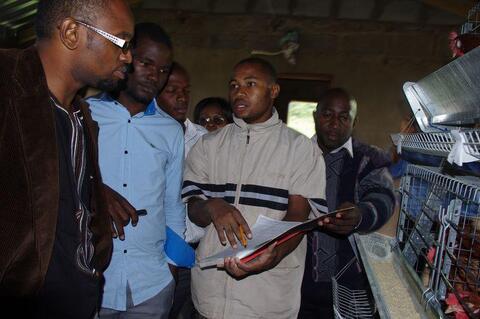
Launched in April 2013, the Strengthening Rural Youth Employment Opportunities in ICTs and Agriculture in Southern Africa (SOFIA) Project is working to strengthen rural youth employment opportunities in agriculture and information and communication technologies (ICTS). SOFIA is supporting youth training centres and young farmer groups to make more effective the use of ICTs to enhance employment and business opportunities. The project is led by the Technical Centre for Agricultural and Rural Cooperation (CTA), through its ARDYIS project, in collaboration with the Ndola Youth Resource Centre, Lulote Business Management Extension Programme, and Farmers Forum for Trade and Social Justice.
According to the SOFIA, ICTs have proved to be effective tools in stimulating young people's interest in agriculture. The added value of these technologies for youth in agriculture lies at mainly three levels: ICTs offer new marketing tools to enhance (youth-led) agricultural businesses; ICTs help promote agricultural interest and opportunities for youth; and, finally, they bring about new jobs linked to agricultural software and ICT-based agribusinesses (mobile applications (mAgri), market information systems, etc).
Despite these opportunities, there are several challenges being faced by youth in Southern Africa, who are engaged in agriculture and ICTs: lack of capacity and policy support that would enable them to take advantage of the opportunities that ICTs offer, lack of documentation and promotion of youth innovations and best practices, and lack of policy provisions related to youths' involvement in agriculture as well as youth in ICT which would aim to improve their livelihoods in urban and rural areas. The project is therefore adopting an integrated approach that addresses both policy issues and capacity-building activities. The expected outcomes of the project are:
- young farmer groups using innovative ICT tools for to enhance their business;
- Southern African policy makers (especially in focus countries) committing to take into consideration the project's conclusions to adopt and implement improved youth policies related to improving youth opportunities;
- youth training centres using innovative ICT tools to empower other youths in their search for improved livelihoods opportunities; and
- Southern African youth innovations and best experiences in relation to ICT use in agricultural businesses being better known, promoted, and supported.
Organisers expect the following results:
- the capacity of 9 youth training centres and 9 young farmer groups are strengthened in ICT;
- youth-led ICT for agricultural development initiatives are identified and documented and innovative uses and lessons learned are shared;
- awareness of at least 300 Southern African youth on agriculture issues and ICT use is strengthened and opportunities in agriculture promoted; and
- favourable policy elements for using ICT to improve youth employment are identified and promoted.
In April 2013, the SOFIA Regional Stakeholders and Launch Workshop took place in Swaziland, with 30 participants from Malawi, Swaziland, and Zambia.
Agriculture, Economic Development, Youth
The purpose of CTA's Agricultural Rural Development and Youth in the Information Society (ARDYIS) project is to raise youth awareness and capacity on agricultural and rural development issues in ACP countries through ICTs. More specifically, it seeks to strengthen the capacities of the youth on ICTs for development issues, particularly in the agricultural and rural sector, and to contribute to sensitising youth on the questions related to agriculture and rural development in ACP countries. It is a framework for actions that seek to contribute to the promotion of opportunities for youth in ACP countries in the sectors of agriculture, rural development, and ICT.
Technical Centre for Agricultural and Rural Cooperation (CTA), Ndola Youth Resource Centre, Lulote Business Management Extension Programme, and Farmers Forum for Trade and Social Justice.
Technical Centre for Agricultural and Rural Cooperation (CTA), ARDYIS project website on April 28 2013; and SOFIA Project Facebook page, October 1 2013.
- Log in to post comments