










































ARDYIS (Agriculture Rural Development and Youth in the Information Society)
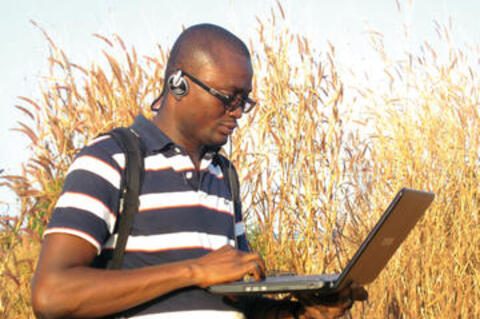
"Through the creative use of new technologies in agriculture, youth are reaping the rewards for their farms, their businesses and their communities."
The purpose of ARDYIS is to raise youth awareness and capacity on agricultural and rural development issues in African, Caribbean, and Pacific (ACP) countries through information and communication technologies (ICTs). More specifically, it works to strengthen the capacities of youth on ICTs for development issues, particularly in the agricultural and rural sector, as well as to contribute to sensitising youth on questions related to agriculture and rural development in ACP countries. The goal is to contribute to the promotion of opportunities for youth in ACP countries in the sectors of agriculture, rural development, and ICT. Launched in May 2010, ARDYIS is a project of the Technical Centre for Agricultural and Rural Cooperation (CTA).
ARYDIS' central approaches involve the presentation of awards to encourage and recognise youth, in concert with training activities to build capacity. For example, ARDYIS's Youth in Agriculture Blog Competition (YoBloCo Awards) recognises three young bloggers and three organisations that write about agriculture, rural development, and youth. The winners stood out from a selection of more than 90 blogs, which first underwent a public evaluation process, in which they were voted and commented on through the internet by about 3,000 people, and then a final evaluation performed by a jury composed of experts in ICT, agriculture, and rural development. Then, on the occasion of the 2012 Conference of the African Chapter of the International Association of Agricultural Information Specialists (IAALD), the ARDYIS project organised a series of activities in Johannesburg, South Africa, May 2012, including the prize giving ceremony of the YoBloCo Awards and a workshop. About 30 participants took part in ARDYIS-specific activities. These included young bloggers from ACP countries (winners and runners-up of YoBloCo), ARDYIS Project's Advisory Committee members, and representatives of CTA and of other organisations interested in youth, ICT, and agriculture.
To cite another example, in 2010, ARYDIS held a competition inviting ACP youth to share their ideas and experiences on the use of ICTs in the field. The stories of the winners, published in Baobab magazine (Issue 61, March 2011) "demonstrate the substantial entrepreneurial and innovative activities taking place in rural areas. Through the creative use of new technologies in agriculture, youth are reaping the rewards for their farms, their businesses and their communities."
The ARDYIS website provides more details on these and other activities, as well as news and updates on other youth, agriculture, and ICT developments and opportunities.
Agriculture, Youth, Technology.
"The feeble involvement of youth in the key agriculture sector, on the one hand, and the existence [of] new opportunities offered by ICTs to promote agriculture, rural development and improve livelihoods for youth, on the second hand, are the key elements at the basis of the launch of this initiative." ARYDIS explains that:
- The economies of ACP countries are largely reliant on the development of their agricultural and rural sectors. However, the majority of farmers today are older. Studies by the Caribbean Farmers' Network (CaFAN) found that the average age of farmers in the Caribbean is 45 years, with the majority being over 60 years of age. ACP countries are also experiencing high unemployment, which is particularly prevalent among young people. Thus, a renewed interest in the agricultural sector among the young and other actors, combined with increased investment, will, according to ARDYIS, contribute significantly to socio-economic development and reduce unemployment in these countries.
- ICTs are filtering through into every socio-professional segment of ACP countries - even in rural areas. ARDYIS cites these figures: internet connections increased by 1392% in African countries, 890% in Latin American and Caribbean countries, and around 300% in the rest of the world between 2000 and 2009, and over half the population in Africa now have access to a mobile phone. "The young are generally best at assimilating new technologies, and can therefore use them to make the most of a whole range of crosscutting opportunities."
CTA international nonprofit organisation established under a joint agreement between the ACP group of countries and the European Union. CTA's mission is to advance food security, increase prosperity and encourage sound natural resource management by facilitating access to information and knowledge, policy dialogue, and capacity strengthening of agricultural and rural institutions and communities in ACP countries.
ARDYIS website, July 17 2012.
- Log in to post comments