










































Mwananchi Programme
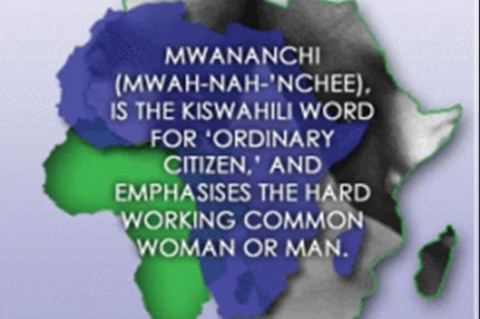
Launched by the Overseas Development Institute in 2008, the Mwananchi (citizen) Programme works to strengthen ordinary citizens voices, and improve state accountability and responsiveness to citizens' interests in Ethiopia, Ghana, Malawi, Sierra Leone, Uganda, and Zambia. The project learns about how civil society, media, elected representatives, and traditional leaders can enhance ordinary citizens’ ability to hold their governments to account, and improve delivery of essential public services. The programme operates primarily through the provision of small grants and capacity development to over 50 civil society and media organisations across the six countries. The five-year project is funded by United Kingdom Department for International Development.
Mwananchi's theory of change centres on citizens effectively expressing their views and interests and holding governments accountable for their actions at different levels in the governmental system. This includes three key participants. The first are the citizens (the "wananchi") or ordinary people. The second are the interlocutors, such as journalists, civil society organisations, and elected representatives, who are able to "broker" citizens’ views and wishes in the policy process and form links between governments and Wananchi. The third is the state. To increase the ability ofcitizens to effectively express their views and hold governments accountable, the programme seeks to sharpen the roles of civil society, media, elected representatives (members of parliament and councilors), and traditional leaders; strengthen partnerships between interlocutors for comparative advantage synergies; and increase the use of research-based evidence to influence government policies and engage citizens.
The programme operates primarily through the provision of small grants and capacity development to over 50 organisations across the six countries. The grant recipients are often civil society and media organisations working at the grassroots and sub-national levels, with links to the national level through partner organisations. They use the grants to facilitate issue-based, change-focused relationships with state actors, the private sector, traditional leaders, social movements, and other civil society and media organisations. The project is based on the idea that by enabling these organisations to play their role more effectively, use evidence to influence policy and work better together, they can become effective "game changers" in their diverse governance contexts, and work towards responsive and accountable interactions between governments and their citizens, ultimately reducing poverty.
At the country level, the project is managed by six National Coordination Organisations (NCOs) with oversight, support, and guidance from National Steering Committees (NSCs). Each country focuses on specific governance issues, with a number of key cross-cutting strategic activities:
- A participatory governance grant scheme was open for civil society organisations (CSOs), media organisations, and elected officials in each country to apply for small grants (on average a total of 10 grant projects per country) for projects that focus on enhancing citizens’ voices to exact government accountability at various levels, around specific country governance issues. After applying in the first year, projects then received top-up grants to scale up those that have had an impact in specific contexts.
- Promoting constructive dialogue and negotiation among interlocutors and state actors is intended to find ways to best address the formal and informal "rules of the game" that impede citizens' voice and ability to hold governments to account on specific governance issues. Various types and forms of dialogue spaces are expanded, created, and supported.
- Providing capacity development support for project grantees to enhance learning of new skills and techniques for more effective citizen engagement and evidence-based policy change, or unlocking existing capacities through influence on their engagement environments.
- Creating a platform to reflect on practical actions through ongoing research into good governance when working with CSOs, the media, and elected representatives.
- Establishing a Community of Practice among grantees, national coordination organisations and other organisations that work on good governance in each country and at the Africa region level to deepen learning and promote good practice.
Mwananchi is a Kiswahili word meaning "citizen." The word mwananchi is used to emphasise the common woman or man, but one who experiences and exercises different forms of citizenship in different contexts. Mwananchi was selected as the name for the overall project because of its precise meaning and historical resonance. However, Swahili is only spoken in one of the six programme countries, Uganda, and therefore National Coordination Organisations (NCOs) in each country selected names that accurately reflected programme goals in each country.
Governance
Overseas Development Institute, United Kingdom Department for International Development, Inter Press Service (IPS), Campaign for Good Governance (CGG), Development Research and Training (DRT), Guraghe Development Association (GDA), Malawi Economic Justice Network (MEJN), Panos Southern Africa, Participatory Development Associates (PDA).
Mwananchi website on October 8 2012.
- Log in to post comments