










































Participatory Video for Monitoring and Evaluation of Community Based Adaptation to Climate Change
Centre for Development Informatics (CDI), University of Manchester
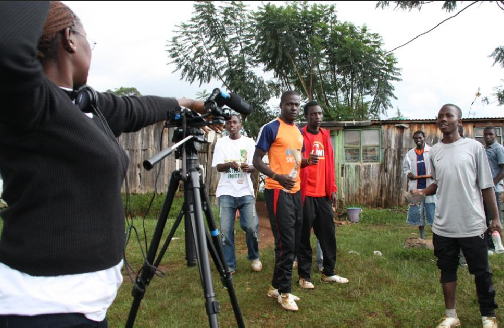
This 10-page case study shares the experience of Community Based Adaptation in Africa (CBAA), an action research project, of using participatory video for monitoring and evaluation of participatory initiatives to help communities adapt to climate change and share lessons learned. Between 2008 and 2011, CBAA tested tools for community adaptation and knowledge generation in eight African countries while building the capacity of its partners and local communities. Between 2009 and 2010, partner InsightShare held workshops in four of the eight participating countries: Malawi, South Africa, Kenya and Zimbabwe, to pass on skills in participatory video (PV) and monitoring and evaluation. According to the case study, the PV methodology both helped to identify additional insights into climate change impact and adaption in communities, and was a valuable monitoring and evaluation tool.
According to the case study, several critical success factors were identified:
- The success of the process was underpinned by the 'learning by doing' approach of participatory video combined with commitment by the partners to this way of working.
- Participatory video is an ideal tool for "putting participation first and foremost" and this fitted with all of the methodologies used by the CBAA partners that were already based on a deep participatory ethos.
- The organisations had a learning agenda, which allowed for experimentation and openness to unexpected findings from interaction with the community.
There were several challenges in implementing the project, including managing the expectations of communities who did not see the immediate benefits of the monitoring and research process. These were addressed through the capacity building aspect of the initiative. The partners built on the skills of community trainees, leaving equipment under community management and creating a forum through screenings and discussions to highlight community action priorities related to CBAA. As well, the case study notes that demanding time from local people requires careful management – while their basic needs are so pressing it can be difficult for people to see knowledge gathering as beneficial. It would therefore have been unreasonable to ask the community to keep filming a strict set of indicators following a rigid calendar for a period of over one year. The partners therefore created a flexible calendar with a loose set of indicators gathered in broad categories.
Recommendations and lessons learned are identified as follows:
- Balance consumption and production oriented models of participatory video: Climate change adaptation is a long haul activity where the focus needs to be on building lasting resilience and capacity. Consumption oriented perspectives on PV focus on immediate actionable impacts; asking how the information generated by PV has been used. While this is clearly important, it should be balanced by a production oriented perspectives that ask how the process of creating PV builds skills, knowledge, confidence, etc within communities.
- Be rigorous about climate change indicators and M&E: Adaptation is hard to pinpoint and categorise, especially trying to prioritise strategies that focus on climate change adaptation rather than what is already being achieved through development projects. It is therefore important to clarify with the community what the significant indicators are that can relate back to adaptation. It is also important to provide a thorough and rigorous M&E framework to ensure that a broad range of issues are covered and an appropriate sample of the community has participated.
- Involve the community in selecting the participatory M&E tools: PV allowed for communities to identify geographical areas that are becoming vulnerable because of climate variability. They physically needed to prioritise areas to film in where there had been climate impacts and where people are focusing their attention in addressing these impacts with various coping strategies. When using participatory video to establish a baseline it is important to use participatory M&E methods that make sense to the local community, for example when choosing sites for mapping or to develop indicators for other approaches.
- Select appropriate technologies and climate related indicators: PV can be very powerful in recording climate related indicators because it gives insights on what is actually happening on the ground. These indicators however need to be carefully selected so that they fit the video medium. More numbers based indicators, for example, the loss of cattle due to drought over a long period of time, could not be recorded on video. However, the state of erosion of a riverbank or an interview with a woman on her changing access to water are excellent topics to record with PV.
- Ensure PV data is manageable: Adaptation to climate change is a complex issue and PV will be best used when the level and quantity of information is limited to the most important and crucial indicators so as to limit the amount of video data to manage. Recording should be archived on a regular basis, especially if filming takes place during an extended period of time.
Nexus for ICTs, Climate Change and Development Case Studies website on July 16 2012.
- Log in to post comments