










































Force for Change Fatherhood Project
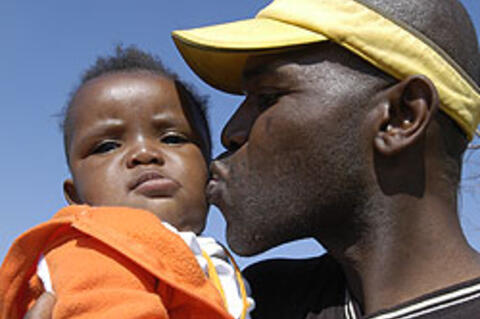
The Force for Change Fatherhood Project is a part of Sonke’s broader One Man Can Campaign and works specifically to include men and to engage them in playing a central role in the initiative, which includes facilitating dialogue around gender equality, HIV and AIDS, and violence against women and children.
Sonke conducted formative research with both adult men and with children to create a baseline understanding of local issues relating to violence against women and children, health promotion, HIV treatment and prevention, and care and protection of OVC. Click here in order to download the report in PDF format on the participatory research conducted with children.
Next, Sonke trained staff from both municipalities and local civil society partners in each area on the implementation of the One Man Can Campaign. Together with local partners, Sonke then trained learners to educate their peers and conducted a Sonke refresher course designed for learners who had previously been trained as social change agents in their communities. In addition, Sonke and its partners implemented photovoice and digital story projects, which led to the creation of digital stories and posters that allowed youth to share their experiences, aspirations, and needs. Click here for the photovoice stories from the Mhlontlo community and here for the photovoice stories from the Nkandla community. Click here for the digital stories.
In addition, the organisers were approached to conduct training with 18 initiates before they went to initiation school. The training focused on HIV/AIDS, sexually transmitted infections (STIs), links between STIs and HIV, and circumcision and HIV risks. According to the organisers, it was the first training conducted with a surgeon who performs traditional circumcisions, and this paved the way for dialogue with traditional surgeons and has created an opportunity to train more initiates in the future. The idea is that the training will lead to the creation of One Man Can Community Action Teams to facilitate training and to mobilise other men to act on violence prevention, HIV prevention, health promotion, and care and support to OVC.
The project also facilitated community imbizos as part of traditional meetings with community leaders. The imbizos were designed to create open spaces to address and discuss issues affecting the communities, including gender-based violence and HIV/AIDS. The first imbizo was attended by 90 men who discussed issues around good and responsible fatherhood, as well as the challenges that OVC are facing.
The project also seeks to mobilise government and civil society around raising awareness and increasing capacity to plan, budget, implement, evaluate, and sustain projects that increase men's involvement in ending violence against women and children.
Gender, Orphans and Vulnerable Children (OVC), HIV/AIDS, and Gender-Based Violence.
Founded in Februray 2006, Sonke Gender Justice works to address the social aspects of the HIV epidemic, with a particular focus on gender issues. Sonke Gender Justice's vision is a Southern African Development Community (SADC) region in which men, women, youth, and children can enjoy equitable, healthy, and happy relationships that contribute to the development of a just and democratic society. To achieve this, the Sonke Gender Justice works to build government, civil society, and citizen capacity to achieve gender equality, prevent gender-based violence, and reduce the spread of HIV and the impact of AIDS.
Sonke Gender Justice, UNICEF, the Open Society Foundation, the municipalities of Nkandla and Mhlontlo, Siyakanyisa, Umtata Child Abuse Resource Center, Sizanani, and the Nkandla HIV Network.
Sonke Gender Justice e-Newlsetter, Issue 4, January 2010 and Sonke Gender Justice website on May 3 2010 and January 27 2011.
- Log in to post comments