










































Global Grassroots
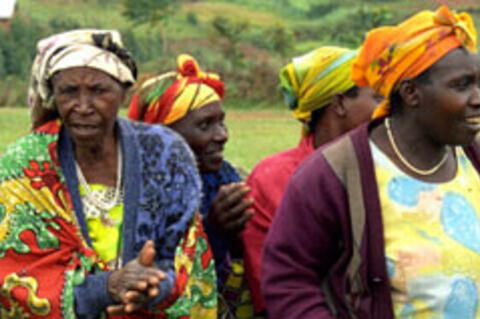
Global Grassroots' vision is that the challenges women face in oppressed societies worldwide may unite women globally, that the stories of women's triumphs may inspire others to act, and that women's ideas for social action may - if communicated effectively - enable others to advance social change. A core motivating belief is that social entrepreneurs are in a position to understand the barriers that have traditionally limited women's progress, and to advance change with fewer resources using revolutionary strategies. In this context, Global Grassroots uses 3 primary approaches:
- Identifying key social innovators with sustainable, effective, creative, and replicable ideas, and providing support for their change projects. For example, one project designed by Global Grassroots graduates in Rwanda, "Achieving a Better Life", is using theatre to educate people about the causes and consequences of violence against women. The guided conversations following each performance are designed to encourage men to make better decisions and to educate women about their rights and alternatives to violence. In its first year of operations, Achieving a Better Life was invited by the Rwandan Ministry of Gender and Family Promotion to perform one of their plays, which was broadcast nationwide three times on television, reaching at least 25,000 people.
- Through the above process, establishing a global grassroots network and international idea bank to link change agents and disseminate solutions, best practices, and new learnings in response to grassroots needs. The Global Grassroots website is one tool for supporting this type of idea exchange.
- Developing communications mechanisms to offer the human stories behind women's rights issues. For instance, Global Grassroots produced the Emmy-Award-nominated documentary film The Devil Came on Horseback to raise awareness about the genocide in Darfur, Sudan, and its impact on women. The film premiered at the Sundance Film Festival in 2007, was broadcast on National Geographic and BBC, and has reached an estimated 10 million people globally.
Women, Rights.
"Akin to business entrepreneurs, social entrepreneurs are change agents utilizing innovative strategies to address social issues. Often because these brand new ideas are so outside the box, they are ineligible for traditional forms of funding. Therefore, they must incorporate inventive resource mobilization strategies that highly leverage the support available from the citizen base they aim to assist. Beginning at the local level, their ventures ultimately have systems-changing impact and are scalable to the national if not international level."
Email from Thomas D. Elliott to The Communication Initiative on April 20 2005; and Global Grassroots website on February 16 2010; and email from Gretchen Steidle Wallace to The Communication Initiative website on May 11 2010.

- Log in to post comments