










































Utilizing Peer Education to Stimulate Behaviour Change at the Community Level
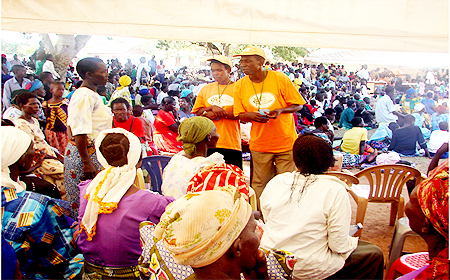
Communication for Development Foundation Uganda (CDFU) provides strategic communication support focusing on network-based community mobilisation and behaviour change utilising peer educators (also known as Popular Opinion Leaders in some communities). This online article discusses their peer educator methodology.
"The peer educators are selected by the community. They usually belong to some network, ...like: Village Health Teams, farmers’ groups, women groups and Post Test Clubs... and are therefore able to pass on information to peers.
A peer educator should be:
- A good listener and communicator
- An advocate of health and development issues
- A role model in the community
- A trusted source of information within the community and respected by the community because they benefit from the person’s experience and knowledge
- Approachable and talks to other community members
- Willing to work as an unpaid volunteer because he/she values contributing to the community
- A resident of the specific area of intervention
The objective of the peer education intervention is to bring about significant and sustained positive change in behaviours and practices through the efforts of peer educators who encourage positive change. They further promote use of specific health products and services among groups of peers.
CDFU develops training guides specifically designed to empower peer educators with skills and knowledge to: initiate discussions with peers in communities, use social events and "conversational" approaches to talk about health issues, and mobilize people for individual and social change. ... [E]xperience has shown that interpersonal communication is powerful in stimulating behaviour change among individuals and the communities they live in.
The process involves working with districts to select community based organizations to partner with so they can monitor and directly supervise the activities; meetings with the community to select the peer educators; training of trainers to build capacity at the district level and training of the community volunteers. The innovation of working through existing community structures addresses sustainability and ownership of the intervention. Our approach emphasizes use of informal interactions in order to provide information and skills necessary for one’s well-being."
The article gives the experience of Margaret, a pseudonym for a peer educator, from whose experience the following conclusions are drawn:
- Peer educators generally practice what they advise. It is empowering for those involved because they develop leadership skills, gain respect of their peers, and improve their own knowledge base and skills.
- They have influenced behaviour changes in others through their information because people identify with them.
- Peer education has allowed free discussion of sensitive matters in communities, especially on health issues.
- It is an efficient and sustainable way of reinforcing learning through already-existing networks in the communities. Those whose behaviour is affected by peer educators can be influencers for the same changes within their social networks.
CDFU website, April 9 2010.

- Log in to post comments