










































Using Social Analysis and Action in Madagascar to Break from Family Planning 'Business as Usual' in Madagascar
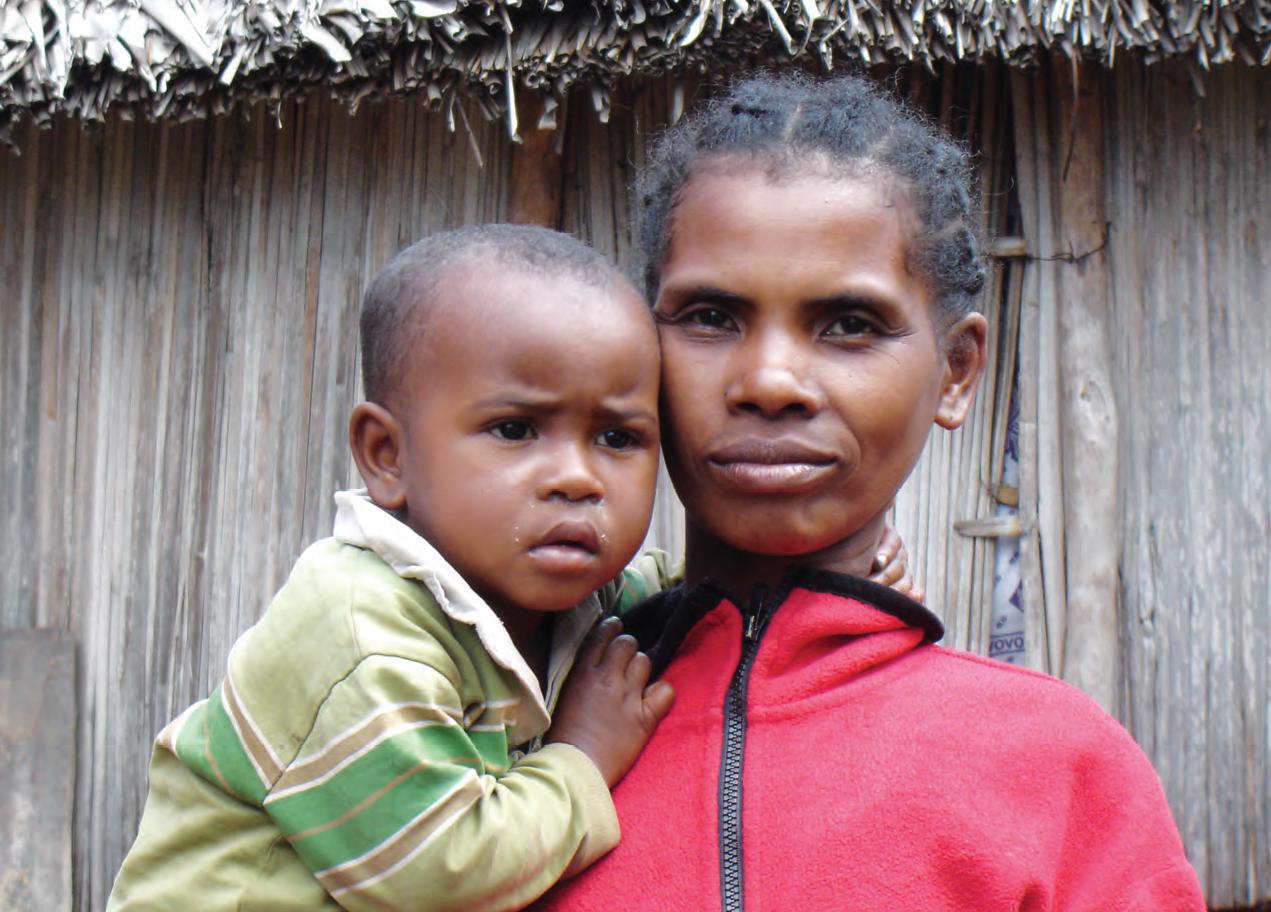
"Strengthening community participation and improving access to family planning services are key steps toward meeting the unmet need for contraception. But how effective can these strategies be if complex issues around contraceptive non-use - e.g., negative gender and power dynamics, unequal decision-making power between couples or poor sexual-health communication between parents and their adolescent children - are not addressed?"
In the context of family planning issues in Madagascar, this case study explores and evaluates a communication approach called Social Analysis and Action (SAA), which the organisation CARE designed to enable community members to initiate and sustain both dialogue and action on issues (including those that deal with cultural and social norms) that affect them and their communities. As a development approach, SAA assumes that honest and open exploration of sensitive social issues among community members is not possible if CARE field agents enter a community as "experts", i.e., with a pre-defined problem to be addressed and with a set of prescribed messages and specific changes to press on the community.
Specifically, the report examines CARE Madagascar's pilot experience integrating discussions about family planning, gender, and health equity into SantéNet2, a United States Agency for International Development (USAID)-funded integrated maternal, child, and reproductive health programme. CARE believed that SAA could help strengthen the Santénet2 strategy, which was focused more on training networks of community health workers to provide basic reproductive health and family planning services and less on exploring social and cultural norms that limit family planning choices.
The report describes how this strategy unfolded. CARE created a pilot team of six field agents within the larger Santénet2 team. Then:
- Staff transformation: The team created a safe space for SantéNet2 staff to explore how behaviours in their private lives, e.g., falling into traditional gender roles - may not always align with perceived institutional values.
- Integrating SAA into Santénet2: Staff reflection and transformation was an ongoing process. During this time, CARE also began working with community health structures developed by Santénet2. This included working with more than 200 self-selected "Change Agents" or members of the pilot communes, most of whom were community health workers trained under Santénet2, local leaders, and health centre staff. Pilot team members facilitated several exercises, including those drawn from Participatory Learning and Action (PLA) tools, to encourage community examination of gender roles and responsibilities.
- Developing and using participatory challenge tools: Starting with social norms that had the greatest influence on family planning, CARE and community Change Agents began to explore normative attitudes, behaviours, and values (e.g., those involving contraceptive use and youth sexuality) and how they influenced health. Change Agents then developed "challenge tools" to explicitly link certain social and cultural norms with health outcomes that were inherently at odds with personal and community expectations of good health and well-being. They included three videos filmed in the pilot communes, two interactive theatre pieces starring community members, several poems, and this cartoon [PDF] - a simple, low-tech tool designed to be used to generate discussions and challenge negative social norms around family planning. Unlike standard information, education, and communication (IEC) tools, the challenge tools were designed to raise open-ended questions and stimulate debate around social influences on family planning behaviours, not just to push specific messages about improved health. The tools were integrated into other Santénet2 awareness-raising activities.
Using a qualitative methodology loosely based on the Most Significant Change (MSC) technique, CARE found that the above experience sparked: greater acceptance of family planning; the easing of taboos on communication about both sexuality between parents and children and also youth contraceptive use. For example, after a video developed by Change Agents in Maintinandry commune was shown in each village, one local health centre reported a sharp increase in the number of new contraceptive users: from from 4-5 per month prior to the video to 14 after the video). Furthermore, in addition to leading to a sense of trust and solidarity between Change Agents, the SAA pilot reportedly impacted Change Agents - specifically, the personal reflection and transformation step, which "served as an important catalyst for change in their communities". Santénet2 staff also noticed that community health committees in the SAA areas demonstrated greater leadership and were more effective than health committees in non-SAA communes.
Jerilala, a Change Agent, said: "This training is totally different from the usual trainings....Usually, the trainers tell us what we should do - 'do this, do that' - but this approach encourages us to reflect about ourselves, and to question ourselves, which leads to increased personal awareness. It's exceptional!"
Challenges and future directions are outlined at the close of the report.
Emails from Luis Ortiz-Echevarría to The Communication Initiative on March 15 2012 and May 25 2012.
- Log in to post comments