










































1 minute
Training Kit on Participatory Spatial Information Management and Communication
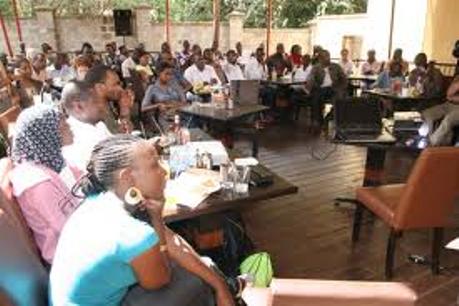
This Training Kit has been developed by the Africa, Caribbean, Pacific (ACP) - European Union (EU) Technical Centre for Agricultural and Rural Co-operation (CTA) with the objective "to support the spread of 'good practice' in generating, managing, analysing, and communicating community spatial information".
The Training Kit is available online and on DVD. It is intended to support indigenous and marginalised communities' participation in documenting, representing, and communicating their spatial knowledge and land-related issues, while taking control over the processes involved, for the purpose of:
- adding value and authority to local knowledge;
- facilitating intergenerational knowledge exchange;
- building and supporting cohesive community identities; and
- supporting sustainable planning through collaborative decision making.
Use of the Training Kit is designed to raise awareness about ethics in the participatory Geographic Information systems (PGIS) practice to influence the attitudes and behaviours of the following groups:
- technology intermediaries assisting vulnerable communities in asserting their rights;
- researchers performing action research;
- government officials calling for public inputs into spatial planning exercises; and
- development agencies that are designing development projects.
CTA Participatory Spatial Information Management and Communication website, December 29 2011.
- Log in to post comments