










































Tanzania Capacity and Communication Project (TCCP)
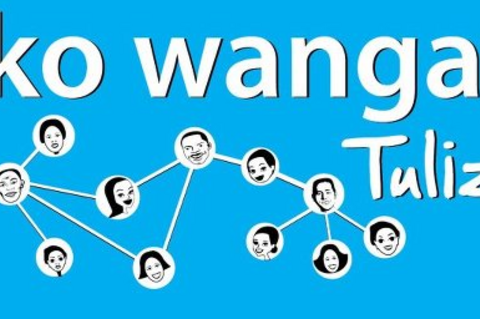
Running from 2010 - 2015, the Tanzania Capacity and Communication Project (TCCP) is using social and behaviour change communication to encourage individual changes in the areas of HIV prevention, reproductive health, and maternal and child health, with the overall goal of leading to healthier families and communities. Centred around two key campaigns, Tuko wangapi? Tulizana and Jiamini!, TCCP uses radio, television, and print media, supported by SMS communication, to encourage awareness and dialogue. TCCP is funded by the United States Agency for International Development (USAID) and led by the Johns Hopkins Bloomberg School of Public Health Center for Communication Programs (CCP), working in partnership with the Ministry of Health and Social Welfare – National AIDS Control Program and other partners.
TCCP is working to execute evidence-based, coordinated social and behaviour change communication (SBCC) initiatives, reinforce systems for coordinating and delivering SBCC, and transfer related skills to Tanzanian institutions, organisations, and individuals. Key strategies include the following.
- Communication strategy development and implementation of integrated mass media, community mobilsation and interpersonal communication campaigns for HIV, family planning, safe motherhood, and child survival.
- Strengthening the capacity of Tanzania's local film industry to develop and produce health-related social and behaviour change communication films.
- Radio distance learning for Village Health Committees and community-based activities for target populations in TCCP's eight priority regions.
- Communication capacity assessment of institutions and individuals, strengthening of SBCC coordination structures, and harmonisation of SBCC messages.
- Leadership training in social and behaviour change communication.
- Formative research, process and impact evaluation of project activities.
The project includes two main communication campaigns:
Tuko wangapi? Tulizana (How many are we? Settle down)
Launched in May 2012, the Tuko Wangapi campaign addresses multiple concurrent partnerships through radio and TV spots, interactive programmes, print, social media, SMS, and community outreach. The campaign is designed for sexually active men and women ages 25-39 in urban and peri-urban areas. These individuals may or may not realise they are part of a sexual network; some may knowingly have more than one sexual partner, others may be faithful to a partner that is not faithful to them. The campaign was created to increase knowledge of what a sexual network is and why it is risky, and examine the health, social, emotional, and other consequences of concurrency. It encourages the audience to think critically about and discuss their own and their partners’ sexual history and behaviour, with the ultimate goal of reducing overlapping sexual partnerships.
Jiamini! (Be confident!) Family Planning Campaign
Launched in April 2012, Jiamini! is a national campaign designed to empower women to initiate use of modern methods of family planning and encourage male support of family planning. Key campaign channels include radio spots, TV spots, discussion time on radio talk shows, articles and adverts in Femina Hip's Si Mchezo! and Fema magazines, an episode of Femina Hip's Fema TV Talk Show, and six episodes of MiniBuzz, a daily 30-minute current affairs television programme shot in a public minibus, in which passengers are filmed discussing and debating issues affecting their lives. The campaign focuses on women and couples who want to delay their first pregnancy, wait to have their next child or stop having children, but who are not currently using a modern method of family planning.
Both campaigns use SMS to create interaction with audiences. All Jiamini! campaign channels refer listeners, readers and viewers to FHI360’s Mobile for Reproductive Health (m4RH) text message platform for more information about family planning methods and service delivery points. m4RH text messages address permanent, long-acting and short-acting family planning methods. An SMS platform is also being used by Tuko Wangapi? Tulizana to engage audiences in a national discussion around concurrent sexual partnerships.
HIV, Reproductive Health, Maternal Health, Child Health
According to JHU-CCP, the Tuko wangapi? Tulizana campaign received more than 10,000 text messages from listeners and viewers in its first month alone. The campaign generated such an overwhelming response that planning for phase two was initiated earlier than anticipated.
Johns Hopkins Bloomberg School of Public Health Center for Communication Programs (CCP), Ministry of Health and Social Welfare – National AIDS Control Program for AIDS, Tanzania Commission for AIDS, MOHSW Reproductive and Child Health Section (RCHS), Media for Development International, CARE Tanzania.
- Log in to post comments