










































The Sustainability of Community Broadcasting in Namibia: An Assessment and Plan of Action
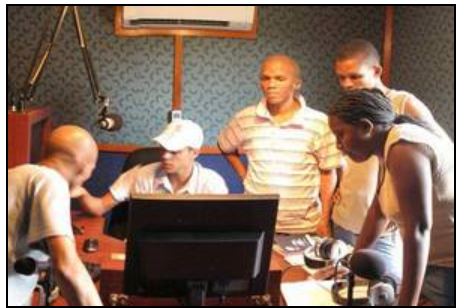
This 83-page report explores the sustainability of community radio and television stations in Namibia in regards to ownership, finances, production, audience, policies, and administration. Published by Friedrich Ebert Foundation's Africa media programme, the study was commissioned at the urging of the community radio sector in Namibia. Station sustainability was evaluated based on community ownership, control, participation and service, and station independence and the not-for-profit business model. According to the report, the sustainability of community stations in Namibia remains precarious, negatively impacted by factors such as low community participation, financial difficulties, and a lack of training necessary to produce quality programming in tune with their audiences.
When reviewing community ownership, control, participation, and service, the report found low levels of community participation and, therefore, buy-in, which it maintains are the cornerstones of sustainability. None of the stations studied had employed democratic process to ensure community-led governance, and board members were neither community-elected nor representative. Similarly, there were low levels of community involvement in production. As well, few stations truly catered to local languages and all stations were reliant on outside programming for diversity, which was heavily criticised by interviewed community members. However, all stations did attempt to interact with their audiences via methods including SMS/text messaging, call-in shows, and announcements.
According to the report, the stations surveyed attempted to be independent; however, they tended to shy away from political or controversial reporting. They also lacked the internal ethical or editorial guidelines to facilitate unbiased reporting on these sensitive issues, if they were to take them up. This can also be problematic because it leaves staff and volunteers to make difficult decisions about programme content. The report notes that community broadcasters might consider getting their editorial guidelines or codes endorsed by the regulator in order to give these codes extra weight and maximise stations, resulting in protection from outside interference.
Finally, researchers evaluated the role of the not-for-profit business model. According to interviewees, the apparent commercialisation of community broadcasters seems to limit community participation in station governance and programming and, therefore, could undermine sustainability. The report states that this could be addressed through a better, sector-wide understanding of "community broadcasting", its role and responsibilities, as well as the difference between this type of broadcasting and more mainstream stations.
The findings of this study suggest that communities expect a service that is unique and tailored to meet their needs. The more professional this service is, the better, although community members seem to appreciate a station's uniqueness and relevance the most. What makes a community broadcaster worth sustaining is the fact that it addresses the specific needs of that specific community in a way that no other broadcaster does. The report states that involving a diverse cross-section of community members in the production of programmes and in the decisions taken by a station as much as possible is probably the only way of achieving this. The report states that this would encourage community broadcasters to provide their communities with a service that the community needs and values enough for community members to contribute from their own pockets towards the financial sustainability of their stations, rather than continuously relying on outside sources.
The report makes a large number of recommendations to improve community stations' sustainability, among these are:
- develop criteria for board member selection and ensure that boards are gender-balanced and inclusive;
- address the perception that community broadcasting is second rate;
- help diversify broadcasters' income;
- encourage greater community participation; and
- promote and enhance the sector's developmental role.
Email from Blanka Balfer to Soul Beat Africa on November 7 2011 and Friedrich Ebert Stiftung (FES) on December 10 2011.
Comments

Achieving sustainable community radio
The problems and recommended actions in this report are interesting but not unique to Namibia. A book written by my late colleague Dennis List in 2003 called Participative Marketing for Local Radio provides plenty of proven ideas on how community broadcasters can secure an audience, generate sufficient income/resources and earn the respect of the community. If copies of this book could be given to each community broadcaster in Namibia and support provided to implement actions then these broadcasters could readily create a more sustainable future for themselves. The book's contents are available free at our website, check out www.audiencedialogue.net/pmlr.html
- Log in to post comments