










































Soul City Institute: Kwanda Report 2011
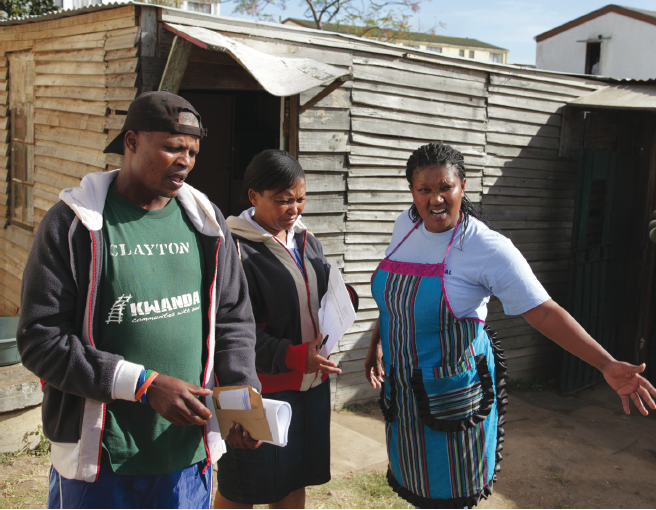
This 36-page evaluation report shares information about Kwanda, a Soul City: Institute for Health and Development Communication initiative to mobilise people to uplift their communities. The project had four main, interlinked, development focus-areas: to help prevent new HIV infections; to address alcohol abuse, violence, and crime; to take care of vulnerable people in the community; and to engage in projects that strengthen livelihoods by earning income, growing food, or in other ways improve the quality of life in communities. The report suggests that Kwanda was, for the most part, successful in meeting its objectives. As expected, certain communities were considerably more successful than others - as were certain activities.
Central to the Kwanda process was a reality-TV community-makeover show in which five teams in five different communities across the country were challenged to make their community "look better, feel better, and work better." The community process and broadcast took place during 2009 as a 13-part TV series, and a subsequent Community Work Programme was initiated to sustain the activity. An external evaluation occurred six months after the completion of the Kwanda process in all five participating communities and two non-participating control communities. The evaluation was designed to measure the perceived impact of Kwanda. Data collection methods were mainly qualitative, consisting of an extensive phase of desk research, focus group discussions, in-depth interviews, field observations, and an analysis of the film footage.
The first part of the impact evaluation report discusses the impact of the Kwanda process itself in the five participating communities.
Prevention of HIV/ AIDS
The report states that the Kwanda process is perceived to have encouraged HIV and AIDS disclosure as well as increased people's likelihood of visiting clinics for testing and obtaining medication. Results indicate that the HIV and AIDS prevention activities opened up discussion and awareness about the pandemic, and around responsible sexual behaviour and sexual rights. Community members said that Kwanda helped them develop greater awareness of the fact that people could live a normal life with HIV and AIDS. However, Kwanda participants believe there is still work to be done in this area, as many people are still reluctant to reveal their status. The evaluation suggests that the leadership skills experience and support that participating communities received through the Kwanda process increased their likelihood of making an impact in the area of HIV and AIDS prevention. The general sense of hopelessness around this focus area, observable in the control communities, was absent in the Kwanda communities.
Reduction of alcohol abuse, violence, and crime
Kwanda was perceived to have a positive effect on people's sense of safety within communities. Although some teams needed additional help to build community solidarity against crime, the process was able to develop a renewed sense of mutual respect between community members. This was not true of non-participating communities, suggesting that the attitude change in participating communities was as a result of the Kwanda process. One of the more difficult Kwanda development focus areas was alcohol abuse. Activities designed to address this issue involved forging partnerships with tavern owners in an attempt to reduce tavern operating hours for purposes of reducing alcohol consumption, and to address underage drinking in taverns. These activities were not always successful but did heighten awareness and reduce the acceptability of underage drinking and drinking-related violence.
Strengthening livelihoods
The strengthening of livelihoods refers to activities such as food gardens, breeding chickens, planting trees, and other activities that would contribute to basic levels of household survival. The report outlines that these activities were more likely to be effective when undertaken on a more collective basis and with community support, and in Kwanda communities enterprises could depend on the support of their fellow community members, unlike in non-participating communities. Through the enterprises, communities branched out while also inventing ways of using one activity to support another - such as using money from selling chickens to help fund a sewing enterprise.
Building confidence
According to the report, the filming increased the self-esteem and dignity of the communities. Community members had felt proud when they saw their communities on TV. Filming helped to enhance the Kwanda participants' commitment. Coaches reported that it created a positive vibe: people wanted to be on TV and to show that there was a level of seriousness. Watching themselves on film also enabled Kwanda participants to reflect on their leadership style.
The second part of the impact evaluation discusses the television broadcast, stating that the filming of the Kwanda series was intended to play a crucial role in exposing the circumstances of different communities, with which other communities could identify. The responses suggest that the show tapped into relevant issues and concerns and provided a very hopeful message to South African viewers. Although there was limited evidence to suggest that the show resulted in significant behaviour change among viewers, there was evidence to suggest that the show was understood by viewers and potentially encouraged individuals to think about the role of community members in uplifting themselves.
The report concludes that the leadership skills provided in the process were one of the main factors that separated the non-participating communities from the participating communities. In most of the participating communities, the awareness and openness of community members around the social challenges facing their communities was heightened. This was particularly evident in residents' willingness to acknowledge and discuss issues that had previously been taboo, particularly around HIV and AIDS, crime, and violence.
The ability of Kwanda teams to obtain the buy-in and support of their communities contributed significantly to their success in addressing the development priority areas that they had identified. To a lesser extent, the forging of partnerships with local authorities and community-based organisations (CBOs) also strengthened this process. The role of local government is clearly crucial for the success of the Kwanda process, and resistance on the part of local government departments in terms of required service delivery often presented a significant barrier for participating communities. This was also indicated by the non-participating communities as the reason for giving up on HIV and AIDS initiatives that they had attempted to set up. The results of the evaluation suggest that through the Kwanda process, a number of linkages were created between local government and the Kwanda communities and that those communities learned how to make demands of their local governments.
From a media perspective, audience ratings remained consistently high throughout the series. Text messages (SMSs) and letters received indicated that viewers identified with the issues covered in the Kwanda series. A variety of requests for assistance did suggest that Kwanda had inspired a desire for other community members to establish their own initiatives. Without a quantifiable means of measure, however, it was not possible to determine the extent to which people had taken any action.
Soul City website on September 22 2011.
- Log in to post comments