










































SANGUE Project
As a first step, CRS carried out an organisational assessment of each partner agency, identified their weaknesses and, jointly with the partners, developed a management improvement plan to help address areas of weaknesses and fill gaps in knowledge and skills. CRS assisted each organisation to recruit qualified professionals in the areas of project management, monitoring and evaluation, communication, financial management and accounting, supply chain management, and malaria. All partners participated in baseline surveys, the design of the communication strategy, and planning for the LLIN distribution. According to CRS, these exercises allowed local partners to share their own knowledge of the country and learn steps in strategy development and supply chain management, as well as survey design and analysis.
The project provided training for each level of staff; for example, finance staff responsible for budgets and financial management participated in six on-site workshops in the first phase of the project. All partner staff participated in training on Global Fund policies and procedures to understand the donor expectations such as monitoring implementation, tracking project indicators, and reporting results to demonstrate impact. Partners also learned a new computerised inventory management system used to track and report on the distribution of the LLINs up to the household level. According to CRS, as a result of the multifaceted capacity building, staff at all levels – national, district, health centre, and village - are now participating in the design of multimedia communication to pass messages to children, caregivers, and other community members about how to prevent the spread of malaria.
The project's media strategies include the following:
- Radio and television were used to broadcast episodes describing the use and benefits of sleeping under a bednet.
- Videos and music - At the district level, local partners organised viewings of videos on how to fight malaria. In addition, community groups developed skits and songs to spread the word in villages.
Malaria
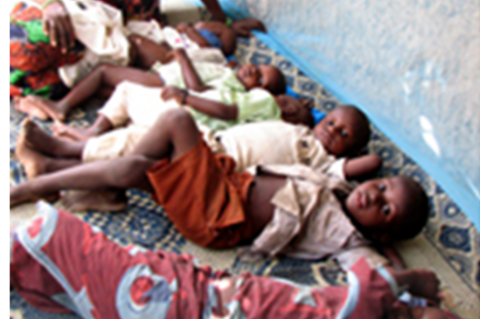
The West African country of Niger has the world's highest infant mortality rate. One child in four does not reach their fifth birthday, often because of malaria, one of the leading causes of death and illness for both children and adults. According to CRS, today more than 78% of all homes have at least one bednet. Nevertheless, only 56% of all children sleep under those nets, indicating that much more work needs to be done. CRS and its partners will work over the next three years to promote the consistent use of bednets, to change people's attitudes, and to further reduce mortality and morbidity due to malaria.
By April 2009, CRS worked closely with partners to distribute close to 2.7 million nets at more than 7,000 sites, reaching the most remote corners of the country.
Catholic Relief Services (CRS), Global Fund to Fight AIDS, Tuberculosis and Malaria
CSR website on November 29 2011.