










































mCenas! Project
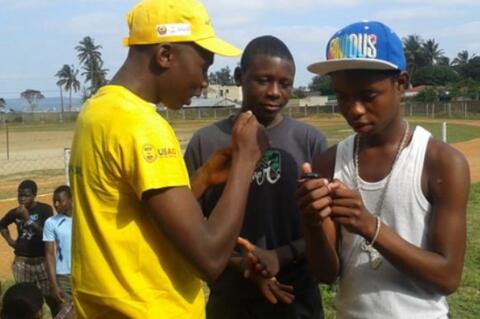
According to Pathfinder International, there are many barriers that the youth face in terms of accessing and using contraceptive methods. One of the main barriers is lack of knowledge around the range of contraceptive methods, especially the myths and misconceptions about particular methods. There is a need to offer innovative opportunities for youth to learn more about methods, reduce myths and misconceptions, and support changes in attitudes and behaviours around the use of contraception.
mCenas! has three main components. First a story is delivered through SMS messages that youth can relate to and draw on for further dialogue and reflection with peers. Informational messages about contraceptive methods are also distributed. For example, when a character in the story starts talking about a intrauterine device (IUD), the mobile user will receive a message that says, “If you’d like to learn more about IUD, reply 1'” If they do, they will receive an informational message about IUD. The same goes for a variety of other methods and topics. Mobile users also have the ability to access an interactive menu of "Frequently Asked Questions" which allows youth to receive SMS messages on topics ranging from pregnancy to sexually transmitted diseases, such as HIV/AIDS, in addition to messages about family planning methods.
To develop the SMS stories, the project used the Pathways to Change tool to gather information from youth about barriers and facilitators to uptake of contraception. Pathways to Change is a methodology, developed by Pathways, to help participants identify various social, interpersonal, and structural barriers to behaviour change. In response to unique needs, Pathfinder developed two different role model stories — one for parenting youth and one for non-parenting youth. Both stories include role models in each story for males and females and incorporate many of the barriers and facilitators identified in the formative research. Stories were crafted based on the stages of behaviour change theory to reflect real life behaviour change processes.
While mCenas! is an automated text messaging system, the project frequently sends youth a phone number to a call-in center — a government-run hotline — where operators answer questions related to contraception, HIV, and more. For this project, Pathfinder trained the hotline operators on contraception (previously, they only provided info on HIV and AIDS) and worked with them to establish a full list of facilities that provide youth-friendly services.
The project uses activistas, young peer educators, to get young people subscribed to the mCensas sms system. These activistas were trained through Pathfinder's Extending Service Delivery - Family Planning Initiative Project (ESD-FPI) to do interpersonal communication at different health fairs and events. Their job is to raise awareness among youth and link young people to youth-friendly sexual and reproductive health services. The project used these existing activistas and trained them to introduce their peers to mCenas! and to ask them if they want to receive stories and health information via text message on their phone. In order to support the sms component with interpersonal communication, the project ensures that activistas know key messages and plots from the stories to use in their interpersonal one-on-one conversations with clients.
When designing this project, Pathfinder built upon the experiences and lessons learned of FHI360's mobiles for reproductive health (m4RH) project delivering informational messages and their experience using role model stories via SMS in Ghana.
Family Planning
Pathfinder International, United States Agency for International Development (USAID).
Pathfinder International website and Pathfinder blog on October 18 2013.