










































Ruka Juu II: Young Farmers in Business: Impact Study
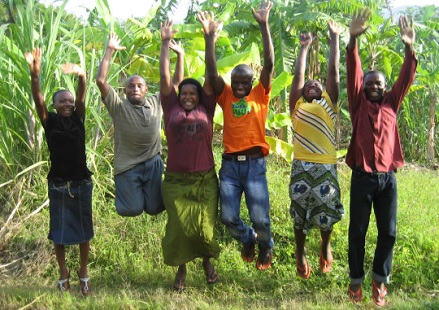
This 88-page report shares findings of an evaluation of Ruka Juu - Young Farmers in Business, season two of a reality competition television show produced by Femina Hip in Tanzania. Ruka Juu means 'Jump Up', and the aim of the show is to see young people 'Jump Up' and take charge of their lives and futures through sustainable livelihoods in small business and agriculture. The first season (Ruka Juu 2010) focused on urban entrepreneurs, the second season (2012) focused on young farmers. Ruka Juu was watched by over three million viewers, and it was supported by complimentary Fema Radio programmes and the Fema Magazine, and Fema’s social media platforms. The evaluation of the Ruka Juu TV show found that the contestants became role models who inspired other youth to engage in farming as a business. The contestants themselves also formed groups in their local communities to share the skills and knowledge they had gained through participation in Ruka Juu.
The findings in the evaluation are based on interviews with the six contestants, participatory viewing and listening sessions for the TV and radio show with a selection of youth in Kilombero and Kilosa, and community viewing and listening sessions where the whole community was invited. The overall objective of the study is to examine if and in what ways the contestants and the audience (in particular Femina Hip’s audience of youth 15‐30 years) had been inspired, informed, and educated through Ruka Juu. The research was a collaborative effort between Femina Hip, Development Pioneer Consultants (DPC), the Norwegian School of Economics (NHH), and two partners on the ground - namely: Rural Urban Development Initiatives (RUDI) and Kilosa District Agriculture Office.
The evaluation found that, for the contestants on the show, Ruka Juu was "a very important journey for them in terms of inspiration, education and support." Following the show, several of the contestants became agricultural trainers or formed groups in their communities to share their skills and knowledge. One of the key learnings they took back to their communities was the value of farming groups to share knowledge and to collectively save and access loans to take their businesses to the next level.
The study included research with youth in Mang'ula and Kilosa who participated in participatory viewing and listening groups. These groups "actively" watched and listened to the programmes by having collective discussions and question and answer sessions after the viewing sessions. The study found that youth who actively viewed two TV episodes and actively listened to two radio episodes "learned a lot, changed their attitudes, and took action." They reported learning: the importance of preparing a checklist; how to negotiate with shopkeepers to get better prices; and financial options for starting or growing a business. They also learned about using a mobile phones to find out about market prices, to access farming information services, and to network with other farmers.
The initiative also included community-viewing sessions with 200 people gathering to watch episodes. Results from Mang'ula and Kilosa showed that these screenings were very popular. However, this approach worked much better with screenings of the television show than with community listening sessions of the radio programmes, where people did not stop what they were doing to listen. Comparing TV and radio, "TV was the preferred medium among the contestants as well as the participating youth." This was largely because of the ability to see what the participants were doing. However, some youth did prefer radio because of the ability to reach more people and the ability to continue doing other things while listening.
Based on the results of this study, the report offers the following recommendations going forward:
- Continue with Ruka Juu with agriculture as a theme. Continue to work with TV and radio as complementary media. Broadcasting Ruka Juu on the radio was appreciated by the listeners, and having the competition on TV with complementary discussions on the radio functioned well.
- Intensify the work with partners on the ground. The research collaboration with RUDI and Kilosa District Agriculture Office was beneficial for Femina Hip as well as the partners. RUDI and Kilosa District Office reached youth and found new ways to work, and Femina Hip reached Mang’ula and Kilosa through the partners. It is important that the partners on the ground decide on the compensation mechanism, if any, in order to make sure that the activities are sustainable for them.
- Provide the partners with a set of the Ruka Juu TV and radio episodes together with an "active learning guide" to support collective viewing and listening.
- Promote community viewing, but with one episode per night, not two.
- Make greater efforts to ensure that the potential audience, i.e. youth in and out of school, particularly in rural areas, know about Ruka Juu, when and where it is broadcast and that the show targets THEM. It will be important to work with partners to market i>Ruka Juu, as well as to look over the distribution system to make sure that new copies of Femina Hip's magazines are available.
- Publish the Boot Camp training in Femina Hip's magazines. Since the Boot Camp training [which occurred at the beginning of the show] at SUA (Sokoine University of Agriculture) seemed to have been particularly useful for the contestants, and they are using them in the groups they have established in their communities, different parts of this training could feature in Femina Hip's magazine.
Femina Hip website on June 20 2014 and email from Lynn O'Rourke from Femina Hip on October 17 2014.
- Log in to post comments