










































The Role of Community Radio in Livelihood Improvement: The Case of Simli Radio
Centre for Continuing Education and Interdisciplinary Research, University for Development Studies (Al-hassan), Department of Mathematics, University for Development Studies (Andani, Abdul-Malik)
This case study, published by Field Actions Science Reports, discusses Simli Radio's contribution to livelihood improvement in the Tolon-Kumbungu and Savelugu-Nanton Districts of the Northern Region of Ghana. Simli Radio is a community radio station established in 1996 under the Ghanaian Danish Community Programme (GDCP), an integrated rural development programme. The case study explores the station's use of broadcasting as an educational tool, to promote traditional culture, facilitate communication and information sharing, and enhance entertainment and income promotion. According to the case study, Simli Radio has improved awareness and knowledge of solutions to community development issues such as culture, rural development, education, hygiene and sanitation, agriculture, and local governance.
As stated in the case study, community radio in Africa can play a significant role at the grassroots level for rural development. For example, radio can provide a set of participatory communication techniques that support agricultural extension efforts by using local languages to communicate directly with farmers and listeners’ groups. As well, exchanging information, facilitating networking, and providing skills and training are all elements of developing a community. This case study sought to examine the role of Simli Radio in livelihood change, as well as analyse the challenges and lessons learned.
The case study outlines the following findings about Simli Radio:
- Education and Livelihood Improvement: Simli Radio has been used to improve awareness and knowledge of solutions to community development problems within various sectors including culture, rural development, education, hygiene and sanitation, agriculture, and local governance, particularly among rural people living in the Dagbani speaking districts. The case study states that some specific examples of impact have included increased enrolment in school catalysed by the School for Life (SfL) literacy programmes being broadcast on the station, reduced out-migration by young girls due to greater gender awareness, and an increased use of fertilizers by farmers.
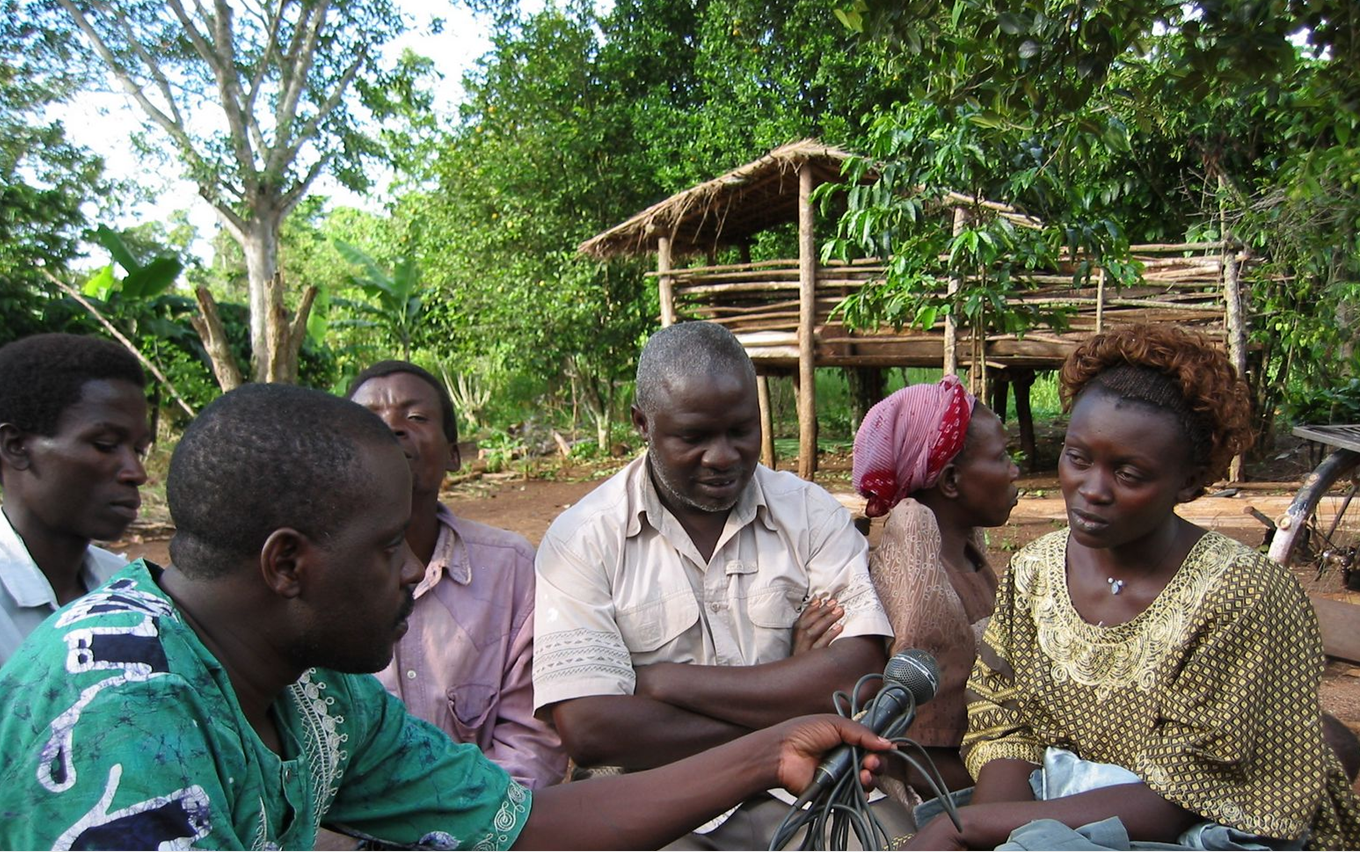
- Communication and Information Sharing: According to the case study, Simli Radio has successfully encouraged dialogue and information sharing, particularly through a strategy of communal listening groups. The case study states that community-based recordings are especially useful in capturing listeners’ priorities, and that most people indicate that Simli Radio programmes concerned their lives more than other radio programmes, and they could identify with the presenters and the programmes made directly in the communities. The station also serves to inform people about what is happening in all the sectors of GDCP.
- Decentralisation and Local Governance: The case study outlines how Radio Simli has facilitated interactive sessions for local authorities to explain government policies and programmes. Listeners are able to question authorities through the "listeners’ comments" sessions, a means of collating feedback from listeners. For instance, the case study found that Parliamentarians and other leaders in those communities were being made accountable through radio broadcasting. As well, daily gender related programmes aired on Simli Radio have helped to "soften" the grounds for female voices to be heard in and across the Dagbon state on some topical issues that affect the family and community generally.
- Cultural Promotion and Entertainment: According to the study, the radio station has established itself as an important cultural and educational institution in the Dagbon traditional area. Programmes such as Yung Dema Saha (Community Entertainment) and Salima Saha (Story Telling) are reinvigorating forms of traditional entertainment that contribute to community cohesion.
- Income through Increased Economic Activity: The activities of Simli Radio have promoted the economic activities of its clients in and around the catchment area. The station has provided a forum for Small and Medium Enterprise (SMEs) to reach out to the larger population by undertaking advertisements at very affordable fees during business promotion segments airing for two hours daily from Monday to Thursday. Business owners said they use the radio to advertise their goods and services leading to increased sales and revenue.
- Social Cohesion:The station engages experts/resource persons as guests to explain various issues related to family life, moral education, gender and social inclusion, domestic violence, conflicts and conflict resolution, peace building, etc. Tehisuma Saha (Morality Talk Show) and Ti-Bom-Yem (Lets’ Seek Knowledge) are programmes designed to promote social cohesion. As well, the station is linked to sporting programmes designed ot reduce community conflict.
According to the case study, one of the key lessons learned by Radio Simli is that stations that try to remain a-political and non-partisan, especially in conflict prone areas, have greater impact in the delivery of services. As well, effective management and leadership are critical in ensuring the performance of every organisation, particularly those involving radio stations such as Simli Radio. Leadership is key for mobilising resources, directing programme activities, and the evaluation of programme impact. The case study concludes that Simli Radio has successfully served as an important communication channel in Ghana, and has encouraged local communities to participate in programme activities and replicate skills acquired. The station has had social, economic, political, and cultural impact in the programme districts, and has largely been used as a tool for integrated rural development. As well, there is a very high degree of listener participation in the programmes, and the rural audience likes to hear themselves and their neighbours. In terms of ownership, community members feel they are part of the station because their suggestions or recommendations have been heeded to by staff of the station. They also participate in the programmes by way of making announcements and advertisement.
The case study recommends that regular feedback from the listening public is essential in order to identify listeners’ preferences. It points out that there is a need to increase programming around environmental issues, particularly in relation to land degradation, indiscriminate tree felling, waste management, soil erosion, desertification, and climate change and how all these impact on peoples’ livelihood. The report adds that there should be less interruptions by radio presenters to improve upon programme quality, and that news or announcements must be more properly edited before they are broadcast. There is also a need to re-organise the listeners clubs. Finally, the report suggests that for the radio to be able to play its important and significant role in community development, it must keep out of politics and religion and highlight gender issues.
Click here to read the case study online.
Click here to download the case study in PDF format.
FACTS Reports website on October 15 2011.
- Log in to post comments