










































Open Mapping from the Ground Up - Learning from Map Kibera
“While debates continue over the best way to truly engage citizens in the ‘data revolution’ and tracking the Sustainable Development Goals, the research here shows that engaging people fully in the information value chain can be the missing link between data as a measurement tool, and information having an impact on social development.”
This research report on the Map Kibera Open Street Mapping (OSM) project examines what it means for citizens to map their communities and the impact of open local information on members of the community. The paper presents three case studies of mapping in Kibera, an informal settlement in Nairobi, Kenya, which involved mapping the education, security and water sectors in the community. It discusses evidence about the effects not only on project participants, but also on governmental and non-governmental actors in each of the three sectors. It describes the project’s work to date on digital mapping, citizen media, and open data; its demonstrable and tangible results; and the project’s impact. The report also offers recommendations for the way forward.
This research report investigated the answers to the following questions:
- Have Kibera citizens been able to influence local change using maps and other digital tools? If so, how?
- What were the inflection points (triggers) that succeeded in directing attention to issues raised by Map Kibera over the past seven or eight years, and how has government responded?
- Has information gathered and shared by Map Kibera brought about: i) new awareness or understanding of issues? and ii) actions taken based on this knowledge?
- What were the barriers, if any, to understanding and action?
- Have there been changes over time to the original theory of change for Map Kibera?
The on-going Map Kibera project began in 2009 when 13 young people received training and mapped Kibera using the online mapping platform OpenStreetMap (OSM). Since they were taught how to map, but not what to map they identified what they thought was important to make visible about their community – health, education, sanitation, commercial, entertainment and other establishments, leading to thematic maps that were discussed and verified in community meetings. The report describes the lessons learned regarding community engagement in information-gathering and in advocacy, and how information and mapping processes themselves can build networks of trust between citizens and governments in low-trust environments.
The report begins by situating the research and Map Kibera in selected literature on transparency, accountability and mapping, then offers a historical overview of Map Kibera’s evolution. It describes the sector mapping projects, key results and impact outcomes, drawing from the sector map case studies and from interviews with Map Kibera staff, participants, clients, and users of the project’s OSM data and maps.
The case studies highlight use of project maps and data for advocacy in different ways by different actors and the results including increased trust between the community and the government. The case studies also describe incidents where the maps and the data offered clients and government officials and aid organisations surprising information that contradicted accepted understandings of resources, needs, and challenges. Since the recipients of the maps and the data trusted Map Kibera’s work, in some cases resources were redirected, and projects redesigned. In some cases, these results were achieved without active advocacy, but simply through distribution of the maps.
The education sector project case study, for example, describes implementation and results of Map Kibera’s “Open Schools Kenya” project that expanded from Kibera to include all schools in Kenya. The research report indicates that the project’s citizen-generated maps and data showed gaps in the government’s open source data. The analysis also states that relative to question 1 above, although citizen mappers did not directly lobby their government, those involved in the education sector mapping influenced local change by engaging with sector stakeholders whose use of their maps led to policy changes and more resources such as funds for teacher training and school building. Comments from the Kibera District Education Officer presented in the report describe project results including increased government awareness of sector resources and needs, increased resources for schools, use of Map Kibera maps and data for presentations at national levels, and increased trust between schools and the District Education Office. The report also describes the impact achieved when other government officials from various sectors used the project’s education sector maps and data.
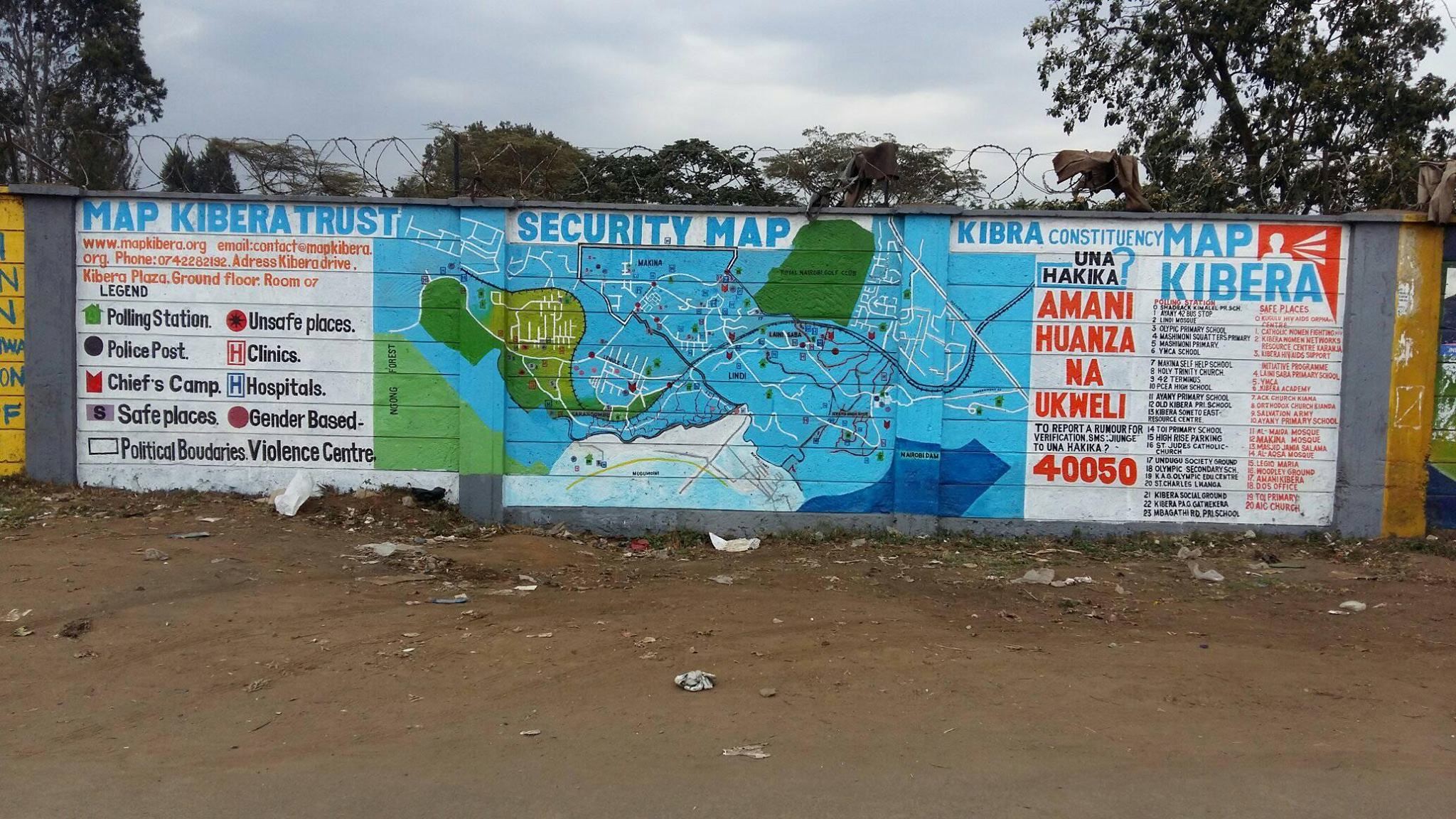
The water sector case study indicates that local organisations with strong ties to external NGOs redirected and improved services. The security sector case study describes how the project’s neutral, citizen security sector data and maps were developed and made available, and discusses how distributing it through a trusted network was key to improving security, strengthening collaborative networks and building social capital.
According to the report, trust was an essential ingredient in the project’s success; it describes the contributing factors including the project’s open data artefact and community involvement in all aspects of project activities. The report further shows that by starting from the ground up and sharing open data widely, it is possible to achieve strong sector-wide ramifications beyond the scope of the initial project, including increased resources and targeting by government and NGOs.
The report recommends:
- data itself should not be the only goal, suggesting that how data is collected matters and community involvement can be particularly important in settings where trust is a challenge;
- reach out to sector-based officials and proprietors of businesses related to the sectors being mapped;
- make both digital and paper maps and on-line and off-line activities available; and
- develop easily accessed, full service mobile sites or apps as a priority.
Making All Voices Count website on February 13 2018.
- Log in to post comments