











































Search for Common Ground: The Team Project Evaluation Report (Zimbabwe)
Policy Development Consultants (PDC)
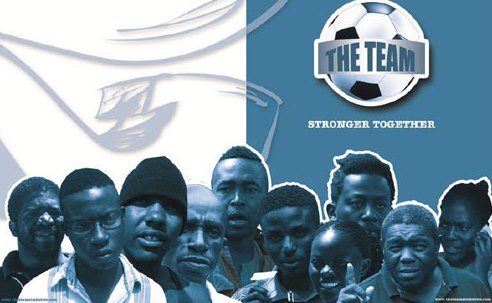
This 82-page report discusses the findings from an evaluation of The Team in Zimbabwe, a media-based peace-building campaign to help communities understand the importance of teamwork. An initiative of Search for Common Ground, The Team is a global peace building initiative that included television and radio productions in several countries, all designed to use sport as a unifier to transform social attitudes and diminish violent behaviour in countries dealing with some form of conflict. According to the report, community dialogues hosted as part of community screenings of the series had particular impact, while there was little evidence that the television broadcasts influenced listeners' behaviour.
The 13-part television and radio series, "The Team", was aired starting in September 2011, on the Zimbabwe Broadcasting Corporation Television (ZTV), and in 2013 on Radio Zimbabwe (ZBC) in Shona and Ndebele. Working with the Centre for Conflict Management and Transformation (CCMT) and the International Video Fair Trust (IVFT), community outreach was conducted through mobile cinema screenings and community dialogues "to help deepen understanding and bring about behaviour change around targeted issues." In Zimbabwe, "The Team" tackled issues such as ethnic and socio-economic differences, intergenerational relations, gender equality and power dynamics between young men and women, and the importance of unity and working together to succeed at the individual, family, community, and national levels. Using literature reviews, interviews with key informants, and focus group discussions, the evaluation documents outputs from the project and reflects on whether the project reached its objectives.
The evaluation report first discusses the relevance of the project to people in Zimbabwe, which was informed by conducting formative research and focus group discussions. Both the soccer theme of the storyline and the issues raised were found to resonate with listeners. The report then discusses an assessment of the effectiveness of the project by reflecting on its five key objectives. The results showed that the reach of the television broadcasts was extensive - two million people, according to the state broadcaster. However, "there is little evidence to suggest that it educated people about peace building and healing or demonstrated that restoring peace was achievable and desirable." As stated in the report, "while the numbers reached through radio and TV may be impressive, it is difficult to say with any degree of certainty what impact if any they had or the extent to which they influenced behaviour change. For many people, the series was only of entertainment value and while they may have identified some of the issues and messages, they did not internalise them."
On the other hand, the evaluation showed that the outreach sessions had greater impact. Although they reached fewer people, most of these were community leaders who shared the knowledge they gained in schools, communities, government departments, churches, and in women and youth groups - positively influencing other people they interacted with afterwards.
The report cites the creation or enhancement of social capital as a major success of this outreach. "Social capital is created when communities engage in dialogue on issues affecting them. Such capital is the product of social connectedness or civic engagement and is a needed ingredient in working together in pursuit of common community goals." Overall, the evaluation found that the community-based dialogues "enhanced social capital by encouraging communities to engage in dialogue on issues affecting them." This included launching community projects and developing community action plans. The evaluation also found that The Team's overriding message of teamwork was understood, and it was recognised that teamwork is a prerequisite for development at the community level and creation of more functional relationships at the personal level.
The report also discusses challenges faced by the project. For example, as the project did not attract or engage with political leaders outside of community leadership, power struggles at the local level sometimes prevented the implementation of community plans and projects. Youth also were not effectively engaged. Lessons learned are also discussed, which include the importance of combining dialogues with screenings or broadcasts, the need for careful partner selection, and the role of involving leadership as key to community development.
The report offers a range of recommendations based on the lessons learned. These include: combining video screenings with community outreaches, targeting different political parties (not just those representing current community leadership) in order to be more inclusive, expanding the outreach component, and ensuring better youth representation.
Search for Common Ground website on April 22 2015.
- Log in to post comments