










































Making All Voices Count
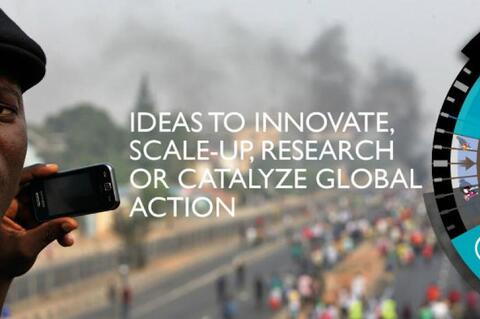
Making All Voices Count is an international initiative that supports effective and accountable governance in 12 countries in Africa and Asia. The initiative brings together actors from government, civil society, academia, and the technology sector to find, support, and learn from technology-based solutions. These solutions include those that use mobile and web technology, and must have as their main purpose to improve the relationship between government and citizens - in particular, to ensure that the voices of citizens are heard and that governments have the capacity, as well as the incentive, to listen and respond. The goal of Making All Voices Count is to contribute to the creation of more effective governance and improved accountability in the 12 focus countries and, through learning, to improve governance approaches and programmes globally. Making All Voices Count works in Kenya, Uganda, Tanzania, Ghana, Mozambique, South Africa, Nigeria, Liberia, Bangladesh, Pakistan, Indonesia, and The Philippines.
As stated on the Making all Voices Count website, “Developments in technology and innovation mean that government and citizens can interact like never before. Globally, citizens have fast-increasing access to tools that enable them to monitor government performance and express their views on government performance in real time. Making All Voices Count is about seizing this moment to promote transparency, fight corruption, empower citizens, and harness the power of new technologies to make government more effective and accountable.”
The programme seeks to achieve its objectives by, in short, “finding, funding and learning from innovations that support accountable governance.” It finds and supports innovations and technology that has the potential to support better governance, through two grant programmes:
- The Global Innovation Competition (GIC): an annual competition where ideas are put to a public vote, then reviewed by the programme team and, finally, a panel of expert judges select the ideas that Making All Voices Count will support. For example, Bahawalpur Service Delivery Unit (BSDU), the winning idea of the 2014 Global Innovation Competition, is using data to fast-track information that will give more women the opportunity to give birth in a safe environment in Pakistan.
- A rolling grants programme: this involves on-the-ground relationship brokering combined with thematically driven calls for proposals to bring forward the best ideas that innovate and scale up, and to research innovations that support better governance and accountability.
Besides funding, the initiative supports country programmes. Teams of programme officers working from regional hubs support networks of innovators and researchers, deliver mentoring programmes for funded partners, and continually look for new ways to bring together unusual partnerships with new ideas. Making All Voices Count’s current projects range from a multi-stakeholder project that follows survivors of sexual assault through health and justice services in South Africa, to a data-driven public service monitoring system for health and education in the Bahawalpur district government in Pakistan. Click here to find out more about the projects which are categorised into the following themes: citizen engagement, inclusive governance, responsive governance, citizen voice, and open governance.
A third component of the programme is research to help build a base of evidence about what works, how, and why in using innovation for accountable governance. The Institute for Development Studies (IDS) is responsible for this component which involves:
- Building an evidence base and contributing to theory-building in the general field of voice and accountability, and specifically for the fields of practice of technology and open government, which are relatively evidence-free zones.
- Contributing to improving the performance and practice in the field by strengthening learning on the part of governments, development practitioners, and tech actors through supporting critical reflection on failure as well as success, documenting emerging insights and good practices, and making them available to the designers and implementers of other initiatives, both within Making All Voices Count's sphere of direct influence and beyond.
Democracy, Governance, and Information and Communication Technologies (ICTs)
The programme is a partnership between three organisations:
- Hivos: supporting people who are systematically blocked from rights, opportunities and resources
- Ushahidi: pioneering technology-for-development organisation
- Institute for Development Studies (IDS): global institution for development research, teaching and learning, and impact and communications, based at the University of Sussex in the United Kingdom (UK)
It is supported by four donors: The UK Department for International Development (DFID), U.S. Agency for International Development (USAID), Swedish International Development Cooperation Agency (SIDA), Open Society Foundations (OSF), and Omidyar Network (ON).
Making all Voices Count website and HIVOS website and IDS website on August 30 2016.
- Log in to post comments