










































m4Youth Project
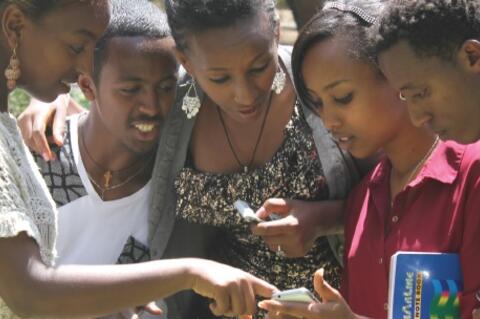
The m4Youth service was created to respond to the rapidly increasing student population in Ethiopia, where the number of tertiary institutions have increased from 2 in 2002 to 30 in 2015. It was found that students in these institutions are vulnerable to unwanted pregnancy, unsafe abortion, sexual and gender-based violence, and sexually transmitted infections, including HIV. This group may engage in risky behaviours, partially resulting from living away from home for the first time, often with limited social and economic support from their families.
m4Youth provides tailored sexual and reproductive health information to university students at Adama Science and Technology University via SMS, based on users' demands. To enroll in the service, students use their mobile phones to text the short code '8990' and receive a message containing a menu covering six topics: contraceptive methods, sexuality, HIV and sexually transmitted infections, unsafe abortion, healthy versus abusive relationships, and where to find services. They then request information by texting a number that corresponds to the topic of their interest. Finally, the server sends content back to students' mobile phones. "When students want to know more about any topic, they can simply send a text from the safety and privacy of their dorm rooms." The service uses RapidSMS, an open-source platform designed to quickly bring mobile services to mass users.
The messages were developed based on gaps identified through a baseline survey and focus group discussions with students. Messages were pre-tested for cultural appropriateness, technical accuracy, and ease of understanding. They are written in English and Oromifa, a local language that uses English characters in writing.
The m4Health service is part of a broader programme to strengthen youth-friendly services at the university health centre and includes the training of peer educators in adolescent and youth sexual and reproductive health. The peer educators are university students who are trained by the project to educate fellow students on sexual and reproductive health. These peer educators also receive additional messages as part of the M4Health initiative for support, supervision, and motivation. In addition, they promote the service to students (and faculty members), which complements the promotion through billboards and posters.
Youth, Sexual and Reproductive Health, HIV, New Technology
According to the project brief: "During the first nine weeks of implementation, students most frequently accessed these content menus: 'Sexuality' (39%) and 'Contraceptive methods' (20%), followed by 'Sexually transmitted infections/ HIV' (15%), 'Healthy vs abusive relationships' (12%), 'Where to find services' (8%), and 'Unsafe abortion' (6%)."
In 2014, the project conducted a baseline survey to measure students’ knowledge of sexual and reproductive health issues and their willingness to receive information via SMS. After six months, the project planned to conduct an endline survey to determine if there were any changes. It is expected that the initiative will have reached 17,000 university students and contribute to increased use of health services by students, and increased reporting of gender-violence.
Running since 2008, the Integrated Family Health Program (IFHP) is one of Pathfinder's "flagship program" working to "make a lasting contribution to the government of Ethiopia’s efforts to improve its health care systems..." IFHP promotes "an integrated model for strengthening family planning; reproductive health; and maternal, newborn, and child health services for rural and underserved populations."
Pathfinder, United States Agency for International Development
- Log in to post comments