










































Interactive Radio for Justice: Impact Assessment Report
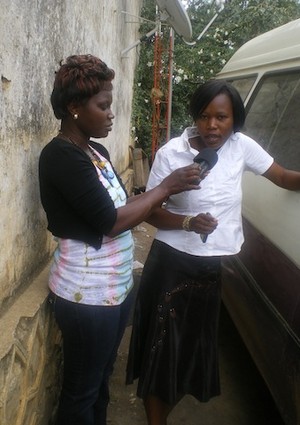
This 68-page report, published by Interactive Radio for Justice (IRFJ), details the results of the second year of an assessment carried out in June 2009 to study the impact of the IRFJ project on audiences in the Democratic Republic of Congo (DRC) and the Central African Republic (CAR), as well as at the international level. The assessment was also designed to review improvement of the project's impact on intended audiences, drawing on the lessons learned during the first year if the project. This report outlines lessons learned, recommendations made during the first year, the interactive process of implementing recommendations, and finally an analysis of the results of that implementation. According to the report, the IRFJ local project sites had a demonstrated impact: targets for eight of 12 indicators were met and several others were nearly reached.
The report explains that IRFJ was founded in 2005 in the DRC, and is designed to encourage dialogue between people in regions where the International Criminal Court (ICC) investigates war crimes, crimes against humanity and genocide, and the national and international authorities responsible for rendering justice to them. Dialogue is created through several series of radio programming, each addressing justice in an interactive manner, produced in local languages and aired on community radio stations.
Data for the assessment report was collected using a mixed-method approach, combining qualitative and quantitative data. Meetings with IRFJ's local teams were held, direct observation took place at listening groups, surveys were conducted with listening group members, focus group discussions took place, key informant interviews were held with government, judicial authorities and staff from the ICC, and web research was conducted to gather data on IRFJ's impact at the international level.
Authors say the results suggest that the project’s greatest strengths lie in bringing about change to listeners' knowledge and beliefs related to their national and international authorities. With regard to knowledge, there was a 54% increase in those saying they felt at least moderately informed on the roles of the ICC authorities, a 58% increase in being at least moderately informed on the roles of governmental authorities, and an 82% increase in being at least moderately informed on the roles of judicial authorities.
Authors say the project had an impact, through less significant one, on participants' behaviour in terms of the percentage increase in the number of those reporting having accessed a judicial authority in the past three months for a problem linked to justice. The target - at 20% increase - was exceeded by a factor of three, although there is continued skepticism on the feasibility and value of consulting local judicial authorities.
One area in which the project has shown meaningful progress is in integrating the voices and views of a diversity of individuals by encouraging them to speak out and understand that their opinions and questions have value. Authors say those participating in the project in its sixth year include different and diverse authorises, as well as individuals from a diversity of intended communities, ethnic groups, genders, ages, and social groups.
At the international level, the report found that IRFJ was the most often solicited organisation for information and assistance by NGOs seeking to work in or report on DRC and CAR.
The report includes a list of general recommendations that may be useful to inform the work of other organisations working on the same or similar issues. These include:
- reinforce linkages between members of the population and national-level authorities through activities such as guided tours of judicial institutions and public meetings;
- create more dynamic programming which could involve field visits and contests;
- produce additional translations into relevant local languages;
- increase the number of public appearances at relevant institutions and conferences to raise awareness of the project among an international audience; and
- consider low-cost possibilities for developing a media strategy, such as hiring an intern with a background in communications or outreach to create a multi-media package.
According to authors, the principal key lesson from the assessment is that while radio is a good medium for changing knowledge and beliefs in particular, and for gradually moving listeners’ behaviour in new directions, there are limitations to its power in contexts where the rule of law remains weak and corruption in the justice system is seen as rampant. Specially planned activities and the production of innovative programming can enhance the impact of the programmes produced. These measures require additional funding and other resources, which points to the importance of collaboration between initiatives working on similar issues.
Click here to contact IRFJ via their online form.
IRFJ website on June 21, 2011
- Log in to post comments