










































ICT4Democracy in East Africa Network
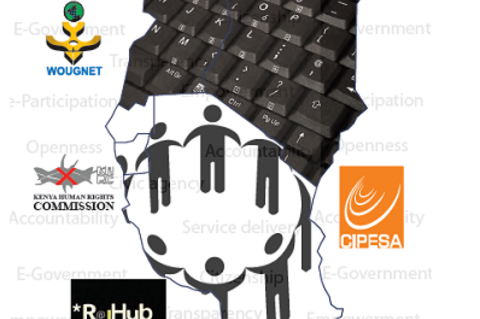
The ICT4Democracy in East Africa Network is premised on the recognition that information and communication technology (ICT) enhances communication and the right to freedom of expression, as well as the right to seek, receive, and impart information. In this respect, ICT has the potential to increase citizens’ participation in decision-making processes, thus strengthening democratisation. Member organisations are leveraging ICTs to hold leaders accountable to citizens, as well as to fight corruption, monitor service delivery, and contribute to building a democratic culture.
The organisations within the network are the Women of Uganda Network (WOUGNET); Transparency International Uganda (TIU); The Collaboration on International ICT Policy for East and Southern Africa (CIPESA); iHub (Kenya); the Kenya Human Rights Commission (KHRC); and Tanzania's Commission for Human Rights and Good Governance (CHRAGG). The ICT for Democracy website houses partner information, news, and events related to ICT for good governance.
The following members are leveraging knowledge and expertise through the network:
iHub, Kenya
iHub in Kenya is conducting exploratory research into the conditions for mobile technology as a successful tool for improved governance in Kenya. Desk research is underway to identify a Kenyan definition of "good governance" and the weakest areas of governance in Kenya. iHub is studying different mobile and web applications as well as lessons learned from existing mobile governance efforts.
Kenya Human Rights Commission (KHRC)
KHRC's has identified and sensitised grassroots-based Human Rights Networks (HURINETs) in the use of social media. Through the HURINETs, databases have been developed for an SMS and crowd-sourcing platform. KHRC is exploring collaboration with iHub (technical) and CIPESA (policy) as well as synergies with CHRAGG.
Transparency International Uganda (TIU)
TIU, with headquarters in Kampala, officially opened its offices in Lira on July 25, 2011. Since then, they have selection and formated Voluntary and Accountability Committees (VACs) which incorporate previously existing Village Health Teams, Health Management Committees, District Health Teams and Baraza structures. The VACs were empowered through ICT to monitor health service delivery in Lira and Oyam districts and currently have 199 members and have so far made visits to eight health centres.
The Collaboration on International ICT Policy for East and Southern Africa (CIPESA)
To enhance Ugandan civic advocacy and engagement and increase government transparency and accountability, CIPESA has entered into memorandums of understanding with two grassroots- based centres to train centre staff in citizen journalism and undertaking and reporting on surveys, focus group discussions, and polls on prevailing governance, political, and service delivery issues. The centres are responsible for mobilising organised groups to join a network of users and advocates in the use of ICTs to improve citizen participation as well as reporting on the activities and developments in the work of mobilised network organisations.
Women of Uganda Network (WOUGNET)
Similar to TIU, WOUGNET has also started its work to empower local people and communities in monitoring service delivery through ICTs. Its project is focuses on five districts in Northern Uganda: Apac, Oyam, Kole, Amuru, and Gulu.
Commission for Human Rights and Good Governance (CHRAGG), Tanzania
In order to ensure citizens understand their basic human rights and the principles of good governance while dealing with the high complaints volume received, CHRAGG built a web based Complaints Handling Management Information System. As a follow up, the commission is developing interactive features via mobile phone platforms to incorporate text messages, and image and video capabilities for informers or complainants.
Democracy, e-Governance, Transparency
the Women of Uganda Network (WOUGNET); Transparency International Uganda (TIU); The Collaboration on International ICT Policy for East and Southern Africa (CIPESA); iHub (Kenya); the Kenya Human Rights Commission (KHRC); Tanzania’s Commission for Human Rights and Good Governance (CHRAGG); and The Swedish Program for ICT in Developing Regions (SPIDER).
the Women of Uganda Network (WOUGNET); Transparency International Uganda (TIU); The Collaboration on International ICT Policy for East and Southern Africa (CIPESA); iHub (Kenya); the Kenya Human Rights Commission (KHRC); Tanzania’s Commission for Human Rights and Good Governance (CHRAGG); and The Swedish Program for ICT in Developing Regions (SPIDER).
CIPESA website, SPIDER website, and ICT for Democracy website on January 25 2012.
Comments

Great Work
This is the way to go keep it up!