










































ICT for Anti-Corruption, Democracy and Education in East Africa
"The use of ICT in developing contexts entails a variety of challenges, but limitations can also be the source of creativity and innovation."
This is one of the observations that emerged from this collection of six essays discussing how information and communication technologies (ICTS) have been used in projects in East Africa to address issues around corruption, democracy, and education. This publication was produced as part of the Swedish Program for ICT in Developing Regions (Spider) Center's Research Related to Projects initiative, which seeks to establish a closer connection between ICT4D (ICT for Development) research and ICT4D practice. ICT4D researchers in Sweden, in collaboration with researchers and practitioners in partner countries, carried out research on ongoing Spider-supported projects. The results of these studies are shared in this publication.
The contributions are organised into three thematic sections, with two contributions per section.
Anti-Corruption
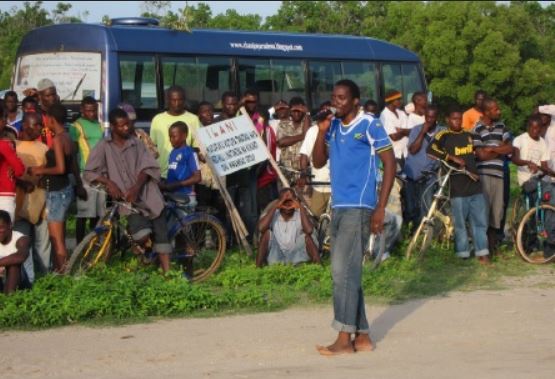
The first section discusses anti-corruption and how ICTS can be used to raise awareness, expose, and to a certain extent, curb corruption. This includes using ICTs to create a public space to debate and mediate action, "while at the same time underscoring the cultural contextualization of ICTs and social media and how actions online relate to actions in the world." The first article explores the use of music combined with digital media, such as facebook and blogs, in an anti-corruption campaign in Tanzania. The second discusses the divergence between the support of an anti-corruption campaign in social media and actual involvement in the initiative. "While there has been great interest in the proliferation of social media, there is much more to learn about the impact of social platforms in development work."
Democracy and Accountability
The second section focuses on the use of ICT in democracy and accountability. The publication observes that "limitations in infrastructure, literacy and ICT skills requires solutions that rely on both "old" and "new" technologies, drawing on what is available and what is possible to find a combination that works." Both articles in this section explore the use of technology in Uganda to facilitate reporting and holding government accountable for poor service delivery. "Designing solutions that are available to the majority of the population requires close attention to context and the needs of the target groups with the lowest capacities. Approaches that rely on co-design or interactive techniques can bridge the gap between developers and end users, are thoroughly described in this chapter."
Education
The final section focuses on the use of ICT in education. The two contributions "underscore in different ways how close attention to the needs, priorities and capacities of the target groups strengthens ICT for education initiatives. Topics chosen by the participants themselves increase motivation, anchor ICT skills and inspire the participants to spread the knowledge further." The first article explores a Kenyan project using a non-formal, mobile learning course to improve knowledge around human rights. The second contribution discusses how ICTs have been used for adult education within self-help groups.
Spider Center website on January 16 2015.
- Log in to post comments