










































How to Write a Creative Brief
"A creative brief is a short, written document used by project managers and creative professionals to guide the development of creative materials (e.g. drama, film, visual design, narrative copy, advertising, websites, slogans) to be used in communication campaigns....[It] is the guidepost for creative deliverables: it guides in-house experts, an advertising agency or a creative consultant in the development of messages and materials that fit within the campaign’s overall strategic approach."
This Health Communication Capacity Collaborative (HC3) guide, one of five [see Relates Summaries below] designed to help strengthen the capacity of those designing social and behaviour change communication (SBCC) programmes, describes the eleven steps in writing a 1-2 page creative brief that "sets the direction, defines the audience(s), focuses on the key messages and shows the desired results for an SBCC campaign or materials... (e.g. drama, film, visual design, narrative copy, advertising, websites, slogans). The creative brief is part of the design phase in the communication process. The creative brief should be based on a communication strategy to ensure creative deliverables align with the overarching strategic approach...."
A creative brief outlines the most important elements of the SBCC campaign (see Creative Brief Template):
- The key health or social issue to be addressed.
- The priority and influencing audiences (who the campaign will reach).
- The importance of reaching those audiences.
- The key behaviors to promote.
- The reason the audience(s) should adopt a specific behavior.
- The benefits of taking that action."
Steps include:
- Step 1: Define the Purpose
- Step 2: Determine the Objectives
- Step 3: Describe the Audience
- Step 4: List Competing Current Behaviors or Conditions
- Step 5: Highlight the Key Issue
- Step 6: Determine the Key Promise
- Step 7: Identify Support Points
- Step 8: Define the Call to Action
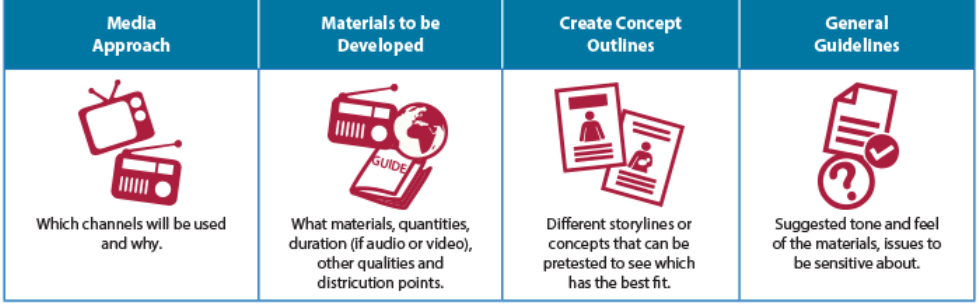
- Step 9: Determine Creative Considerations
- Step 10: Map the Timeline
- Step 11: Develop the Budget
The document also includes: resource links, templates, samples, tips and recommendations, a glossary and concepts section, and sources and citations.