










































Home-Based Record (HBR) Ownership and Use of HBR Recording Fields in Selected Kenyan Communities: Results from the Kenya Missed Opportunities for Vaccination Assessment
Brown Consulting Group International LLC (Brown); Kenya Expanded Programme on Immunization (Tabu); World Health Organization (WHO) Kenya Country Office (Sergon, Onuekwusi); WHO Headquarters (Shendale, Ogbuanu); Maternal and Child Survival Program, or MCSP (Mugoya); WHO Regional Office for Africa Inter-Country Support Team (Machekanyanga); United Nations Children's Fund (UNICEF) Kenya Country Office (Okoth)
"Additional work is needed to develop and operationalize effective communication strategies alongside health workers to ensure caregivers are aware of the importance of maintaining the child's HBR safe from harm in the home and to bring the document with her to each and every health encounter."
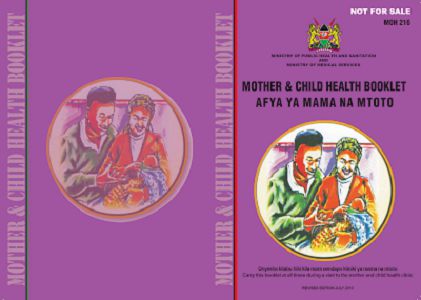
As part of a series of activities by the World Health Organization (WHO) and the United Nations Children's Fund (UNICEF) to revitalise the utilisation of home-based records (HBRs) within immunisation service delivery (and primary health care more broadly), this group of researchers leveraged an opportunity within the 2016 Kenya Missed Opportunities for Vaccination Assessment to describe current HBR ownership prevalence among children visiting health clinics and to report on the utilisation of selected recording areas in HBRs in Kenya.
To help readers understand the impetus behind the research, the researchers provide background on HBRs and their purpose within the communication encounters that take place around immunisation, worldwide. In brief, home-based, personal health records, such as vaccination cards or child health passports, are designed to provide frontline health workers with a standardised patient history that is convenient, comprehensive, and vital to informed decision-making about the need for care and immunisation services. They also serve as a prompt to initiate a discussion between health workers and caregivers about the importance of immunisation, hopefully increasing the likelihood of a timely completion of the full infant immunisation series. As a source of documented evidence of vaccination history, HBRs are also important for public health monitoring, improving the accuracy and reliability of small-scale community-based rapid coverage assessments. However, there are increasing concerns around HBRs with recording areas that are functionally irrelevant because they are incomplete or not up to date. Ideally, entries in the HBR are made in clear, legible handwriting along with the date of service, the date of the next expected visit, and any additional information that may be useful.
As the report describes in detail, the Kenya Missed Opportunities for Vaccination Assessment used a mixed-methods approach that included exit interviews, using a standardised questionnaire, among a convenience sample of caregivers of children younger than 24 months attending a health facility during November 2016, as well as interviews of health staff and facility administrators. Data obtained from a review of available HBRs from the children were also reviewed.
Among the 677 children, a HBR was in hand and reviewed for three-quarters (n = 516; current HBR ownership prevalence = 76%). Roughly two-thirds (n = 443) of caregivers noted they were asked by clinic staff to see the HBR during the clinic visit. Nearly 20% (n = 129) of respondents noted they owned a HBR for the child but did not have the document with them. Among the 129 respondents who did not have the child's HBR in hand, nearly one-third (n = 41) reported they did not come to the clinic for immunisation services, and another one-third (n = 41) noted they did not know the importance of bringing the document with them. Four percent of respondents reported not having a HBR at all, for these reasons: never received a HBR (n = 9), having lost the document (n = 4), and other reasons (n = 12). Current HBR ownership prevalence was lower for those where the respondent reported no formal education (54%) compared to respondents who completed secondary or more than secondary schooling (82-85%). Current HBR ownership levels were also greater among those where decisions about vaccination were a shared responsibility of the mother and father (83%) than by either the father (50%) or mother (70%) alone.
Across the 516 reviewed HBRs, recording areas were most commonly identified for the child's demographic information (80% of HBRs) and vaccination history (82%), with information marked in more than 90% of records. Recording areas were less frequently available for child early eye / vision problems (61%), growth monitoring (74%), and vitamin A (76%) - with information marked in 33%, 88%, and 60% of records, respectively. ("If recording areas are not being utilized, then programmes might consider a call to arms for the corresponding health area around the need for improvements in recording and use of data for action, or consideration should be given to removing those recording fields from the HBR altogether.")
More than 80% of caregivers provided valid explanations of the purpose of the HBR. Among the responses, 31 caregivers noted that the HBR is required, or was perceived by the respondent to be required, to access primary care services in some communities in Kenya. The researchers stress that they do not believe that the absence of the HBR is appropriate justification for restricting access to care. Furthermore, despite explicit language printed on Kenya’s official HBR (since at least 2014) that the document is not for sale, nearly 20% of respondents had been asked to pay for a HBR, many by public health facilities. Some caregivers may have received older versions of the Kenya HBR or received a private sector HBR that did not include explicit language printed on the document that the record is not for sale. In other cases, the HBR was an informal ruled-notebook, a makeshift solution resulting from a problem of stock outs of the official HBR in the country. The researchers are concerned that use of multiple HBR formats can pose challenges for health workers - for example, making it more difficult to locate recording fields, which may lead to incomplete or blank recording fields.
The researchers suggest that additional investigation is needed to further understand how health workers and caregivers use (or not) all content areas within comprehensive, multi-domain HBRs and the benefit of these documents vis-à-vis HBRs limited to recording vaccination and those limited to vaccination and growth monitoring. Further work may also be appropriate to better understand how HBR design and standardisation may influence ownership and use of the document, particularly with a focus on how well-designed HBRs can help reduced missed opportunities for vaccination (MOV). Improving caregiver understanding of the importance of vaccination can also facilitate a reduction in MOV.
In concluding, the researchers stress that, being critical to the reduction of MOV, "the HBR's importance must be emphasized and the document must be requested by health workers at every health encounter. Health workers must not only ensure that all children receive a HBR and counsel caregivers of its importance, but they must also ensure that all sections of the record are legibly completed to ensure continuity of care. Programmes are encouraged to periodically review and critically assess the HBR to determine whether the document's design and content areas are optimal to end user needs."
PLoS ONE 13(8): e0201538. https://doi.org/10.1371/journal.pone.0201538 - sent via email from David Brown to The Communication Initiative on August 2 2018. Image credit: Home-Based Record Repository
- Log in to post comments