










































HBR Guide for Frontline Health Workers: Improving Use of the HBR/Vaccination Card
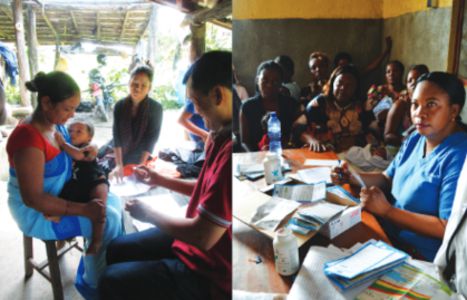
This document from JSI's Coordination and Implementation of Child Health Record Redesigns Project is a compilation of home-based records materials developed in Democratic Republic of Congo, Nepal, and Zimbabwe as guides for health workers who are vaccinating children as part of their regular jobs. Guidelines, posters, and/or job aids were developed in each country for frontline health workers to understand the importance of the home-based record (HBR) and how to use this tool during their regular immunisation activities.
Used around the world, HBRs - also known as child health cards, maternal-child health booklets, or vaccination cards in some countries - are official documents issued by the Ministry of Health. HBRs are an important data collection and monitoring tool serving multiple purposes for the caregiver, health worker, community health worker (CHW), and health system. For example, HBRs can serve as a link between health workers and caregivers to communicate to parents what antigens the infant should receive and when and where to go for vaccination services. They can empower caregivers by enabling them to understand the health services their child needs. This knowledge can contribute to and increase timely demand for vaccination, improving immunisation compliance and contributing to increased coverage. JSI stresses that it is important to ensure that caregivers receive cards and are oriented on the card's importance. "Because of their close relationship with caregivers, CHWs can play an important role in promoting messages around the importance of cards....Community leaders such as village heads, chiefs, and religious leaders can also play an important role in spreading messages around the importance of immunization and protecting and using vaccination cards."
Contents include:
- Introduction - HBR Users
- Benefits of the HBR/Vaccination Card
- When a Health Workers Uses the HBR/Card
- Use of Card with Other Immunization Reporting Tools at Health Facility Level
- Ensuring Card Availability and Stock
- Involving Community Leaders
- Key Messages on Importance of Card
- Annex 1: Example User Scenarios for Health Worker Training
- Annex 2: CHW Job Aid from Zimbabwe
- Annex 3: Sample Poster Used at Health Facilities and Vaccination Sessions in Nepal
- Annex 4: Job Aid for CHWs in Nepal
- Annex 5: HBR Briefer Included in Rotavirus Vaccine Introduction Materials for Health Workers in Nepal
- Annex 6: How to Use the Card and Tickler File System for Defaulter Tracking
JSI advises countries to adapt this guide to include locally used terminology, processes, and roles. This information could also be included in other materials being developed for in-service trainings and new vaccine introductions (see example of this in Annex 5).
English, French, Portuguese, Spanish
30
JSI website, September 5 2018.