










































Time to read
less than1 minute
A Country for My Daughter: Film and Discussion Guide
Image
SummaryText
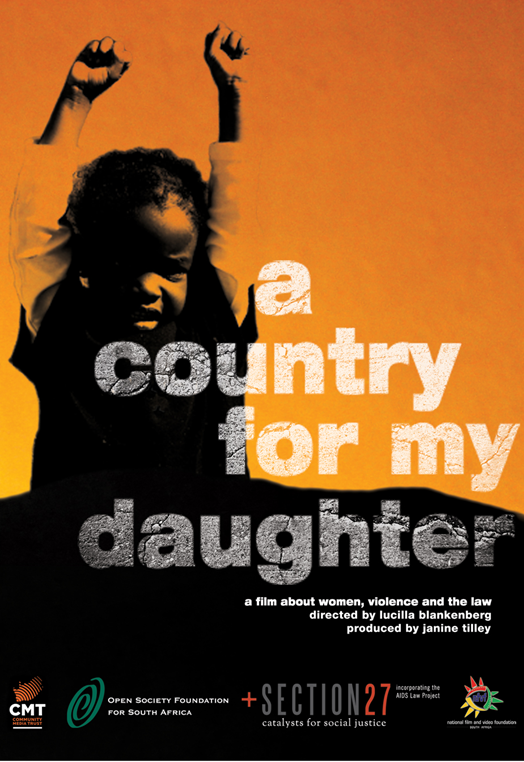
Produced by Community Media Trust, A Country For My Daughter features Nonkosi Khumalo, chairperson of the Treatment Action Campaign, a human rights activist, and mother who doesn’t want her daughter to grow up in a world of violence. In the film, Khumalo travels around the country investigating the stories of women whose court cases have transformed the law in South Africa for the better. The cases range from rape within a family to holding the Minister of Safety and Security liable. Through these stories, Nonkosi Khumalo learns of the laws available to protect South African women and how they can be used. The film also highlights the gap between South Africa's good legislation and the real experiences of women living in the country.
A 59-page training manual accompanies the film, designed to assist facilitators in structuring a comprehensive and informative discussion about women, violence, and the law. The manual is designed to be used to educate communities about gender-based violence and the rights associated with this problem. It includes the following chapters.
A 59-page training manual accompanies the film, designed to assist facilitators in structuring a comprehensive and informative discussion about women, violence, and the law. The manual is designed to be used to educate communities about gender-based violence and the rights associated with this problem. It includes the following chapters.
- Chapter One: Gender Based Violence: An Overview
- Chapter Two: Sexual Assault and Rape
- Chapter Three: State Responsibility to Protect
- Chapter Four: Men and Gender Based Violence
- Chapter Five: Gender Based Violence and HIV
- Chapter Six: Community Mobilisation
- Chapter Seven: Helpline contacts
Publication Date
Languages
Englsih
Number of Pages
59
Source
Beat It website on July 21 2011.
- Log in to post comments