










































The Advocacy Sourcebook
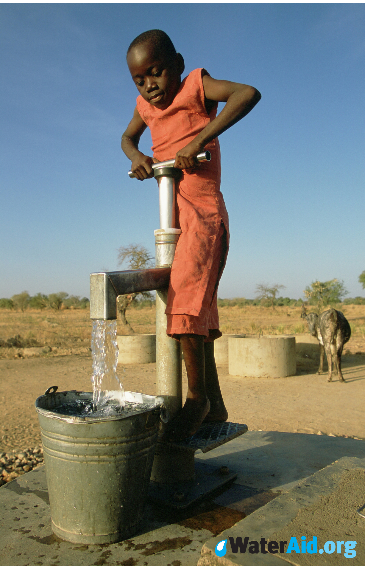
The primary aim of this guide is to "assist WaterAid staff and partner organisations in drawing up advocacy plans that aim to improve the water supply and sanitation situation of the poorest people in the countries where they work." As such, it may be useful to "anyone who wants to change the lives of the poorest people in the world."
The Advocacy Sourcebook looks at what advocacy is, why organisations do advocacy, how to develop advocacy plans, and how to make advocacy happen. It offers a selection of advocacy tools from a toolkit that can be used as is or modified according to specific campaign needs.
The sourcebook is divided into six sections: Section 1 examines the theory of advocacy work in order to prepare the reader for self-analysis, research, and planning processes. Section 2 looks at specific WaterAid advocacy to improve water supply and sanitation (WSS) in the context of the United Nations Millennium Development Goals. Section 3 discusses grassroots community involvement and includes tools and case studies on how to make this central to advocacy work. Section 4 presents an advocacy planning cycle with steps for organisations to plan advocacy work (analysing the issue, identifying targets, identifying the means to influence those targets). Section 5 and 6 have tools for putting advocacy plans into practice while Section 7 discusses monitoring and evaluation and Section 8 offers links to useful list serves, networks, and organisations. Finally, the sourcebook provides some case studies from Africa and Asia that may be useful in helping organisations draw up and implement their own advocacy plans.
Click here to access this resource online.
Click here to access the English version of this document in PDF format.
Click here to access the Portuguese version of this document in PDF format.
Publishers
English, Portuguese, French, Spanish
118
WaterAid website on February 14 2012. Credit: WaterAid/Jon Spaull
- Log in to post comments