










































Media in Cooperation and Transition (MICT)
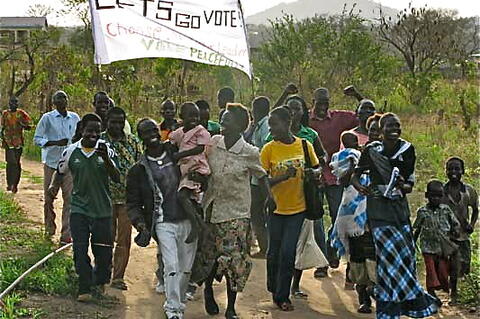
From MICT's perspective, the key factor in conflict transition is supporting media cooperation, media networking, media development, and capacity building in the field of journalism. To that end, the focal point of MICT's strategies is the interaction and interdependence of media and conflict. MICT's services comprise the training of journalists and media producers, programme and content development, production of radio programmes, films, and books, as well as media research and monitoring in conflict zones. All projects are realised in close cooperation with MICT partners on-site.
Selected MICT project examples:
Web
- Wirtschaftsplattform Irak (WPI) - In May 2009, MICT launched this online portal for German entrepreneurs interested in working and investing in Iraq. The website contains detailed information on jurisdiction, economic regulations, and current issues pertaining to politics, society, and the rebuilding and development of Iraq today. WPI is realised by a team of experts based in Berlin, Germany, in continuous interaction with journalists, activists and business operators in Iraq and the wider Middle East.
- NIQASH - a trilingual website (Arabic, English, Kurdish) on politics, media, and culture in Iraq. Since March 2005, an international editorial team, in cooperation with a network of Iraqi correspondents, researches and publishes background information online and sends out a weekly newsletter with analyses of current political developments in Iraq to over 3,000 subscribers all over the world.
- LIQA - a digital exchange of letters between experts from Iraq, its neighboring countries, and Europe in which 28 select participants from 9 different cities wrote each other letters on controversial questions situated at the intersection of politics and art. The resulting texts, letters, and opinions were published on the NIQASH website.
- Electionnaire - interactive online voter education software. The user is asked to agree or disagree, per mouse click, to 30 statements on political core issues. At each new statement s/he can inform him-/herself about the respective position of all main political parties. At the end of the dialog the Electionnaire informs the user on which political party mostly closely represents his/her own positions. MICT developed the Electionnaire with a focus on the parties, lists, and candidates participating in the December 2005 elections in Iraq. Particularly against the background of an election campaign that was very emotional and focused on religious and ethnic aspects, the availability of such a tool, which focuses on political issues, seemed useful and necessary to MICT. To cite a more recent example, the Sudan Electionnaire is an online questionnaire that compares views on 30 debated issues with the positions of the 16 main parties for the upcoming elections in February 2010. A ranking shows how the answers match the party programmes. The tool is meant to offer more information before going to the ballot box.
- Online School - MICT selected young Iraqi radio journalists and trained them in a 4-week online course designed to develop their skills in gender-sensitive journalism. Through this application an expert or teacher in charge is able to comment directly, on-time, and remotely to a radio report that has been submitted by a student. The teacher can either add a comment to a specific part of the audio file or can submit in-depth comments on the student's reports. The student responds to the comments in an extra text space.
Film
- BABEL NOW - an art installation featuring conversations with 14 citizens of Babel exploring their projects and struggles, giving their political analysis, and reflecting on how ancient history influences daily life in the capitol city of Hilla. These conversations with Babylonians are shown as an installation with 10 screens in the Pergamonmuseum (Berlin/Germany) and in the British Museum (London/Great Britain) as part of the exhibition "Babylon. Myth and truth". One can watch/listen here as well.
- Iraqiscope - an online platform for films and video clips made in Iraq. It allows people to upload and share video clips, short films, and movies of any kind. Users can see first-hand accounts of current events, made by Iraqis from the "inside perspective".
Radio
- Election Coverage Network - a voter education project for the parliamentary elections in Iraq in January 2010. On July 5 2009 a consortium of journalists from all parts of Iraq began the production of radio interviews, reports, and information on election issues in cooperation with a German-Arabic team of editors working for MICT. The project aims to provide the Iraqi people with independent information about parties, candidates, and details on the voting process. The products will be made available to a network of FM radio stations across Iraq and will be open to a worldwide audience online. The radio reports will be broadcast in Arabic and Kurdish.
- Journalists in Dialogue - initiated by MICT with the goal to to enhance tolerance and mutual understanding among the ethno-religious communities in the country and to increase dialogue between conflict partners on the community level via local Iraqi media. Starting on March 1 2007, a network of 6 radio stations cooperatively produced 10 radio shows on key conflicts revolving around the problem of federalism. In the run-up to the production, editors of the participating radio stations attended lectures on the federalism debate in Iraq and conflict-sensitive journalism and developed guidelines and a structure for the production. The participating radio stations exchanged reports, material, and phone calls during the show, which was broadcast every Monday at noon by all participating radio stations simultaneously.
- Radio Reports Network (RRN) - Implemented from June 2005 to January 2007, RRN was a radio agency for production and dissemination of Iraqi radio reports. Linking a network of more then 30 journalists located all over Iraq with a network of Iraqi radio stations, RRN produced and disseminated radio reports (features, interviews, and vox pops - "man on the street" interviews) in all provinces of Iraq on a daily basis. The centrepiece of up- and download/dissemination was a secured internet platform managed and maintained by MICT. Although the core purpose of RRN was political education, MICT also hoped through the project to facilitate the capacity building of young journalists (all participating journalists underwent training measures before joining the network) and to strengthen linkages between the 20 participating radio stations.
- Election Monitor Iraq (EMI) - Running from December 21 2005 to February 31 2006, this radio programme monitored the preparation, implementation, and analysis of the Iraqi elections in January 2006. Over 3 months, in daily 30-minute shows, EMI discussed election topics with candidates, presented parties and their programmes, asked election observers to comment on the state of the process, explained the technical aspects of voting, etc. The programme was aired by 4 different radio stations in 11 Iraqi provinces. The content was delivered by 20 correspondents in Iraq (who had been trained during a 7-day workshop in Amman), while the programme itself was put together at the MICT studio in Berlin. The various parts of the radio programme were collated on a website for further use and complemented by additional information. Part of the project was the creation of an election booklet in which all candidates and parties were explained. The guide to Iraqi Parties was distributed as complement with the Newspaper Sabah Al-Jadeed.
- Sawtuha - Launched in June 2005, Sawtuha (her voice) was a year-long radio production on women's topics. Together with female journalists and Iraqi non-governmental organisations (NGOs), MICT developed shows and features on the situation of women in Iraq, which were broadcast by up to 15 radio stations throughout Iraq. The communication between MICT, radio stations, female journalists, and NGOs was coordinated through a virtual editorial platform.
- Iraq 360 Degrees - Two Iraqi writers reported on their 3-month journey to Damascus, Istanbul, Ankara, Cairo, and Beirut. On a weekly basis 1 Lebanese and 3 Iraqi radio stations aired the show.
- Telephone FM - produced 5 days per week for 3 months in 2004 in Berlin together with Iraqi journalists and transmitted via a partner radio station in Baghdad. At the centre of each show was the conversation between Iraqi radio journalists in Germany and young people in Iraq who, as academics, entrepreneurs, or cultural workers, reflect and evaluate the current changes in their country. The conversations focused on everyday life, private perspective, and professional activity of the interview partners in Iraq; these personal questions were intended to convey an evaluation of the political situation. To implement this project, Iraqi radio journalists were invited to Berlin, where together with German editors they developed and produced the programme.
Conferences and training
- In Sudan, the Voters Education Project aims to support the country's media in covering the upcoming (February 2010) elections. MICT will train journalists from 14 newspapers and radio stations in various workshops designed to enable them to produce professional background information about parties, candidates, and the voting process.
- Transmediale (Berlin, Akademie der Künste, February 2 2006) - On the occasion of the Transmediale art festival, MICT invited Iraqi journalists and writers to Berlin to discuss the role of Iraqi and foreign media in the political development of Iraq. The panel, "Fragile freedoms - Iraq's media landscape", was organised and moderated by MICT.
- Election Day (Berlin, Kulturbrauerei, January 31 2005) - On the occasion of the Iraqi parliamentary elections, MICT invited 8 Middle East experts to a debate on the political process in Iraq, the elections within the context of political tensions, and the election results. The panel discussion, which was held before an audience of 350 guests, was held within the framework of a 4-hour live radio show, broadcast from Iraq. The audience in Berlin could listen via headphones either in the Arabic original or simultaneously translated into German. A bilingual ticker, projected on a big screen, provided the latest news sent to Berlin by MICT's correspondents and election observers in Iraq.
- Radio Conference (Amman, August 15 2005) - MICT invited representatives and directors of 22 Iraqi radio stations to network, to find ways of future cooperation, and to discuss challenges and difficulties that radio broadcasters face in Iraq. All 22 radio stations agreed on cooperation within the framework of the RRN and to sign a Professional Code of Ethics.
Publications
- SHAHADAT - a collection of interviews, articles, artwork, and other comments on the cultural transformation of Iraqi society in the past 4 years. The participating authors are key figures in the cultural political discourse.
- Media on the Move - a reader on the developmental status of media in Iraq, with a focus on regulation and legislation issues.
Media Development, Democracy and Governance.
MICT is financed and supported by the Belgian Foreign Ministry, the German Foreign Office, the Friedrich Ebert Foundation, United Nations Educational, Scientific and Cultural Organization (UNESCO), United Nations Development Fund for Women (UNIFEM), United Nations Assistance Mission for Iraq (UNAMI), the Government of Canada, and the Amman Centre for Human Rights Studies.
Email from Christoph Dietz to The Communication Initiative on July 2 2009; A-Z of German Media Assistance to Developing and Transitional Countries [PDF]; and MICT website, September 10 2009 and September 16 2009. Image credit: Xchange Perspectives
Comments

All the information in this
All the information in this essay are based on Cooperation and Transition, To that end, the focal point of planning is the interaction and interdependence of media.
- Log in to post comments