










































Sports for Peace and Life Program
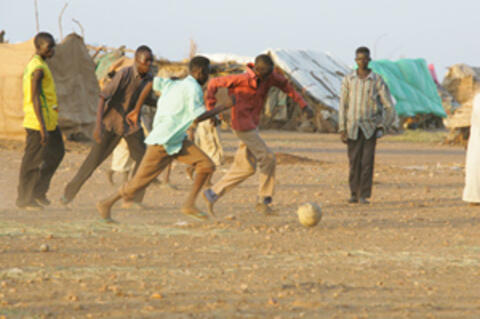
To ensure the success and sustainability of Sports for Peace and Life, Mercy Corps partnered with Nike, Grassroot Soccer, and the Southern Sudanese Ministry of Culture Youth and Sports. According to the organisers, these partnerships were key to driving the programme and its future sustainability. Together with Grassroot Soccer, Mercy Corps firstly developed the Sports for Peace and Life curriculum. The Ministry of Culture functioned as the recruitment team, locating coaches and teachers from each state to lead the programme. A Mercy Corps employee then partnered with a Grassroot Soccer employee to train these new recruits who in turn led groups of youths, ages 13-24, through 6 weeks of curriculum and training. In most cases the sport used was soccer, although for some all-girls teams it was volleyball.
The project used game-based activities to de-stigmatise HIV/AIDS and teach youth about the difference between HIV and AIDS, how the disease is transmitted, and how to avoid infection through the use of condoms, abstinence, or by having only one partner. According to Mercy Corps, the game-based approach is a relaxed and comfortable way to address these sensitive topics. The organisation also strives to identify trusted adults in the community to be coaches so the atmosphere can be relaxed and youths can talk openly about the issues addressed. For the peace building component of the programme, role-playing was used to give examples of how to manage conflict rather than resort to violence.
Once the 6-week curriculum was over, participants completed a post-test to measure changed attitudes and understanding. A large state tournament was held to celebrate the completion of the programme as well as reinforce the main issues. Nike provided jerseys and sports equipment for all the teams and in total donated more than 190,000 pieces of equipment. The tournament was not only a celebration but a graduation from the programme. In 9 months 7,000 youth completed the Sports for Peace and Life programme, with a 92% graduation rate. In total, there were 366 coaches spread out among the 10 states of southern Sudan with each coach in charge of approximately 20 youths.
Youth, HIV/AIDS, Conflict.
Due to Sudan's 21-year civil war, 2 generations of southern Sudanese youth have missed out on a formal education. Following the 2005 peace agreement, the region now faces other problems. A severe lack of schools and skilled teachers means there is still little opportunity for education or structured activities. Although HIV prevalence is currently estimated at 1.6% (much lower than bordering countries), there are factors that threaten to increase this rate. These factors include: increase in population movement through trade and transport from neighbouring countries, lack of HIV/AIDS education and awareness, low levels of health care services, and cultural factors such as polygamy, cultural barriers around speaking about sex, and the stigma surrounding HIV/AIDS. In addition, young people risk inheriting the long-held beliefs which fuel intertribal conflict.
Overall, the programme was deemed successful even with the many challenges that were presented. However, Mercy Corps has stated that these challenges will inform the future of the programme and has helped identify areas of improvement. According to the organisers, cultural barriers related to the inclusion of girls in the programme need to be overcome. Culturally, females tend to domestic chores, do not participate in sports, and sometimes do not even go to school. For this reason, 4 out of 5 participants in the programme were male. In the future, the programme plans to encourage more girls to participate and is thinking of working with parents to achieve this. The organisers believe that by improving access to sports, education, and HIV/AIDS awareness, they can improve the livelihood and self-esteem of many girls in the area.
Other challenges identified were language barriers, access to condoms, and access to testing services. Furthermore, working in a post-conflict environment presented challenges due to the lack of organised sports teams and a government structure that is in the process of being developed.
Grassroot Soccer, Nike, United States Agency for International Development (USAID), Southern Sudanese Ministry of Culture Youth and Sports.
Mercy Corps website; Global Vision website on July 21 2008; and email from Sylvia Ross to The Communication Initiative on June 15 2010.
Comments

sports in southern sudan
hi
iam very grateful for the work done by your organisation towards peace through sports in southern sudan. I can see that these site was posted in the year 2006.Is this vision still running three years down the line?.Has your organization consindered southern sudanese in diaspora.
otherwise once again it is a very good undertaking from the fact that sudan is a growing country, I your vision should be to support southern sudan sports to olypics and international sports.
best regards
benson
Sports
This type of sport enhances the skills and abilities of the students/individual, peace and life program to the citizens in the area. I wish that the government or non-government organizations and kind hearted individuals will offer or even provide some necessary equipments/tools and donations for this for future athletes like the marquez vs bradley athletes in boxing.
- Log in to post comments