










































Awareness Creation and Feedback Collection Through Interactive Radio Shows in Kitui and Makueni
Africa's Voices Foundation (AVF)
"Containing and stopping the COVID-19 pandemic in Kenya requires equitable access to trusted, reliable information, particularly in counties outside of the main urban centres where access to information and adequate healthcare may be less available."
Following the outbreak of COVID-19 in Kenya, in March 2020, Africa's Voices Foundation (AVF) implemented its interactive radio modality for simultaneous awareness-raising and feedback collection in an effort to understand the knowledge, attitudes, and practices related to COVID-19 among community members in Kitui and Makueni counties. They undertook this work in part to help contribute to World Vision Kenya (WVK)'s evaluation of the effectiveness of the support provided through WVK's Emergency Response in Kitui and Makueni counties project (July-December 2020).
AVF deployed the Common Social Accountability Platform (CSAP) in Kitui and Makueni, which is designed as a sustained channel for open conversation between citizens and decision-makers, across sectors and mandates. Social accountability refers to a form of civic engagement that builds accountability through the collective efforts of citizens and civil society organisations (CSOs) to hold public officials, service providers, and governments to account for their obligations with responsive efforts. CSAP uses a combination of radio programming and SMS (text) messaging to create a platform citizens actively engage in, while simultaneously allowing for feedback received from citizen SMS messages to be robustly analysed, understood, and ideally, acted upon.
CSAP is built on AVF's interactive radio method. This approach is designed to leverage Kenya's media landscape, which consists in over 170 radio stations broadcasting in English, Kiswahili, and vernacular languages. With AVF's method, audiences drive the discussion by inputting their perspectives through SMS to a toll-free short code. By connecting citizens with each other and with decision-makers in this way, the interactive radio method can overcome some of the barriers of cost, infrastructure, and security that traditional survey methodologies often face, without losing the scope for rich and sustained citizen-authority interactions. In addition, engaging through SMS and radio allows citizens who are traditionally excluded from public discussion spaces, such as women, youth, and refugees, to have a voice in decision-making processes. Moreover, by convening citizens in large-scale discussions, AVF's method allows for the gathering of public opinion in a way that combines the richness of on-the-ground qualitative approaches with the scale and some of the quantitative value of perception surveys.
WVK and AVF focused the first episode of the radio consultation on understanding how citizens were responding to the COVID-19 crisis and the impact it was having on their lives. The show was broadcasted on the vernacular radio station Musyi FM, which has a considerable listenership in the targeted region. The show's advert aired 3 days prior to the show to encourage and invite listeners to share their opinions via SMS to the free shortcode. Each message received in response was followed by a request for consent to use the data for analysis and a request for additional demographic information. A similar approach was adopted for episodes 2 and 3 of the radio shows, also aired on Musyi FM.
Specifically, the first episode, which featured guest speaker Dr. Moses Masika, a virologist and lecturer at the University of Nairobi, asked, "What are you doing to protect yourself and family from COVID-19?" The second episode, which featured Dr. Joy Mueni Kiir, economist and lecturer, University of Nairobi, asked, "How has your source of income been affected by COVID-19?" The third episode, which featured Ms. Bretta Mutisya, County Health, Education & Promotion Services Officer, Makueni County, asked, "What is your opinion on the Impact of COVID-19 on education, especially with schools reopening?"
Across the 3 episodes, over 1,200 participants sent over 2,300 messages. A total of 1,008 participants consented for their messages (totaling 1839 messages) to be included in the analysis.
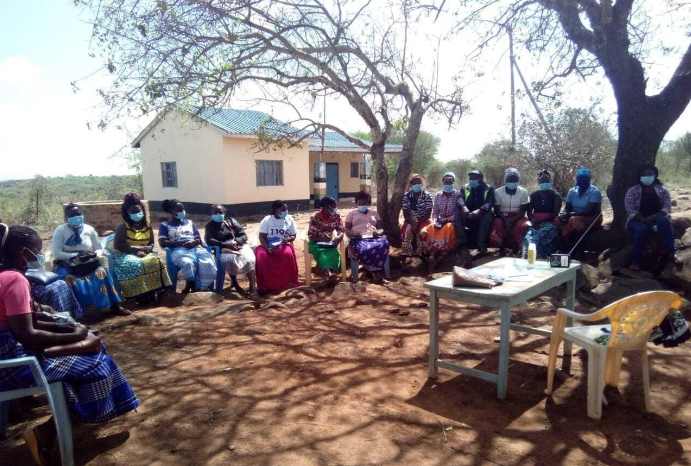
The project also undertook a series of listening groups, whereby a total of 105 participants listened to the live AVF interactive radio shows on Musyi FM on week 2 and 3 of programming. Through this approach, AVF hoped to increase engagement levels against the backdrop of the first phase of this project, where hypotheses explaining relatively low levels of engagement included broadcast language, lack of access to radio and mobile phones, and low literacy levels. The 7 groups (4 in Kitui County, 3 in Makueni County) were composed of 15 members each and were assisted by a trained local facilitator. The facilitators were balanced in terms of gender and recruited from the communities by WVK and AVF, which was designed to enable ownership of the discussions.
In the first episode, aired on July 16 2020, participants in Makueni and Kitui demonstrated some awareness of coronavirus, including knowledge of how to prevent transmission. However, some participants indicated a lack of basic understanding about what the virus is, how it is spread, and the necessary preventative measures. One-quarter of the respondents sent in messages regarding the negative impact coronavirus is having on their lives. The fact that this was the most commonly reported response suggests that citizens' desire to highlight that the negative socioeconomic impact of the virus has overridden their interest in answering the radio question about the strategies they have in place to protect themselves and their families. Participants also indicated a lack of access to basic preventative equipment, such as masks, gloves, and hand sanitiser.
In episodes 2 and 3, aired in November (the 5th and 12th) 2020:
- It became clear that people in Makueni and Kitui have faced serious economic consequences from the pandemic, with examples of participants (especially those in the younger age group of 18-35 years old) losing their jobs and struggling to get enough food or to pay rent. This impact across the board has also affected the existing resilience and self-help structures in the community, such as table-banking (a group saving strategy) and chamas (an informal cooperative society that is normally used to pool and invest savings).
- Participants also spoke on the impact on domestic tensions and violence, and also discussed negative behaviours among children and adolescents as a result of the school closure and overall instability.
- Participants showed concern about the risk of COVID-19 spreading in schools when they reopen, but there seems to be a stronger need for them to open as long as measures are taken to keep them safe. Participants were proactive in making recommendations on how they can be made safe but also had questions about measures and risks of schools not following guidelines./li>
In November 2020, AVF deployed "Katikati", a one-to-one SMS platform, to determine the satisfaction of beneficiaries under various livelihood programmes implemented by WVK in Kitui and Makueni Counties. The aim was to confirm the receipt and form of the assistance, gauge the level of satisfaction, and seek recommendations for new areas of intervention in Kitui and Makueni counties. A total of 129 individual conversations were initiated by AVF to a group of 129 beneficiaries; 35 of the 129 conversations were established and sustained to conclusion.
WVK beneficiaries who engaged in the one-to-one conversation conveyed appreciation for the assistance offered, which fell into 4 categories: financial assistance and prescription drugs; financial assistance and chicken for poultry farmers; financial assistance on school fees; and provision of lighting (electricity) and water. Some described the assistance as life-changing and requested its continuation, alluding to its positive impact, such as increased income from the sale of eggs produced by the donated chickens and improved health at the household level after consumption of those eggs. There were also numerous appeals from parents for sustained and increased financial assistance for education-related expenses emanating from challenges posed by COVID-19. Inaccessibility to both clean drinking water and farming water was cited by a number of respondents as a current and long-term need for residents in both Kitui and Makueni counties.
AVF concludes with some recommendations for WVK, including that it should:
- Continue to focus attention on the impact of COVID-19 on people's livelihoods and ability to access basic shelter, food, and health needs, as well as on addressing need for psychosocial support.
- Create sustained awareness campaigns, such as through the media and other channels, to ensure that all citizens in Kitui and Makueni understand how to prevent the spread of coronavirus. Participants still have some questions about COVID-19 and request more information, such as about what to do when children will not observe precautions at home and what other programmes WV has in place for assisting different vulnerable groups.
- Encourage conversations between schools and communities to ensure COVID-19 protective measures are taken and communicated to parents. Relatedly, programmes/mechanisms should be set up for girls who have gotten pregnant during this period so they can receive education when all the others resume school. There is a need to ensure that the dropout rates are minimised, as basic education is a right for all.
Email from Derick Ngaira to The Communication Initiative on February 11 2021; and AVF website, February 12 2021. Image caption/credit: Listening Group 7: Women 18-40, Kanyangi Market, Kitui County, November 2020 - AVF
- Log in to post comments