










































Evaluation of Communication Strategies in the National Immunisation Campaign in Cross Rivers State
Cross River University of Technology
"The study recommends the full utilisation of local media channels and intensive community mobilisation to effectively combat vaccine resistance and promote the acceptability, usability and sustainability of immunisation Campaign in Cross River State and Nigeria at large."
Communication interventions in Nigeria have proved to be a vital instrument in the fight against vaccine-preventable diseases (VPDs). In Cross River State, the majority of the population live in remote areas, and factors like ignorance, illiteracy, superstitious beliefs, and unwholesome cultural practices may impact on whether campaign strategies can successfully educate, convince, and motivate people to embrace beneficial health programmes. Here, health communication goes beyond merely creating awareness of existing health challenges to penetrate entrenched cultural barriers, norms, attitudes, and behaviours that interact with the population and existing social system. In this context, the present study evaluates the communication strategies used in the national programme on immunisation (NPI) in Cross River State between 2013 and 2016.
To situate the study, the paper begins with a review of literature, which is organised in 3 distinct areas: research that focuses on the NPI in Nigeria; analysis of literature on communication efforts in the immunisation process; and articles that discuss the benefits of immunisation.
The study adopts the theory of planned behaviour, which postulates that a person's behaviour is determined by his or her intention to perform the behaviour and that this intention is, in turn, a function of his or her attitude toward the behaviour and subjective norms.
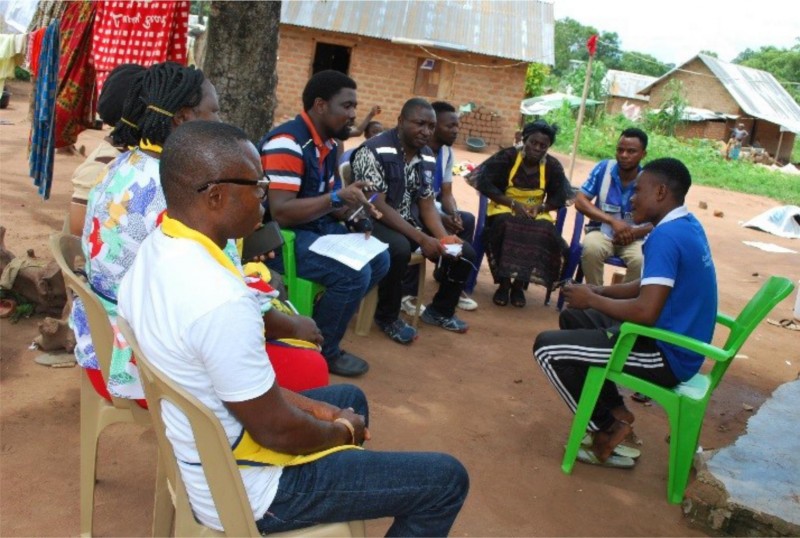
Focus group discussions (FGDs) and in-depth interviews were used to obtain data from 64 participants (parents, policymakers, community leaders, health workers, and media personnel). The findings revealed that programme planners deployed several communication strategies: interpersonal communication (IPC), local advocacy (door-to-door, town criers), mass media campaigns, and social or community mobilisation. While the mass media strategy proved very effective in the urban areas, those in rural areas suffer setbacks due limited access to mass media. As such, local advocacy through town criers and IPC with health workers were their main source of information. This is due to the proximity of personnel as well as their perceived credibility.
Community participation has been viewed as an important component to enhancing the acceptability, usability, and sustainability of the immunisation programme in the state. The study reveals that at present, the level of community participation in the NIP is not satisfactory. For example, government/programme planners do not consult pregnant women, mothers, or fathers to seek periodic feedback about the programme or to ascertain the effectiveness of communication strategies used. Other issues cited include: inadequate health information, unavailability of vaccines, and inadequate health workers.
In conclusion, this study "identifies community participation, indigenous media and mass media intervention as the ideal strategies to achieve full participation of the target audiences of the Immunisation especially in the rural settings. It is necessary to incorporate community leaders and other relevant stakeholders to achieve [the] desired result in the NPI....The implication of community involvement is to collectively proffer solution to matters that affect them." Based on the findings of this study, the following recommendations are made:
- Government/programme planners should use all available media to reach the intended population.
- Adequate publicity should be done in a timely manner before the days of the immunisation exercise.
- Community and religious leaders, as well as indigenous communication systems, should be fully utilised to reach out to the intended population.
- The community as a whole and parents should cooperate for an effective immunisation process.
- Logistics funds should be released on time to enable the health workers to carry out their work well.
- Health workers should use simple English (Nigerian English) in communicating with audiences in rural areas.
- The government should have a database of phone numbers of pregnant women, mothers, and fathers to use in sending out periodic text messages with information about the NPI.
International Journal of Communication: An Interdisciplinary Journal of Communication Studies, 22, September, 2017. Image credit: Mega Icon Magazine
- Log in to post comments