










































The Views and Perspectives of Radio Ergo's Female Listeners in Mogadishu and Baidoa, Somalia
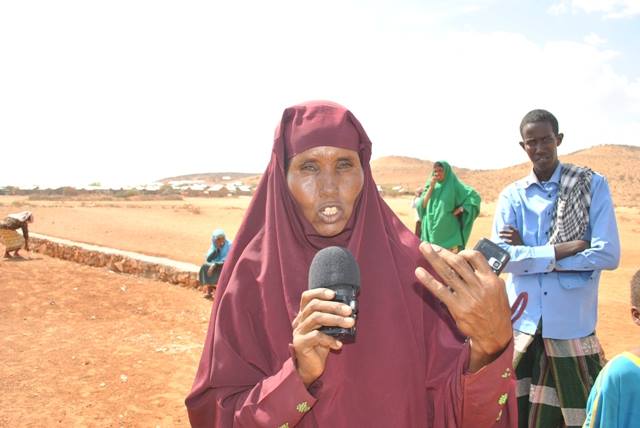
"...provided a much needed space for those whose voices are not heard on mainstream radios to articulate their own issues and concerns....hearing the voices of the marginalized created awareness and empathy among listeners."
Somalia has been affected by conflict, displacement, and natural disasters. In the Somali language, the word "ergo" means mediators or envoys in the interest of people in need, and can also refer to those who mediate in conflicts. Radio Ergo, run by International Media Support (IMS), works to strengthen access to information and enhance Somali citizens' awareness on humanitarian and social issues in order to improve their lives and bring about positive change in the country. Since 2016, Radio Ergo has worked to promote women's voices by, for example, monitoring the number of female and male voices in the programmes, increasing the number women reporters, and profiling women's contributions in Somali society. This report examines the views and perspectives of female listeners on Radio Ergo's programmes and their impact.
Due to insecurity at the time, the research focused on the views and preferences of Radio Ergo listeners in two urban centres, Mogadishu and Baidoa. The focus was on women in order to test Radio Ego's gender strategy, which aims to get more female voices onto the radio and to disrupt the largely negative or narrow stereotypes of women in the Somali media. The participants were selected through calls put out by the researcher, a Somali-speaking gender expert, to her networks, including universities, schools, women's groups, and civil society organisations. Carried out between July 24 and August 8 2019, the research involved semi-structured interviews and focus group discussions (FGDs).
Radio Ergo's shortwave transmissions cover the entire country, which is considered important as there is no national broadcaster in Somalia, and most of the local FM radios serve mainly urban-based audiences. Radio Ergo also runs a mobile phone feedback platform, which is free to callers, enabling listeners anywhere in the country to leave a voice message sharing their comments, views, or plight. The platform gives a chance for everyone to be included in planning, decision-making, and response processes. The feedback leads to further reporting and programming on the radio, as well as providing an analysis of trends and needs to be shared with the humanitarian responders.
The research found that Radio Ergo has a strong following among young educated women residing in Mogadishu and Baidoa. They described Radio Ergo as: a community radio, a humanitarian radio, and a unique radio that focuses on critical humanitarian and social issues affecting people of Somalia living inside and outside Somalia. They stated that the radio station is unlike other local media in that it does not focus on local politics or security-related issues; rather, it tells extraordinary stories about ordinary people who may be refugees living in Dadaab refugee camps or internally displaced persons (IDPs) in camps inside Somalia and in towns and villages in Somalia. They said Radio Ergo amplifies voices of vulnerable populations affected by conflict, displacement, and drought and who are struggling to cope with meagre resources.
All the participants acknowledged the importance of having sufficient female voices on Radio Ergo and across its programmes. They pointed to: the requirement to enable women to participate and be represented in programmes; the fact that female journalists brought different views and perspectives from male journalists; the fact that female journalists were better placed to capture accurately the challenges facing women, and to interview women especially on sensitive subjects when male journalists may not gain access; and the notion that female journalists acted as good role models and could encourage other women and girls to become journalists.
Participants noted positively Radio Ergo's attention to issues affecting women and girls in their communities and to raising awareness on the specific challenges facing women in Somalia. One listener said a programme about a young girl campaigning against female genital mutilation (FGM) inspired her to participate in anti-FGM initiatives in her own community. She stated: "Life stories, testimonies and hearing the actual voices of real people have captured my attention and made me a regular listener of Ergo programmes." (Many other examples are provided in the report to illustrate the extent to which Radio Ergo has influenced listeners' thinking and perception on various issues in their own communities.)
"The study showed that Radio Ergo acts as a connector because its programmes frequently provoke discussions among female listeners about topical issues and events. All of the interviewed participants stated that they had participated in discussions based on programmes aired on Radio Ergo among their family members, neighbours and friends....These female listeners see Radio Ergo as laying the foundation for a much-needed space where vulnerable populations can have a voice, articulate their specific needs, access humanitarian assistance, and communicate their needs to humanitarian organizations. In addition, the radio is generating healthy dialogue and debate for the people of Somalia, who have borne the brunt of the protracted conflict and natural disasters. Radio Ergo allows its female listeners to recognize their roles and responsibilities as citizens engaged in rebuilding their lives in a new Somalia."
In addition, the participants in Mogadishu and Baidoa noted areas for improvement. They wanted an expansion of broadcasting hours and many additional programmes, such as those focused on migration and women. They also wanted to hear more female voices on the radio, even though they recognised that Radio Ergo pays more attention to gender inclusion than most other radios in Somalia. A number of the participants also requested an increase in the number of articles posted on Radio Ergo's website, particularly as young, educated women and men living in urban areas have smartphones and laptops and enjoy reading.
The researcher recommends further training for Radio Ergo journalists to ensure they capture gender perspectives throughout their reporting. Also, development of a gender-training manual for use in Somalia could build journalists' knowledge on how to incorporate gender into their coverage and promote gender equality and social inclusion. Finally, further focused studies could provide insight into how different segments of the audience relate to Radio Ergo, what they wish to hear, and how the programmes are having an impact on their lives. Such research could also help fill gaps in knowledge about Somali audiences.
The report concludes that Radio Ergo plays an important role in the representation of vulnerable populations and the communication of their needs.
Editor's note: Radio Ergo first went on air on shortwave in 2008 as an initiative of the United Nations Office for the Coordination of Humanitarian Affairs (UN-OCHA) IRIN project. Since 2011, the radio has been run by IMS as a component of a wider media development programme in Somalia. Radio Ergo is funded by the Swedish International Development Cooperation Agency (Sida), the Danish International Development Agency (Danida), and the Danish Refugee Council (DRC) through a sub-grant from the Office of U.S. Foreign Disaster Assistance (USAID/OFDA). For more information, see:
IMS website and IMS website, July 1 2011 - both accessed on January 28 2020. Image credit: Radio Ergo via Facebook