










































1 minute
Cultural Impact on Conflict Management in Higher Education
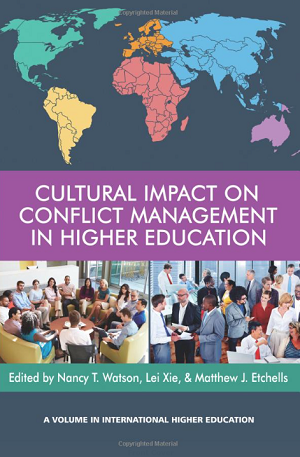
Cultural Impact on Conflict Management in Higher Education shares information regarding conflict management and resolution in higher education from a global perspective. In this book, we introduced many conflict resolution methods from different regions in the world. You can borrow some successful strategies and examine the differences and similarities between contexts. The book shares a conflict resolution model which may direct the reader to start thinking about addressing and managing conflicts from different levels of organizations.
This book is a collective work of authors coming from all over the world. We chose higher education as the context because it is a place where diverse thoughts, perspectives, and people come together. Because of the potential richness of diversity on a college campus, the opportunity for conflicts occurs.
Managing conflict does not work when there is a “one-way only approach/model” for addressing conflict. Some conflict resolution encompasses multiple dimensions: (a) one’s personal beliefs or beliefs about an issue; (b) an individual’s personal history in terms of how the conflict was perceived as something to be discussed or not; (c) work culture of the conflict where if ‘one has a conflict,’ the person or unit is messing up or there is a problem person; (d) the unconscious strategies of ‘face saving’ (trying to maintain one’s image) present; (e) social hierarchies or relationships; and (f) the diversity dimensions and issues that may be present.
- Log in to post comments